
Puppy Vaccination Schedule: Which Shots Are Core, Which Are Optional, and How Many Boosters Are Needed?
Your puppy needs protection from serious infectious diseases, but the vaccination schedule can seem confusing. Why are there three or four appointments? Does every puppy need Bordetella? Is leptospirosis now a core vaccine? And when is your puppy actually protected?
At Desert Forest Animal Hospital, our veterinarians help families understand current puppy vaccination guidelines and develop individualized protection plans based on age, health, vaccine history, lifestyle, travel and local exposure.
This guide explains the recommendations from the American Animal Hospital Association (AAHA), World Small Animal Veterinary Association (WSAVA), American Veterinary Medical Association (AVMA) and other veterinary authorities.
How Many Puppy Vaccinations Are Needed?
Most puppies receive approximately three to four doses of the distemper/parvovirus combination vaccine during their initial puppy series.
Vaccination usually begins around 6–8 weeks of age, with additional doses every 2–4 weeks until the puppy is at least 16 weeks old. Some higher-risk puppies may benefit from continuing through 18–20 weeks.
Other vaccines have different schedules. Rabies ordinarily starts with one dose, while leptospirosis requires two initial doses. Optional vaccines are selected according to individual exposure.
The most important distinction is that puppy vaccines are not simply a fixed number of shots. The puppy’s age when the final core combination vaccine is given matters greatly. A puppy receiving three doses ending at 12 weeks may not have completed an adequate primary core series.
For example, a puppy vaccinated at 8, 12 and 16 weeks may complete the routine initial combination series with three doses. A puppy beginning at 6 weeks may need four or more appointments depending on the spacing.
Our dog and cat vaccination service page explains preventive vaccination for pets of all ages. This article focuses specifically on the puppy series and what happens after it.
Which Puppy Vaccines Are Core?
Core vaccines are recommended broadly because they protect against serious diseases with important individual or public-health consequences. Under the updated AAHA canine recommendations, core protection includes distemper, adenovirus, parvovirus, rabies and leptospirosis.
1. DHPP / DAPP / DA2PP
This combination vaccine protects against several important canine infectious diseases:
- Distemper: A serious viral infection affecting respiratory, gastrointestinal and nervous systems. Neurologic damage can be permanent.
- Adenovirus: CAV-2 vaccination protects against canine infectious hepatitis caused by CAV-1 and may provide respiratory protection.
- Parvovirus: A highly contagious virus that can cause severe vomiting, bloody diarrhea, dehydration and life-threatening illness.
- Parainfluenza: Frequently included in combination products and contributes to respiratory-disease protection, though it is not independently classified as universally core.
Initial series: Generally every 2–4 weeks from approximately 6–8 weeks until at least 16 weeks of age.
2. Rabies
Rabies is a fatal viral disease affecting the nervous system. It can infect humans and is an important public-health concern.
Maricopa County requires rabies vaccination and licensing for dogs older than three months. Initial vaccination timing must follow the particular vaccine’s approved age and applicable requirements.
Initial series: One initial dose, commonly at approximately 12–16 weeks.
Next booster: One year after the first vaccination, even when a three-year-labeled vaccine was used for the initial dose. Subsequent intervals follow vaccine labeling and applicable requirements.
3. Leptospirosis
Leptospirosis is caused by bacteria that may damage the kidneys and liver. Infected animals may shed the organisms in urine, and people can also become infected.
AAHA updated its canine guidance in 2024 to classify leptospirosis vaccination as core. This recommendation reflects the recognition that exposure is not limited to hunting, rural or outdoor dogs.
Contaminated water, damp soil, rodents and wildlife may create exposure opportunities.
Initial series: Two doses, approximately 2–4 weeks apart, commonly beginning around 12 weeks under current AAHA recommendations.
Afterward: Typically annually.
What Does “Core” Actually Mean?
Core does not mean every vaccine must be administered during every visit, or that every puppy receives an identical schedule.
Vaccination is individualized when there is a meaningful medical reason, such as a prior serious vaccine reaction, an illness requiring postponement, or a specific product consideration.
AAHA recommends leptospirosis vaccination broadly for dogs, while WSAVA’s international recommendations classify it as core in regions where appropriate leptospirosis vaccines and disease exposure warrant that designation.
Important: Do not assume that “one puppy shot” protects against every disease. Combination vaccines contain specific antigens, and rabies and leptospirosis have their own vaccination requirements. Bring the actual vaccine records, including dates and product information, to your veterinarian.
Which Puppy Vaccines Are Non-Core or Optional?
Non-core does not mean unnecessary. It means that the recommendation depends on the puppy’s likelihood of exposure, location, travel plans and other risk factors. A vaccine may be very important for one dog but have limited practical value for another.
| Vaccine | What It Helps Prevent | When to Consider It | Typical Initial Doses |
|---|---|---|---|
| Bordetella | Contributes to protection against canine infectious respiratory disease, commonly called kennel cough. | Boarding, daycare, grooming, training classes, dog shows or frequent contact with unfamiliar dogs. | Often one oral or intranasal dose; many injectable products require two doses 2–4 weeks apart. Follow product instructions. |
| Canine Influenza | Canine influenza respiratory disease from relevant viral strains. | Frequent group-dog exposure, travel, current regional outbreaks or facility requirements. | Generally two initial doses 2–4 weeks apart, followed by risk-based boosters. |
| Lyme Disease | Helps protect against illness associated with Borrelia burgdorferi transmitted by infected ticks. | Travel, relocation or activities in Lyme-endemic regions; meaningful tick exposure. | Generally two doses 2–4 weeks apart, followed by annual boosters while risk continues. |
| Rattlesnake Toxoid | Intended to stimulate antibodies against components of Western diamondback rattlesnake venom. | Selected dogs with substantial rattlesnake exposure after a discussion of limited effectiveness evidence. | Product-dependent initial and booster schedule. Not routinely recommended for every dog. |
Bordetella: Does Every Puppy Need the Kennel Cough Vaccine?
Bordetella bronchiseptica is one of several organisms involved in canine infectious respiratory disease complex (CIRDC). Parainfluenza, canine respiratory coronavirus, influenza and other pathogens can also contribute.
Dogs attending daycare, boarding, grooming facilities, training classes or other group settings may benefit from Bordetella vaccination.
Intranasal, oral and injectable vaccines have different dose requirements and immune responses. A facility may require more frequent boosters than the veterinarian’s standard schedule.
Important: No Bordetella vaccine prevents every cause of kennel cough. Vaccinated dogs can still develop respiratory illness.
Canine Influenza: Should My Puppy Get a Flu Shot?
Canine influenza can cause coughing, fever and respiratory disease. Some dogs develop pneumonia. Vaccination may be appropriate when regional circulation, group exposure or travel increases the risk.
Two initial doses are generally needed for currently used injectable canine influenza vaccine schedules. Continued vaccination depends on ongoing exposure and product guidance.
Not every puppy in Cave Creek automatically needs canine influenza vaccination. We evaluate current risk rather than assuming every social dog faces identical exposure.
Lyme Disease: Is It Necessary in Arizona?
Lyme disease vaccination is not automatically included in every locally living Cave Creek puppy’s vaccination plan. A dog traveling or relocating to a higher-risk region, hiking in tick habitats where Borrelia burgdorferi circulates, or regularly spending time in endemic areas may be a stronger candidate.
Tick prevention remains important even for vaccinated dogs because ticks transmit diseases other than Lyme disease.
What About the Rattlesnake Vaccine?
Rattlesnake encounters are relevant to families living near the Sonoran Desert’s washes, trails and open spaces. However, evidence establishing reliable clinical benefits from rattlesnake toxoid vaccination remains limited.
A rattlesnake vaccine must never be presented as preventing serious envenomation or replacing emergency treatment. A vaccinated dog may still require hospitalization, antivenom and emergency stabilization.
If your puppy or adult dog may have been bitten by a rattlesnake, seek immediate veterinary emergency care. Do not wait for swelling or visible fang marks.
Puppy Vaccination Schedule by Age
The following example demonstrates how core and optional vaccines may fit together during the first year. It is not a fixed prescription for every puppy.
| Puppy Age | Vaccines Commonly Discussed | What Happens at the Visit |
|---|---|---|
| 6–8 weeks | First DA2PP/DAPP dose, if not already administered. | Physical examination, previous vaccine records, fecal testing, parasite prevention, nutrition and early socialization counseling. |
| 9–12 weeks | Next DA2PP/DAPP dose; discuss Bordetella and starting leptospirosis around 12 weeks. | Review growth, digestive health, parasite control, handling and exposure risks. |
| 12–16 weeks | Continue DA2PP/DAPP series; leptospirosis initial series; first rabies vaccine at the legally and medically appropriate age. | Plan remaining doses and safe outdoor activity. |
| 16 weeks or older | Ensure a final routine DA2PP/DAPP puppy dose is administered at 16 weeks or older. | Confirm whether additional doses are indicated for individual risk. |
| 18–20 weeks, selected puppies | Additional core combination dose if risk or maternal-antibody concerns justify it. | Particularly relevant to high-exposure circumstances. |
| Approximately 6 months | Consider the WSAVA-recommended additional core viral vaccine dose; discuss the clinic’s adopted protocol. | Address possible delayed maternal-antibody interference and update preventive care. |
| By one year after initial series | Core combination booster if not already addressed by an appropriately selected earlier plan; rabies booster one year after first rabies dose; annual leptospirosis as due. | Transition toward an individualized adult vaccination schedule. |
Intervals differ among products and professional guidance. AAHA recommends a core combination booster within one year after the initial puppy series. WSAVA’s 2024 guidelines favor a dose around 26 weeks of age to help protect the minority of puppies still affected by maternal antibodies late in the initial series. Your veterinarian should select a coherent protocol rather than automatically administering redundant doses.
Is It Three Puppy Shots or Four?
Both may be appropriate. The number depends primarily on the puppy’s age when vaccination begins, the intervals between injections and the age at the final dose.
A puppy receiving DA2PP at 8, 12 and 16 weeks has received three doses during the initial series. Another puppy receiving doses at 6, 9, 12 and 16 weeks has received four.
The objective is not to reach a magic number. The objective is to deliver an effective vaccine when interference from maternally derived antibodies is sufficiently low.
What If My Puppy Started Vaccines Late or Has Missing Records?
Do not automatically restart every vaccination from the beginning. For an older puppy or dog with uncertain records, the correct catch-up protocol depends on age, the vaccine type, product labeling and risk.
Modified-live core viral vaccines and inactivated vaccines such as leptospirosis do not necessarily follow the same catch-up rules. We review available records before recommending additional injections.
Why Do Puppies Need Repeated Vaccine Boosters?
Newborn puppies receive antibodies from their mothers, primarily through colostrum during early nursing. These maternally derived antibodies provide temporary protection against certain infectious diseases.
However, those same antibodies can interfere with a puppy’s ability to respond to vaccination.
The timing of antibody decline varies between puppies, even within the same litter. One puppy may respond well to a dose administered at 10 weeks, while another may still have enough maternal antibodies to interfere.
Maternal Antibodies
Initially protective but gradually decline. Their levels are not identical in every puppy.
Active Vaccine Response
A core vaccine becomes more likely to stimulate an effective response as interfering maternal antibodies fall.
Does the First Puppy Vaccine Provide Any Protection?
It may. Some puppies develop an immune response after an early dose. But receiving one injection does not guarantee reliable protection against parvovirus, distemper or other infectious diseases.
For this reason, it is important to continue the schedule rather than assuming the first dose makes all public environments safe.
Can Antibody Titers Replace Puppy Vaccinations?
Antibody testing for distemper, parvovirus and adenovirus can be useful in selected situations, particularly when evaluating whether a dog responded to vaccination. Interpretation depends on the specific test, disease and timing.
WSAVA discusses testing after the primary series as one approach to identifying puppies needing further core vaccination.
However, titers do not provide the same information for every disease. They do not replace a legally required rabies vaccination, and leptospirosis antibody testing is not a simple substitute for its routine vaccination protocol.
Which Puppy Vaccines Matter Most in Cave Creek and the Sonoran Desert?
Puppies living in Cave Creek, Carefree, Desert Mountain and North Scottsdale share many vaccine needs with puppies elsewhere. However, local lifestyle and environmental exposure influence how our veterinarians assess individual risk.
Parvovirus Exposure in Public Areas
Canine parvovirus is highly contagious and can persist in contaminated environments for prolonged periods. Exposure can occur through contaminated fecal material and surfaces, even without direct contact with a visibly sick dog.
Until adequate protection is established, avoid heavily used dog parks, communal pet-relief areas and locations where unknown dogs may have eliminated.
A puppy that develops vomiting, bloody diarrhea, profound weakness or refusal to eat needs prompt veterinary attention. Puppies may deteriorate rapidly because of dehydration, electrolyte abnormalities and serious infection.
Leptospirosis Is Not Just a Rural-Dog Disease
Even in Arizona’s desert environment, rodents, wildlife, irrigated yards, standing water and damp areas can create possible exposure opportunities. Not every exposure will cause disease, but urban and small-breed dogs are not inherently protected.
Leptospirosis may cause fever, poor appetite, vomiting, kidney injury, liver injury and other systemic findings. An infected dog may initially show nonspecific signs.
Because leptospirosis can also infect humans, its prevention has implications beyond the individual pet.
Rabies and Wildlife Exposure
Bats and certain wild mammals can transmit rabies. Although a typical pet owner may never witness a rabid animal, the consequences of infection are severe.
Keeping rabies vaccination current protects pets, owners and the broader community and simplifies public-health management after possible exposures.
Travel, Boarding and Desert Recreation
A puppy living primarily indoors may face different optional-vaccine needs from a dog regularly boarding, attending daycare, traveling across state lines or spending time in group-dog activities.
Our recommendations consider real exposure rather than automatically adding every available vaccine. For example, travel to Lyme-endemic regions may change recommendations even if the puppy’s primary residence is in Arizona.
Can a Puppy Socialize Before All Vaccines Are Finished?
Yes, with appropriate precautions. The most important early socialization period overlaps with the primary puppy vaccination series.
Completely isolating a puppy until five months of age may mean missing valuable opportunities for positive exposure to people, animals, sounds and environments.
The American Veterinary Society of Animal Behavior supports thoughtfully managed early socialization. This does not mean taking an incompletely vaccinated puppy into uncontrolled high-risk settings.
Safer Early Socialization Options
- Invite healthy, appropriately vaccinated dogs with known histories into a clean, controlled environment.
- Introduce new people, sounds, car rides and handling in a gentle, positive way.
- Consider a responsibly managed puppy socialization class with appropriate vaccination, sanitation and health requirements.
- Carry your puppy through environments where you want positive exposure without allowing unnecessary contact with contaminated ground.
- Avoid dog parks, poorly maintained shared elimination areas and contact with visibly ill animals.
AVSAB guidance supports enrolling appropriate puppies in controlled classes after they have received at least one vaccine dose at least seven days beforehand and have begun deworming, provided other safety requirements are met.
Ask your veterinarian to assess your puppy’s specific risk and local disease conditions.
What Else Should Happen During Puppy Booster Appointments?
A puppy vaccine appointment should be more than a quick injection. Puppies change rapidly, and repeated early visits create opportunities to identify health concerns, monitor development and answer owner questions.
At Desert Forest Animal Hospital, we approach puppy preventive care as a series of medical assessments rather than a simple checklist.
Physical Examination
Depending on age and findings, the examination may include evaluation of heart sounds, respiratory health, eyes, ears, oral development, bite alignment, palate, abdomen, hernias, skin, body condition, joints and gait.
We may identify concerns such as a heart murmur, umbilical hernia, ocular abnormality or developmental orthopedic issue that warrants monitoring or additional evaluation.
Parasite Testing & Prevention
Young puppies may have intestinal parasites even if stools appear normal. A fresh stool sample may be recommended for testing, alongside age-appropriate deworming and prevention.
Flea, tick and heartworm prevention should be considered according to the puppy’s age, weight, product labeling and exposure.
Nutrition and Growth
We can discuss appropriate growth diets, feeding amounts, body condition and safe weight gain. Large- and giant-breed puppies need special attention to balanced growth nutrition.
Behavior, Handling & Development
Appointments create opportunities to discuss safe socialization, bite inhibition, crate training, house-training, dental development and low-stress veterinary handling.
Dr. Quinn Bauer is a Fear Free Certified veterinarian and incorporates behavior-aware techniques when medically appropriate.
Learn more about our comprehensive puppy and kitten veterinary care , including nutrition, microchipping, parasite control, first examinations and spay/neuter discussions.
Are Puppy Vaccines Safe? What Side Effects Should Owners Watch For?
Vaccination is an important preventive measure with substantial benefits against serious infectious disease. As with other medical interventions, adverse reactions are possible.
Most vaccine-associated reactions are mild and temporary, but severe allergic reactions require prompt treatment.
Possible Mild Reactions
- Temporary soreness at the injection site.
- Mild tiredness or reduced activity.
- A small injection-site swelling.
- A temporary decrease in appetite.
These signs generally improve within a short period. Contact the veterinarian if they are severe, worsening or persistent.
Signs Requiring Urgent Veterinary Attention
- Facial swelling, hives or sudden marked itching.
- Repeated vomiting or diarrhea after vaccination.
- Collapse, extreme weakness or pale gums.
- Difficulty breathing.
If your puppy develops breathing difficulty, collapse or other signs of a severe reaction, seek immediate emergency veterinary care.
Tell your veterinarian about any previous vaccine reaction before the next injection. Your veterinarian may discuss product selection, monitoring, scheduling adjustments or other individualized precautions.
There is no universal requirement to administer every vaccine during one appointment. However, unnecessary delays should also be avoided when the puppy remains vulnerable to serious disease.
Puppy Vaccination and Booster FAQs
How many DHPP shots does a puppy need?
Most puppies receive approximately three or four doses when the series begins at 6–8 weeks, but the exact number depends on the starting age and spacing. The last routine primary core combination dose should occur at 16 weeks or older. High-risk puppies may need another dose through 18–20 weeks.
Is leptospirosis now considered a core vaccine?
Yes, under the 2024 update to AAHA’s canine vaccination guidelines. The initial series requires two doses, generally 2–4 weeks apart, followed by annual boosters. WSAVA uses more region-specific criteria, while ACVIM also supports broad canine vaccination.
What is the difference between DHPP and DHLPP?
DHPP or DA2PP protects against core viral diseases and commonly includes parainfluenza. DHLPP commonly indicates a combination that additionally includes leptospirosis. Exact ingredients and approved schedules differ by manufacturer; always review the product actually administered.
Does my puppy need Bordetella if we do not board?
Not necessarily. Bordetella vaccination depends on exposure to unfamiliar dogs, training classes, grooming, daycare and other social situations. Your veterinarian may still recommend it based on anticipated activities.
Can a puppy get rabies vaccination at 12 weeks?
Many approved rabies products permit first vaccination at approximately 12 weeks or three months. The precise age depends on labeling and applicable requirements. Maricopa County requires rabies vaccination and licensing for dogs older than three months.
What happens if I miss a puppy booster?
Contact your veterinary clinic rather than assuming the entire series must be restarted. Your veterinarian will consider the puppy’s age, previous doses, interval, vaccine type and product instructions to create a catch-up plan.
Is my puppy fully vaccinated after the third shot?
Not necessarily. Three doses may be adequate if the final core combination vaccine was administered at 16 weeks or older and other requirements are met. Three doses ending at 12 weeks are not equivalent to three doses ending at 16 weeks.
How long after the last puppy shot can we go to the dog park?
Discuss the timing with your veterinarian. Protection is not instantaneous, and dog parks expose puppies to unfamiliar dogs and potentially contaminated environments. Your puppy’s age, vaccine dates, health and local disease risks determine when higher-risk activities become reasonable.
Does a puppy need the parvovirus vaccine every year forever?
No. After the initial series and appropriate early follow-up vaccination, distemper, adenovirus and parvovirus combination vaccines are generally administered no more frequently than every three years in appropriately vaccinated adult dogs under standard guidelines. Some individual circumstances warrant different decisions.
Is leptospirosis vaccination given every three years?
No. Leptospirosis vaccines generally require annual revaccination following the initial two-dose series. Their duration-of-protection recommendations differ from the long-lasting core viral combination vaccines.
Does every puppy need the Lyme vaccine?
No. Lyme vaccination is based on the risk of exposure to infected ticks, particularly in endemic regions. Travel and relocation may change the recommendation for puppies living in Arizona.
Can vaccines cause a puppy to become sick?
Mild transient effects such as soreness or lethargy may occur. Severe reactions are uncommon but possible. A puppy with vomiting, diarrhea, respiratory signs or weakness should be evaluated rather than assuming the symptoms are simply a normal vaccine reaction.
Does my puppy need a physical examination at every booster visit?
Clinical assessment is valuable because puppies grow rapidly and health circumstances can change between visits. A veterinarian determines what examination and monitoring are appropriate and whether vaccination should proceed that day.
Can a puppy with diarrhea still receive vaccines?
That depends on the cause, severity and general health of the puppy. Mild symptoms do not automatically prohibit vaccination, but significant illness may justify postponement and diagnostic evaluation. Puppies with severe diarrhea or vomiting need timely assessment for potentially serious diseases, including parvovirus.
Where can I find puppy vaccinations near me in Cave Creek?
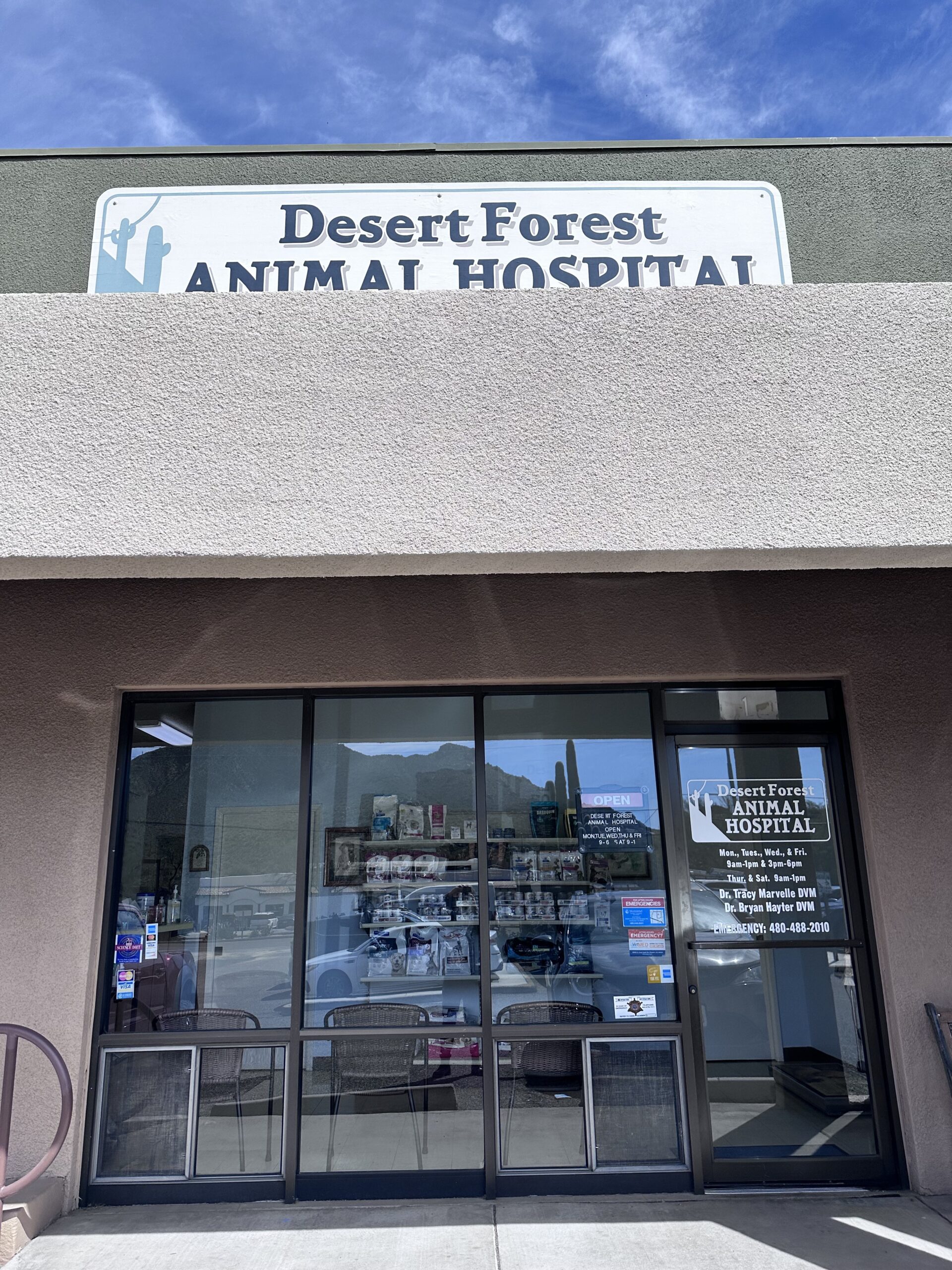
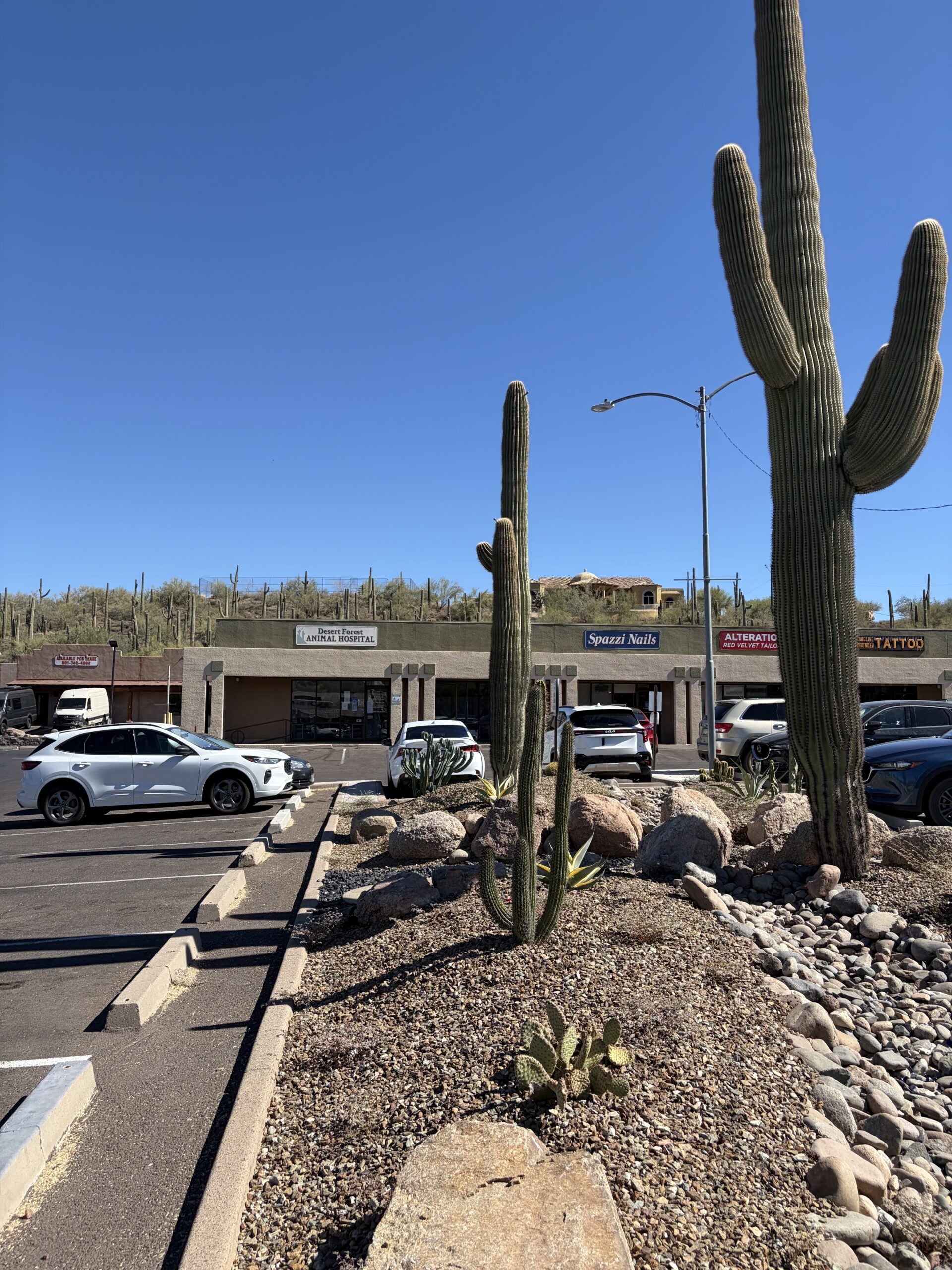
Desert Forest Animal Hospital provides puppy wellness examinations and individualized vaccination planning at 6554 E Cave Creek Road, Cave Creek, Arizona. We welcome families from Cave Creek, Carefree, Desert Mountain, Terravita, Dove Valley Ranch and North Scottsdale. Call (480) 488-2010 to arrange an appointment.
References and Professional Vaccination Guidelines
Recommendations in this guide are informed by veterinary professional guidelines, public-health requirements and evidence-based preventive medicine.
- AAHA Canine Vaccination Guidelines (2022, updated 2024) . Core and non-core recommendations, initial series, boosters and individual risk assessment.
- AAHA: Leptospirosis Vaccination Designated Core . The updated designation and initial vaccination discussion.
- WSAVA 2024 Vaccination Guidelines for Dogs and Cats . Maternally derived antibodies, puppy schedules and follow-up vaccination.
- UC Davis: Vaccination Guidelines for Dogs and Cats . Puppy core series and additional vaccination near six months.
- ACVIM Consensus Statement on Leptospirosis . Canine exposure risks, disease prevention and vaccination.
- Rabies Aware: Arizona . Arizona-specific vaccine age, revaccination and regulatory considerations.
- Maricopa County Animal Care and Control . Local dog rabies vaccination and licensing requirements.
- AAHA: Bordetella, Parainfluenza and Canine Influenza . Respiratory vaccine indications and individualized exposure.
- AAHA Core and Non-Core Vaccine Recommendations . Vaccine-specific schedules and lifestyle recommendations.
- AVMA: Updated Canine Leptospirosis Guidance . The rationale behind broad vaccination recommendations.
- Merck Veterinary Manual: Preventive Health Care for Small Animals . Preventive care and vaccination considerations.
Vaccine recommendations, product labels, regional risks and legal requirements can change. This guide offers general education and does not replace an individual veterinary examination, current product labeling or legally applicable rabies guidance.
Individualized Puppy Booster Visits at Desert Forest Animal Hospital
At Desert Forest Animal Hospital, preventive medicine is not a one-size-fits-all checklist. Our team takes time to review each puppy’s health, prior vaccine records, potential disease exposure and the family’s questions.
As an independently owned veterinary hospital serving Cave Creek since 1984, we aim to combine current preventive medicine with personal attention and familiar faces.
We welcome puppies from Cave Creek, Carefree, Terravita, Dove Valley Ranch, Desert Mountain, Tatum Ranch, Desert Hills and surrounding North Scottsdale communities.
More Resources for New Puppy Owners
- Dog and Cat Vaccinations in Cave Creek — core and lifestyle-based vaccine planning for all ages.
- Puppy and Kitten Care — examinations, parasite prevention, nutrition and early development.
- New Client Information — what to bring to your first appointment.
- Contact Our Veterinary Team — appointments and questions.
Before your puppy’s first appointment: Bring any vaccination records from the breeder, rescue or shelter; food information; a fresh stool sample if available; and questions about your puppy’s behavior, development and health.
Medical Review & Editorial Standards
This puppy vaccination and booster guide has been medically reviewed for accuracy in its discussion of core and non-core vaccines, current canine vaccination guidelines, disease prevention, puppy booster scheduling, vaccine safety and individualized preventive veterinary care.
Medical review: Bryan Hayter, DVM | Owner & Medical Director
Last medically reviewed: November 19, 2026
Desert Forest Animal Hospital uses current veterinary research and professional guidelines to support individualized recommendations. Vaccination decisions should always account for the patient’s health, age, exposure risks, medical history and applicable vaccine requirements.