GENTLE, LOW-STRESS VETERINARY CARE FOR DOGS & CATS
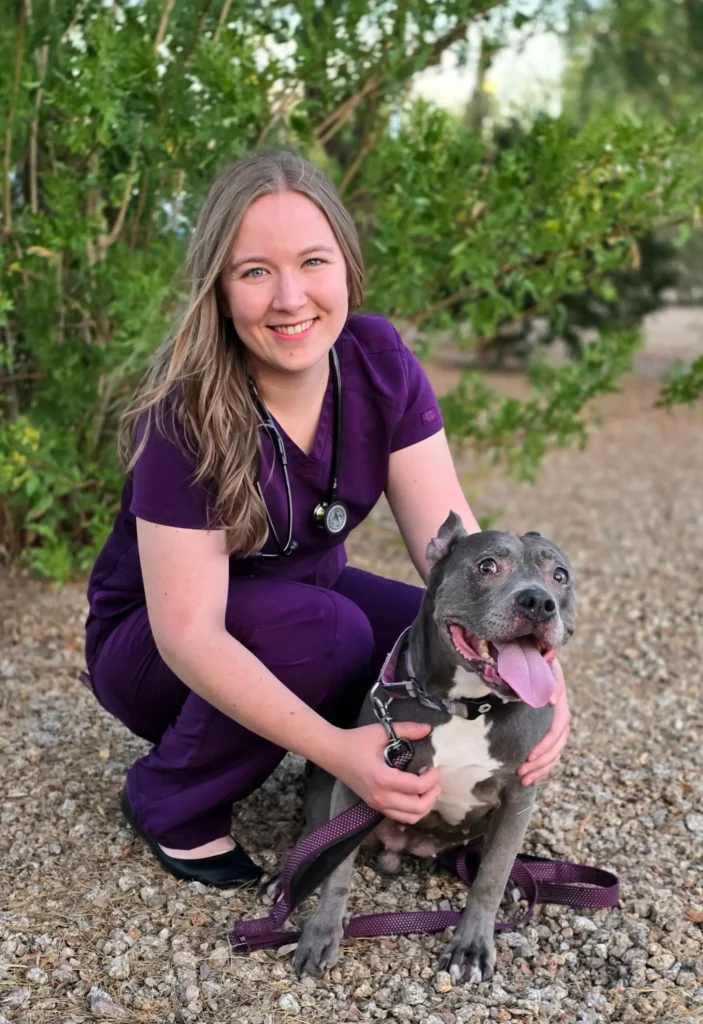
Veterinary care should protect both your pet’s physical health and emotional well-being. At Desert Forest Animal Hospital, Dr. Quinn Bauer is a Fear Free Certified veterinarian who uses gentle, behavior-aware techniques intended to reduce fear, anxiety and stress during veterinary visits.
Dr. Bauer takes time to understand how each dog or cat responds to handling, unfamiliar people, new environments and medical procedures. Depending on the patient, a lower-stress visit may involve favorite treats, additional time to acclimate, modified handling, examination in a preferred position or pre-visit medication prescribed in advance.
Our broader hospital team supports this approach through compassionate communication and low-stress handling whenever the pet’s condition and the medical situation allow.
Desert Forest Animal Hospital welcomes dogs and cats from Cave Creek, Carefree, Tatum Ranch, Desert Hills, North Scottsdale and nearby North Valley communities.
REQUEST A LOW-STRESS APPOINTMENT
Fear Free veterinary care
is an approach to veterinary medicine that considers a pet’s emotional well-being alongside their physical health. The goal is to reduce fear, anxiety, and stress whenever medically appropriate while still providing the examination, diagnostics, and treatment the patient needs.
Dr. Quinn Bauer
is a Fear Free Certified veterinarian at Desert Forest Animal Hospital in Cave Creek. Her approach may include gentle handling, recognizing changes in body language, minimizing unnecessary restraint, using positive reinforcement, modifying positioning, and considering pre-visit medication or sedation when medically appropriate.
Fear Free care does not mean avoiding medically necessary procedures. It means choosing the least stressful safe approach for the individual patient whenever circumstances allow.
Pets communicate discomfort through body posture, facial expression, movement, vocalization and changes in their willingness to interact. A Fear Free Certified veterinary professional is trained to recognize those signals and adjust the visit when possible.
A low-stress veterinary approach may include:
Fear Free care does not mean that a pet will never experience stress or that every procedure can be completed without restraint. It means that we consider the pet’s emotional state, use the least stressful safe approach available and adjust the plan when fear is interfering with humane medical care.
Dr. Quinn Bauer is a Fear Free Certified veterinarian with a special interest in helping nervous, sensitive and previously fearful pets receive the medical care they need.
She understands that a pet who growls, hides, struggles or tries to escape is often communicating fear rather than behaving badly. Punishment or excessive restraint can intensify that fear and make future visits more difficult.
Dr. Bauer instead works to build trust through patience, observation and an individualized plan. Her approach may include changing the order of the examination, giving the pet more space, using high-value rewards, postponing a nonurgent procedure or prescribing medication before a future visit.
Her goal is not simply to complete today’s procedure. It is to help create a safer, more manageable pattern for future veterinary care.
Some pets display obvious fear at the veterinary hospital. Others show subtle changes that can be mistaken for stubbornness, excitement or aggression.
Tell our team when your pet has previously shown:
Providing this information before the visit gives us an opportunity to plan. Please do not wait until your pet is already overwhelmed in the examination room.
When scheduling, tell us about your pet’s previous veterinary experiences, known triggers and favorite rewards.
Useful information includes:
For pets with significant fear, Dr. Bauer may recommend a consultation or prescribe pre-visit medication after reviewing the pet’s medical history.
Some pets become stressed before entering the examination room. Depending on current clinic activity and your pet’s needs, our team may recommend waiting in the vehicle briefly or moving into an examination room as soon as one is available.
Keep dogs securely leashed and cats inside a closed carrier. Tell us before entering if your pet reacts strongly to unfamiliar dogs, cats or people.
We may allow your pet time to investigate the room before beginning the examination. Dogs may feel more secure on the floor, while cats may prefer to remain in the bottom half of a carrier or on familiar bedding.
The veterinary team may alter the order of the examination based on what the patient tolerates best. We may also use treats, toys or gentle distraction when appropriate.
A complete physical examination remains important. Low-stress handling changes how we approach the examination; it does not eliminate medically necessary evaluation.
Vaccinations, blood collection, nail trims, ear treatment and other procedures can be challenging for fearful pets.
Depending on the patient, we may:
When a procedure is not urgent and a pet’s fear has become too intense, rescheduling with a better preparation plan may be more appropriate than forcing the procedure to completion.
Helpful preparation may include:
Do not withhold food unless our team has instructed you to do so. Some procedures require fasting, while other appointments may benefit from your dog arriving motivated to accept treats.
Helpful preparation may include:
A carrier should be a familiar resting space rather than an object that appears only before an unpleasant trip.
Some dogs and cats benefit from medication given at home before traveling to the veterinary hospital. These medications are intended to reduce fear and anxiety enough for the pet to cope more comfortably with transportation, handling and examination.
Pre-visit medication is not a sign of failure and is not used simply for staff convenience. For an appropriately selected patient, it can reduce distress and make necessary veterinary care safer.
The medication, dose and timing must be prescribed for the individual pet. Do not give another pet’s medication, a human sedative or an over-the-counter calming product without veterinary guidance.
A trial dose at home may sometimes be recommended before the actual appointment.
Fear Free techniques can support many types of veterinary care. The exact approach depends on the patient, procedure and medical urgency.
Positive early veterinary experiences may help puppies and kittens become more comfortable with handling, examinations, carriers and future care.
During routine visits, we may incorporate treats, gentle handling and gradual exposure to help establish a better long-term relationship with veterinary care.
LEARN ABOUT PUPPY & KITTEN CARE
An ill or painful animal may be more sensitive to handling than usual. Appropriate pain management, careful positioning and efficient diagnostic planning may reduce unnecessary discomfort.
Low-stress methods can be incorporated into physical examinations, blood collection, radiographs and other diagnostic procedures when medically appropriate.
LEARN ABOUT VETERINARY DIAGNOSTICS
Dentistry and surgery require safe anesthesia, appropriate monitoring and pain control. Fear Free preparation may still improve the experience before admission and during recovery.
For anxious pets, we may discuss pre-visit medication, calmer admission procedures and individualized handling before anesthesia.
LEARN ABOUT VETERINARY SURGERY
A sudden illness or injury can be stressful for both pets and their families. An animal that is painful, nauseated, weak, frightened, or having difficulty breathing may also react differently to handling than they would during a routine veterinary visit.
Desert Forest Animal Hospital provides
same-day urgent veterinary care in Cave Creek
while incorporating Fear Free principles whenever the patient’s medical condition allows.
Dr. Quinn Bauer is a Fear Free Certified veterinarian, and our team considers pain, fear, body language, positioning, restraint, and the patient’s previous veterinary experiences when approaching an urgent examination or diagnostic procedure.
Depending on the situation, a lower-stress urgent visit may include gentle positioning, minimizing unnecessary restraint, appropriate pain control, efficient diagnostic planning, treats or distraction when medically appropriate, or sedation when it provides the safest and most humane option.
Medical urgency always comes first. Severe breathing difficulty, major trauma, poisoning, uncontrolled bleeding, collapse, or another life-threatening condition may require rapid examination and stabilization that cannot safely be delayed for gradual acclimation or other Fear Free techniques.
Learn About Same-Day Urgent Care
No. Calm pets can also benefit from thoughtful handling and positive veterinary experiences.
A pet that appears comfortable today may become fearful after pain, an unfamiliar procedure or repeated stressful experiences. Using lower-stress techniques before a serious problem develops may help preserve the pet’s confidence.
Fear Free care can be especially valuable for:
Dr. Quinn Bauer has completed Fear Free professional certification and applies that training to the individual needs of her patients.
We do not assume that the same handling method will work for every dog or cat. The plan may be adjusted according to the pet’s medical needs, personality, previous experiences and response during the appointment.
Desert Forest Animal Hospital focuses on veterinary care for dogs and cats. We do not currently treat exotic pets.
Desert Forest Animal Hospital is an independently owned veterinary hospital serving Cave Creek, Carefree and nearby North Valley communities.
Tell us what has worked for your pet in the past. We want future visits to build on that information rather than beginning from zero each time.
Looking for a new veterinarian for a nervous or previously fearful pet? New clients can learn how to prepare for their first visit with Desert Forest Animal Hospital.
Fear Free Certified veterinary professionals complete education focused on recognizing, preventing and reducing fear, anxiety and stress in animals. Dr. Quinn Bauer is an individually Fear Free Certified veterinarian.
Dr. Quinn Bauer is a Fear Free Certified veterinary professional. Individual professional certification is different from facility-level Fear Free Veterinary Practice Certification.
No. Fearful behavior may include freezing, hiding, trembling, refusing treats or attempting to escape. A pet does not need to growl, hiss or bite to benefit from lower-stress handling.
They may. Reducing fear and improving cooperation can make handling and examination more manageable, although some pets still require medication, sedation or modified procedures.
We frequently use treats and positive reinforcement when they are medically appropriate and the pet is willing to eat. Tell us about food allergies, dietary restrictions or fasting instructions before offering treats.
Owners can often remain with their pets during routine examinations. Certain diagnostics, treatments, safety concerns or procedures may require the pet to be moved to another area.
A properly fitted muzzle may occasionally be used when necessary to protect the pet, owner and veterinary team. A muzzle is a safety tool, not a punishment, and should be used thoughtfully as part of the least stressful safe plan.
Yes. Sedation may be recommended when fear, pain or movement makes a procedure unsafe or inhumane without it. Appropriate sedation can be less stressful than prolonged physical restraint.
Possibly. The veterinarian must consider the pet’s medical history, current medications and planned procedure before prescribing a pre-visit medication. Contact us before the appointment rather than waiting until your pet arrives distressed.
Ask us when scheduling. Some visits benefit from a pet being interested in treats, while anesthesia, sedation or certain testing may require fasting.
Bring favorite treats, a preferred toy or blanket, a secure leash or carrier, a current medication list and information about previous triggers or successful handling methods.
No veterinary clinic can guarantee that a pet will experience no fear. Our goal is to recognize stress early, reduce it when possible and choose the safest and most compassionate approach for the individual patient.
We use gentle handling whenever possible, but life-threatening conditions may require rapid examination and stabilization. Medical urgency must remain the first priority.
Call Desert Forest Animal Hospital at (480) 488-2010 or use our online appointment request form. Mention your interest in an appointment with Dr. Bauer and describe any previous fear or handling concerns.
Your pet should not have to become completely overwhelmed before receiving help with veterinary fear.
Dr. Quinn Bauer provides Fear Free Certified veterinary care for dogs and cats at Desert Forest Animal Hospital in Cave Creek. Tell us about your pet’s triggers, previous experiences and favorite rewards so we can prepare a more individualized visit.
Desert Forest Animal Hospital
6554 E Cave Creek Road
Cave Creek, AZ 85331
Monday–Friday: 9:00 a.m.–6:00 p.m.
Saturday: Closed
Sunday: Closed
Content review: Reviewed for accuracy by Quinn Bauer, DVM, Fear Free Certified. Last reviewed July 2026.