VETERINARY SKIN, EAR & COAT CARE FOR DOGS AND CATS
Veterinary Dermatology in Cave Creek, AZ
Itching, licking, hair loss, recurring ear infections, and irritated skin can make a pet uncomfortable and interfere with sleep, play, and everyday life. Desert Forest Animal Hospital provides veterinary dermatology care for dogs and cats in Cave Creek, Carefree, Tatum Ranch, Desert Hills, North Scottsdale, and nearby North Valley communities.
Our general-practice veterinarians evaluate and treat many common skin, coat, paw, nail, and ear conditions. Because similar symptoms can have very different causes, we begin with a careful examination and recommend diagnostic testing based on your pet’s history and clinical signs.
Desert Forest Animal Hospital is owned and medically directed by Bryan Hayter, DVM. Our veterinary team includes Dr. Quinn Bauer, a Fear Free Certified veterinarian. We use patient, gentle handling techniques intended to reduce fear, anxiety, and stress whenever your pet’s condition and medical needs allow.
Request a Dermatology Appointment
|
Call (480) 488-2010
What We Commonly See in Our Cave Creek Dermatology Patients
Skin disease does not always begin with an obvious rash. Some of the most useful clues are behaviors that pet owners may not initially realize are related to the skin.
At Desert Forest Animal Hospital, persistent paw licking is the number-one sign we commonly see in dogs with atopic dermatitis. Owners frequently tell us that they assumed their dog was licking because of anxiety, boredom, or habit—particularly when the skin does not initially look very abnormal.
Behavioral licking certainly can occur, but repeated licking of the paws, especially between the toes, often deserves a medical evaluation before it is attributed to anxiety. Environmental allergies, food-related skin disease, bacterial infection, Malassezia yeast overgrowth, foreign material, parasites, nail disease, and orthopedic or neurologic pain can all contribute.
For dogs with environmental allergies, the paws are a particularly common area of inflammation. A dog may lick long before an owner notices redness, odor, hair loss, or visible infection.
Learn more about pet allergy evaluation and treatment →
Medically reviewed by:
Bryan Hayter, DVM, Owner & Medical Director • Updated August 2026
Signs Your Pet May Need a Dermatology Evaluation
Skin disease does not always appear as a visible rash. Dogs and cats may show subtle behavioral changes before owners notice an obvious skin lesion.
Schedule an examination when you notice signs such as:
- Frequent scratching, chewing, licking, or rubbing
- Persistent paw licking or chewing
- Red, inflamed, flaky, greasy, crusted, or thickened skin
- Hair thinning, bald spots, or excessive shedding
- Recurring hot spots or moist skin lesions
- Unusual skin odor
- Scabs, bumps, sores, pustules, or wounds that do not heal
- Recurring ear infections, head shaking, or ear scratching
- Darkened skin or changes in coat texture
- Swollen paws, irritated skin between the toes, or nail changes
- Excessive grooming or hair loss in cats
- Skin problems that improve temporarily but repeatedly return
Severe swelling of the face, difficulty breathing, collapse, rapidly spreading hives, or sudden weakness may indicate an urgent allergic reaction. Call us immediately during business hours or contact an emergency veterinary hospital if we are closed.
Common Skin and Ear Problems We Evaluate
Itching and hair loss are symptoms rather than diagnoses. A complete dermatology evaluation helps us distinguish among allergies, parasites, infections, hormonal disease, immune-mediated disorders, and other potential causes.
Environmental and Seasonal Allergies
Dogs and cats can react to environmental allergens such as pollens, grasses, weeds, molds, and dust mites. Environmental allergies may cause paw licking, face rubbing, scratching, recurrent ear disease, and repeated bacterial or yeast infections.
Learn more about our approach to pet allergy evaluation and treatment.
Food Allergies and Adverse Food Reactions
Food-related skin disease may cause year-round itching, recurring ear infections, paw irritation, skin infections, or gastrointestinal symptoms. Blood, saliva, and hair tests do not reliably diagnose food allergy. When food allergy is suspected, a carefully controlled elimination diet followed by a dietary challenge may be recommended.
Our veterinarians can help select an appropriate diet and explain how treats, flavored medications, supplements, chews, and table food can affect the accuracy of a food trial. Visit our pet nutrition counseling page for additional information.
Flea Allergy Dermatitis and Other Parasites
Some pets are highly sensitive to flea saliva and may develop intense itching after only a small number of bites. Mites, ticks, lice, and other parasites can also contribute to skin irritation, hair loss, inflammation, or infection.
Because parasites are not always visible, diagnostic testing and consistent prevention may still be recommended. Learn more about parasite prevention for dogs and cats.
Bacterial and Yeast Infections
Secondary infection is one of the most important—and sometimes overlooked—parts of treating an allergic dog.
Dogs with atopic or other allergic skin disease have an abnormal or inflamed skin barrier. Scratching, chewing, and licking further damage that barrier, making it easier for organisms normally found on the skin to multiply excessively.
Common secondary problems include bacterial skin infection, often involving Staphylococcus species, and overgrowth of Malassezia yeast.
Signs may include:
- A sudden increase in itching
- Red or inflamed skin
- Pustules or small pimple-like lesions
- Crusting or scabbing
- Greasy skin or coat
- Hair loss
- Darkened or thickened skin
- A musty or unusual odor
- Red, irritated skin between the toes
- Recurring ear discharge or odor
Why Cytopoint or Another Anti-Itch Medication Can Seem to “Stop Working”
This is something we encounter frequently at Desert Forest Animal Hospital.
Owners sometimes tell us that they stopped Cytopoint or another anti-itch medication because “it wasn’t working anymore.” When we examine the patient, however, we sometimes find that the dog has developed a secondary bacterial or yeast infection.
This distinction matters.
Medications such as Cytopoint are intended to reduce allergic itching. They do not directly treat a bacterial skin infection or yeast overgrowth. A dog can therefore have good control of the underlying allergic itch and still become dramatically itchier when a secondary infection develops.
The AAHA Management of Allergic Skin Diseases Guidelines specifically note that anti-itch therapies may be less effective when active infection is present and recommend treating secondary bacterial and Malassezia infections along with the underlying allergic disease.
For this reason, a dog that suddenly becomes itchy again does not necessarily mean that Cytopoint, Apoquel, or another previously helpful treatment has simply stopped working.
We may recommend skin cytology to look for bacteria, yeast, and inflammatory cells before deciding how the treatment plan should change.
Treating Secondary Skin Infection
Treatment depends on what we find, where the infection is located, how extensive it is, and whether it has occurred repeatedly.
Depending on the patient, treatment may involve:
- Medicated shampoos
- Antiseptic wipes, sprays, or mousses
- Topical antimicrobial medication
- Medicated ear treatment
- Therapy directed specifically against Malassezia yeast
- Systemic antibiotics when medically appropriate
- Bacterial culture and susceptibility testing for selected recurrent, deep, or treatment-resistant infections
Not every bacterial skin infection automatically requires oral antibiotics. For many surface and superficial infections, topical antimicrobial treatment may be appropriate. Oral antibiotics are more often reserved for deeper, extensive, or otherwise appropriate infections based on the examination, cytology, response to treatment, and culture findings when indicated.
This approach helps us treat the infection effectively while also practicing responsible antimicrobial stewardship.
Dog Ear Infections: One of the Most Common Problems We Treat
Based on our day-to-day caseload at Desert Forest Animal Hospital, ear infections are the most common dermatologic problem we treat in dogs.
Some dogs experience one isolated ear infection. When infections repeatedly return, however, simply treating each episode without asking why it keeps happening can lead to a frustrating cycle for both the dog and the owner.
Recurrent otitis externa may be associated with:
- Environmental allergies and atopic dermatitis
- Food-related allergic disease
- Malassezia yeast overgrowth
- Bacterial infection
- Excessive moisture
- Foreign material
- Ear-canal anatomy
- Parasites
- Chronic inflammation and narrowing of the ear canal
- Other underlying skin or medical conditions
Allergic disease is an especially important contributor. In some dogs, recurring ear inflammation may be one of the primary—or occasionally the only obvious—signs of underlying allergy.
When appropriate, we perform ear cytology to look for bacteria, Malassezia yeast, and inflammatory cells. This gives us considerably more useful information than treating every red or painful ear with the same medication.
Treatment is individualized according to what is present in the ear, the condition of the ear canal and eardrum, the dog’s history, and whether infections have been recurrent.
For dogs with repeated infections, our long-term goal is not simply to clear today’s ear infection. We also look for underlying allergic or dermatologic disease that may be allowing the infections to return.
Learn how allergies can contribute to recurring ear disease →
Hair Loss and Coat Changes
Hair loss may result from itching, infection, parasites, hormonal disorders, nutritional problems, medication effects, immune-mediated disease, or other medical conditions. The distribution and appearance of the hair loss can provide important diagnostic clues.
Hot Spots and Self-Trauma
Hot spots are painful, inflamed areas that can worsen quickly when a pet repeatedly licks, scratches, or chews the skin. Treatment may include gently clipping and cleaning the area, addressing infection and discomfort, preventing further trauma, and identifying the underlying trigger.
Skin Masses, Lumps, and Nonhealing Lesions
Skin growths can be benign, inflammatory, infectious, or cancerous. Appearance alone does not always reveal the cause. Depending on the lesion, our veterinarians may recommend needle sampling, cytology, biopsy, surgical removal, monitoring, or referral.
Unusual, Resistant, and Immune-Mediated Skin Disease
Most of the dermatology cases we manage involve much more common problems such as allergies, ear disease, bacterial infection, yeast overgrowth, parasites, or inflammatory skin disease.
Occasionally, however, we encounter a skin condition that does not behave like a typical allergy or infection.
Less common problems we may investigate include:
- Autoimmune or immune-mediated skin disease, including forms of cutaneous lupus
- Unusual crusting or ulcerative skin disorders
- Persistent lesions involving the nose, paw pads, nails, or mucocutaneous areas
- Recurrent or treatment-resistant bacterial infection
- Infection involving antimicrobial-resistant bacteria
- Unusually severe or recurrent Malassezia yeast overgrowth
- Persistent skin lesions that require biopsy for diagnosis
Malassezia itself is not a rare finding. We commonly identify yeast overgrowth in dogs with allergic skin or ear disease. What deserves additional investigation is infection that is unusually severe, repeatedly returns despite appropriate treatment, or fails to behave as expected.
Similarly, repeated bacterial infections may lead us to ask whether there is an uncontrolled underlying allergy, hormonal disease, immune problem, resistant organism, or another factor affecting the skin barrier.
For selected bacterial infections, we may recommend culture and antimicrobial susceptibility testing rather than repeatedly changing antibiotics empirically.
When lesions suggest an autoimmune disorder, unusual inflammatory condition, or another less common disease, diagnostic testing may include cytology, blood testing, bacterial culture, biopsy, or referral to a board-certified veterinary dermatologist.
How We Diagnose Skin Problems
There is rarely one universal test for an itchy pet. We begin by reviewing your pet’s symptoms, diet, parasite prevention, medications, lifestyle, seasonal patterns, previous treatments, and response to therapy.
During the examination, our veterinarians may evaluate the skin, coat, paws, nails, ears, and other body systems. Depending on the findings, recommended testing may include:
- Skin and ear cytology to look for bacteria, yeast, and inflammatory cells
- Skin scrapings to evaluate for certain mites
- Flea-comb examination and parasite assessment
- Fungal testing when ringworm or another fungal condition is suspected
- Needle sampling or cytology of a lump, bump, pustule, or unusual lesion
- Bacterial culture and susceptibility testing for selected infections
- Biopsy of persistent, unusual, or nonhealing skin lesions
- An elimination diet trial when food allergy is suspected
- Bloodwork or other diagnostic testing when an internal or hormonal condition may be contributing
- Environmental allergy testing when it may help guide allergen-specific immunotherapy
Not every pet needs every test. We explain the purpose of each recommendation and develop a diagnostic plan based on your pet’s symptoms, comfort, medical needs, and the information most likely to affect treatment.
Personalized Dermatology Treatment
Treatment depends on the cause of the skin disease and whether secondary infection, inflammation, pain, or self-trauma is present. Some problems resolve with short-term treatment, while chronic allergic or immune-mediated conditions may require ongoing management.
Your pet’s individualized plan may include:
- Topical shampoos, mousses, wipes, rinses, sprays, or ear medications
- Parasite treatment and year-round prevention
- Medication to reduce itching and inflammation
- Targeted treatment for bacterial, yeast, fungal, or parasitic disease
- A prescription or veterinary-directed elimination diet
- Skin-barrier and coat-support strategies
- Environmental management recommendations
- Allergen-specific immunotherapy for selected environmental-allergy patients
- Management of an underlying hormonal or systemic condition
- Follow-up examinations and repeat cytology when needed
Our goal is not simply to suppress itching temporarily. We work to identify likely triggers, treat infection and inflammation, improve skin-barrier health, and create a practical plan that supports long-term comfort.
Managing Chronic Allergic Skin Disease
Environmental allergies are often chronic and may change with the seasons, age, climate, or exposure patterns. Many allergic pets experience periods of improvement followed by occasional flare-ups.
Successful long-term care may involve several complementary strategies rather than relying on a single treatment. Depending on the patient, this may include consistent parasite prevention, bathing or topical care, treatment of secondary infections, dietary evaluation, itch-control medication, environmental management, and scheduled rechecks.
We monitor each pet’s response and adjust treatment as needed. The most appropriate option depends on the pet’s age, diagnosis, other medical conditions, infection status, previous response, and current medications.
Dermatology Care for Cats
Cats may show skin discomfort differently from dogs. Instead of obvious scratching, a cat may groom excessively, pull out hair, develop thinning areas over the abdomen or legs, develop small crusted bumps, scratch around the head and neck, or develop sores on the lips or skin.
Possible causes include fleas, environmental allergies, adverse food reactions, parasites, fungal infection, pain, stress-related overgrooming, and other medical conditions. Because several disorders can produce similar patterns, a veterinary examination is important before assuming that a cat’s hair loss is behavioral or allergy-related.
Fear Free Dermatology Visits
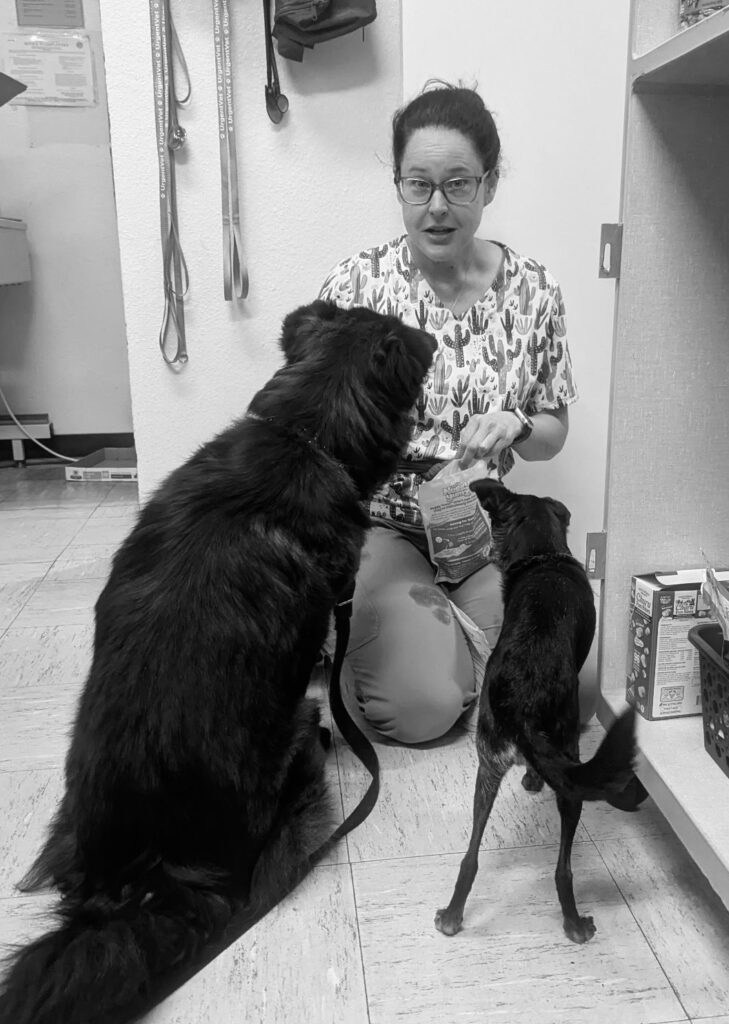
Skin and ear problems can make pets painful, sensitive, or reluctant to be handled. Dr. Quinn Bauer is a Fear Free Certified veterinarian who uses behavior-aware techniques designed to reduce fear, anxiety, and stress during veterinary visits.
Depending on the patient and the medical situation, a lower-stress dermatology visit may include:
- Allowing additional time to acclimate to the room
- Using high-value treats when medically appropriate
- Examining the pet in a preferred or comfortable position
- Using gentle, purposeful handling
- Taking breaks when appropriate
- Planning procedures in stages when medically reasonable
- Prescribing pre-visit medication for selected anxious patients
No technique can guarantee that every pet will remain completely relaxed, especially when an area is painful or urgent treatment is required. However, we make thoughtful efforts to protect both physical health and emotional well-being.
Learn more about our Fear Free veterinary approach.
When We May Recommend a Veterinary Dermatologist
Our general-practice veterinarians diagnose and manage many common dermatologic conditions. A referral to a board-certified veterinary dermatologist may be recommended when a condition is unusually complex, severe, uncommon, resistant to treatment, or requires specialized testing or procedures.
If referral is appropriate, we will explain why and help coordinate your pet’s ongoing care. Desert Forest Animal Hospital can continue supporting routine health needs and collaborate with the specialist when needed.
Why Choose Desert Forest Animal Hospital?
- Veterinary dermatology evaluations for both dogs and cats
- Care for allergies, infections, parasites, hair loss, ear disease, and other skin conditions
- In-house cytology and diagnostic capabilities
- Individualized testing and treatment recommendations
- A Fear Free Certified veterinarian
- Gentle, patient handling whenever medically appropriate
- Clear explanations and practical long-term management plans
- Convenient Cave Creek location serving nearby North Valley communities
- Referral recommendations for cases requiring specialty-level care
Frequently Asked Questions About Pet Dermatology
Why is my dog constantly licking its paws?
Persistent paw licking can have several causes, but at Desert Forest Animal Hospital, paw licking is the most common sign we see in dogs with atopic dermatitis. Owners often initially assume that the licking is caused by anxiety or boredom.
Before labeling repetitive paw licking as behavioral, we consider environmental allergies, food-related skin disease, bacterial or Malassezia infection, parasites, foreign material between the toes, nail disease, irritation, orthopedic pain, and neurologic discomfort. Behavioral licking can occur, but medical causes should be investigated when licking is persistent, recurrent, or causing skin changes.
Why did Cytopoint seem to stop working for my dog?
There are several possible reasons, and the answer is not always that the medication itself has stopped working. One problem we commonly identify is a secondary bacterial or yeast infection. Allergic dogs are prone to these infections, and the additional inflammation can cause substantial itching even while the underlying allergy medication is still providing benefit.
An examination and skin or ear cytology can help determine whether infection, parasites, a change in allergy severity, another condition, or a change in treatment strategy may be responsible.
Why does my dog’s ear infection keep coming back?
Recurring ear infections often have an underlying cause. Allergies are especially common contributors, although bacteria, Malassezia yeast, moisture, foreign material, ear anatomy, parasites, and chronic changes within the ear canal can also play a role. At Desert Forest Animal Hospital, ear infections are the most common dermatologic problem we treat in dogs, so recurrent ear disease is something we evaluate frequently.
Our goal is to treat the current infection while also determining why it continues to return.
Why does my pet’s skin infection keep coming back?
Recurring infections often indicate that an underlying problem is disrupting the skin barrier. Allergies, parasites, hormonal disease, resistant organisms, moisture, skin folds, and incomplete resolution of an earlier infection may contribute. Cytology and other testing can help us treat the current infection and investigate why it is recurring.
Can a blood test diagnose my pet’s food allergy?
Blood, saliva, and hair tests are not considered reliable methods for diagnosing food allergy in dogs or cats. A veterinarian-supervised elimination diet followed by a dietary challenge is generally the most useful approach.
Does allergy testing diagnose environmental allergies?
Environmental allergy is usually diagnosed from the pet’s history, symptoms, examination findings, and exclusion of other causes of itching. Intradermal or blood allergy testing may then be used in selected patients to identify allergens for allergen-specific immunotherapy. These tests are not substitutes for a complete dermatology evaluation.
Are skin problems contagious?
Some skin conditions, including ringworm and certain parasites, can spread between animals and may sometimes affect people. Many other causes, such as environmental allergies and hormonal disease, are not contagious. Until the cause is known, wash your hands after handling suspicious lesions and ask our team whether household precautions are needed.
How long will it take for my pet’s skin to improve?
The timeline depends on the diagnosis, severity, presence of infection, and response to treatment. Some pets become more comfortable within days, while hair regrowth, chronic infections, elimination diet trials, and long-term allergy management may take several weeks or months. Keep scheduled rechecks so treatment can be adjusted based on your pet’s response.
Should I bathe my itchy pet?
Bathing can help some pets by removing allergens, debris, excess oil, and microorganisms from the skin. However, the wrong product or bathing schedule can cause irritation or interfere with topical medication. Ask our veterinarians which product and frequency are appropriate for your pet.
When is an itchy pet an emergency?
Most skin, ear, and allergy problems can be evaluated during a regular appointment, but some sudden reactions need prompt veterinary attention.
Rapid facial or muzzle swelling, widespread or rapidly spreading hives, sudden painful swelling, severe skin inflammation, or a rapidly worsening allergic reaction may require same-day evaluation.
If these symptoms develop during our regular clinic hours, call (480) 488-2010 before arriving. Desert Forest Animal Hospital provides
same-day urgent veterinary care in Cave Creek
for many stable illnesses, injuries, and allergic reactions when availability allows.
Difficulty breathing, collapse, blue or very pale gums, profound weakness, or another life-threatening reaction requires immediate emergency veterinary care.
Trusted Pet Dermatology Resources
The following independent resources provide additional information about veterinary skin disease:
Online information cannot determine the cause of an individual pet’s symptoms. A veterinary examination is necessary for an accurate diagnosis and personalized treatment plan.
Schedule a Pet Dermatology Appointment in Cave Creek
Do not let recurring itching, ear infections, paw licking, hair loss, or irritated skin continue without evaluation. Desert Forest Animal Hospital provides individualized dermatology care for dogs and cats from Cave Creek, Carefree, Tatum Ranch, Desert Hills, North Scottsdale, and surrounding North Valley communities.
We are here to help reduce your pet’s itching, improve skin health, and develop a practical plan for greater long-term comfort.
Request an Appointment Online
Call Desert Forest Animal Hospital at (480) 488-2010
Desert Forest Animal Hospital
6554 E Cave Creek Road
Cave Creek, AZ 85331
Medical review: Reviewed for medical accuracy by
Bryan Hayter, DVM, Owner & Medical Director.
Last medically reviewed: August 2026
This page provides general educational information and is not a substitute for examination, diagnosis, or individualized veterinary advice. Dermatologic conditions can have similar appearances but very different causes, and treatment recommendations depend on the individual patient and diagnostic findings.