

Feline Tooth Resorption: The Painful Dental Disease Cats Often Hide
By Desert Forest Animal Hospital | Updated October 27, 2026 | Cave Creek, Carefree & North Scottsdale, Arizona
Your cat finishes dinner every night. They still purr, ask for treats, and curl up in a favorite sunny spot. Could they nevertheless have a painful tooth? Yes. Cats often continue eating even when a dental problem is causing significant discomfort. One commonly overlooked cause is feline tooth resorption, a progressive condition that breaks down tooth structure and may affect teeth beneath the gumline long before a problem is obvious at home.
At Desert Forest Animal Hospital, we want cat owners in Cave Creek, Carefree, Desert Mountain, and surrounding North Valley neighborhoods to understand why dental examinations—and, when indicated, dental X-rays—are so important.
What is feline tooth resorption?
Tooth resorption happens when cells that normally help remodel mineralized tissues begin breaking down a cat’s tooth. The process can affect the root, the visible crown, or both. Over time, the tooth may weaken, fracture, or develop an exposed area of sensitive dentin or pulp.
You may hear older names such as feline odontoclastic resorptive lesions (FORLs), neck lesions, or cervical line lesions. Today, tooth resorption is the preferred general term.
This is not the same as an ordinary human-style cavity. The precise cause of most feline tooth resorption remains unknown, and brushing or a dental cleaning cannot reverse a tooth that has already started to resorb. The condition is common in adult cats and becomes more frequent with age, although younger cats can also be affected.
Seven subtle signs your cat may have a painful tooth
Cats are skilled at hiding discomfort. Some cats with tooth resorption act almost completely normal. Others show small changes that are easy to attribute to age, personality, or picky eating:
- Chewing on one side or tilting the head while eating.
- Dropping kibble or swallowing dry food without much chewing.
- Preferring softer food or hesitating before taking a crunchy treat.
- Drooling, occasional blood-tinged saliva, or newly noticeable bad breath.
- Jaw chattering or twitching when a sensitive tooth is touched or while eating.
- Less grooming, irritability, or withdrawing from handling around the face.
- Eating more slowly, losing weight, or skipping meals when pain becomes more severe.
Important: Normal eating does not rule out dental pain. A cat can have painful tooth resorption without any of the classic signs above.
What does a resorptive lesion look like?
Sometimes a veterinarian sees a tiny pink or red area where the gum meets a tooth, a defect in the enamel near the gumline, or gum tissue appearing to grow over part of a tooth. But many lesions begin below the surface and cannot be reliably diagnosed by looking into an awake cat’s mouth.
The lower premolars are commonly affected, but resorption can occur in other teeth, and more than one tooth may be involved. Even a tooth that looks relatively intact above the gumline can have substantial damage below it.
Why dental X-rays matter so much
A complete dental assessment may begin with an awake oral examination, but a definitive treatment plan usually requires an anesthetized oral examination and intraoral dental radiographs. The veterinarian examines individual teeth, evaluates the gums, and checks radiographic images of the roots and surrounding bone. Full-mouth imaging is recommended in cats with suspected resorptive disease because additional lesions may be hidden elsewhere.
Dental radiographs help answer three essential questions:
- Where is the damage? Affected roots may not be visible during a routine examination.
- What type of resorption is present? Different radiographic patterns require different treatment techniques.
- Are other diseases present? Periodontal infection, inflammation, and changes around the tooth root can affect whether a procedure is safe and appropriate.
Our veterinary dentistry service in Cave Creek includes dental examinations and dental radiography when medically indicated. The care team can discuss an individualized plan based on your cat’s examination, health history, and imaging findings.
How is feline tooth resorption treated?
The goal is to relieve pain—not simply make the tooth look normal again. Tooth resorption cannot be halted by antibiotics, routine scaling, a filling, or at-home dental products. The approach depends on the lesion’s radiographic type and whether there is active disease or discomfort.
Type 1: Complete extraction is generally needed
When the X-rays show an affected tooth with roots that are not being replaced by bone, complete surgical extraction of the crown and roots is generally indicated. Leaving diseased roots behind can perpetuate pain or infection.
Type 2: Crown amputation may be appropriate in carefully selected cases
In advanced replacement resorption, the tooth root may be progressively replaced by bone. In selected cases, a veterinarian trained in the procedure may remove the crown and intentionally leave already-resorbing root material. This is not appropriate for every Type 2 tooth: radiographs and evaluation for periodontal disease, root infection, and stomatitis are essential.
Type 3 and complex cases: The plan may differ by root
Some teeth have features of both patterns. These require individualized radiographic assessment, and referral to a veterinary dental specialist may be appropriate for particularly complex cases.
Can an early lesion ever be monitored?
A lesion limited to a root, with no crown involvement or clinical evidence of pain, may sometimes be monitored under veterinary guidance. Because the disease can progress, monitoring means scheduled rechecks and imaging—not ignoring the problem.
Will my cat be able to eat after a tooth extraction?
Usually, yes. Many cats adapt very well after treatment of painful teeth and may eat more comfortably once the source of pain is removed. Recovery instructions depend on the number and location of teeth treated, the procedure performed, and your cat’s overall health. Your veterinarian may recommend pain medication, a temporary softer diet, and a follow-up examination.
Never give your cat human pain medications unless a veterinarian has specifically directed you to do so. Some common human pain relievers are dangerously toxic to cats.
Can feline tooth resorption be prevented?
There is no proven method to prevent all cases of feline tooth resorption, because its underlying cause is not fully understood. Regular dental care is still valuable: it can help manage plaque-related gingivitis and periodontal disease and gives the veterinary team more opportunities to detect tooth resorption early.
For most cats, a reasonable plan includes regular wellness examinations, appropriate home dental care when tolerated, and an individualized schedule for professional dental assessments. Cats previously diagnosed with tooth resorption may need annual dental radiographs or more frequent follow-up depending on the veterinarian’s findings.
If your cat resists oral handling or brushing, do not force the mouth open—especially if dental pain is possible. Ask for a gentler home-care plan after a dental examination.
Gentle veterinary dental care in Cave Creek
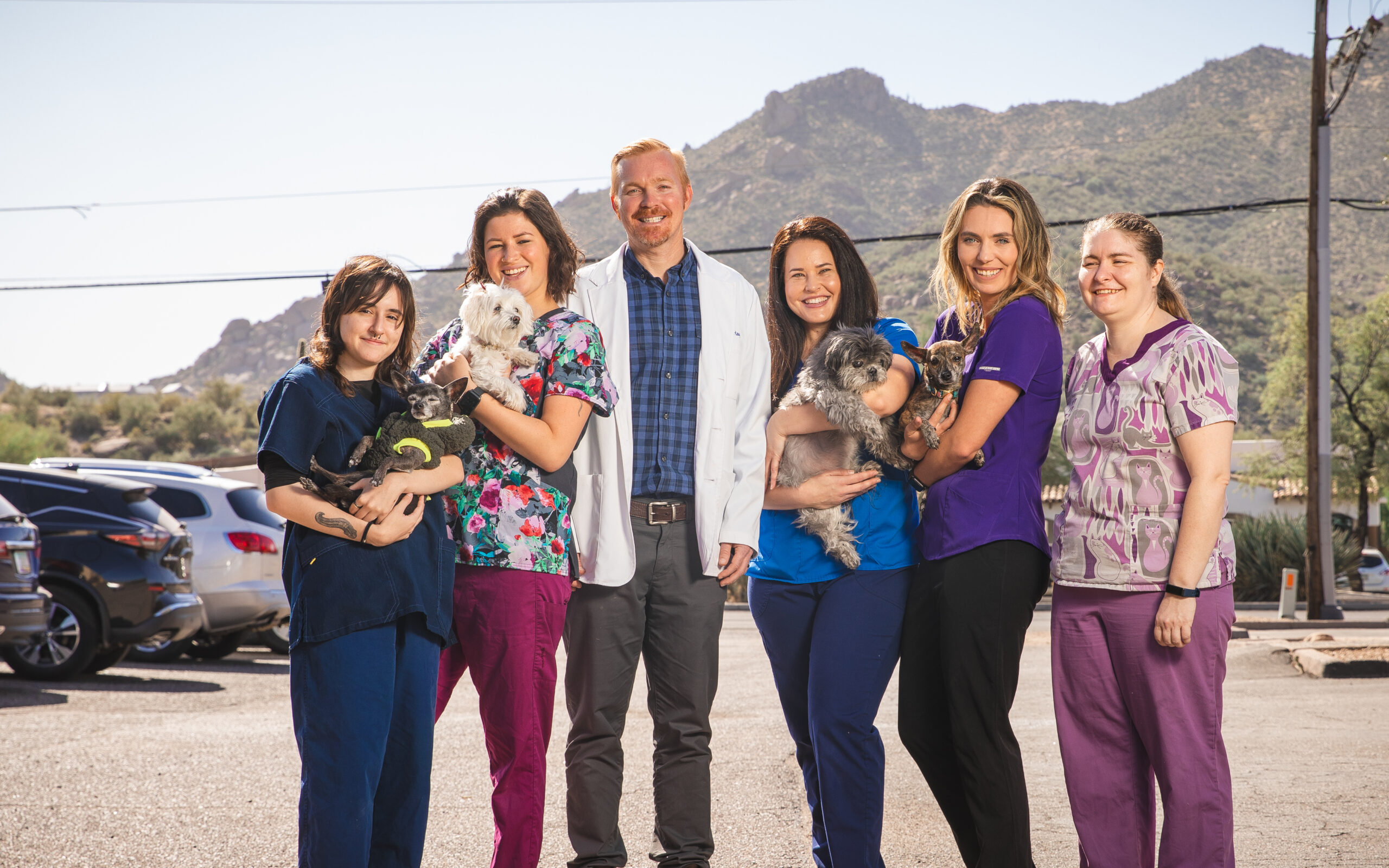
Dental pain can make a cat more sensitive to handling, and travel to the clinic can add stress. At Desert Forest Animal Hospital, Dr. Quinn Bauer, DVM, is an individually Fear Free Certified veterinarian with a professional interest in veterinary dentistry. Our team considers a cat’s comfort, handling tolerance, medical history, and anesthesia needs when planning care.
Learn more about our Fear Free approach for cats and dogs and what to expect as a new client. For planned dental procedures, you can also review our veterinary payment and financing options.
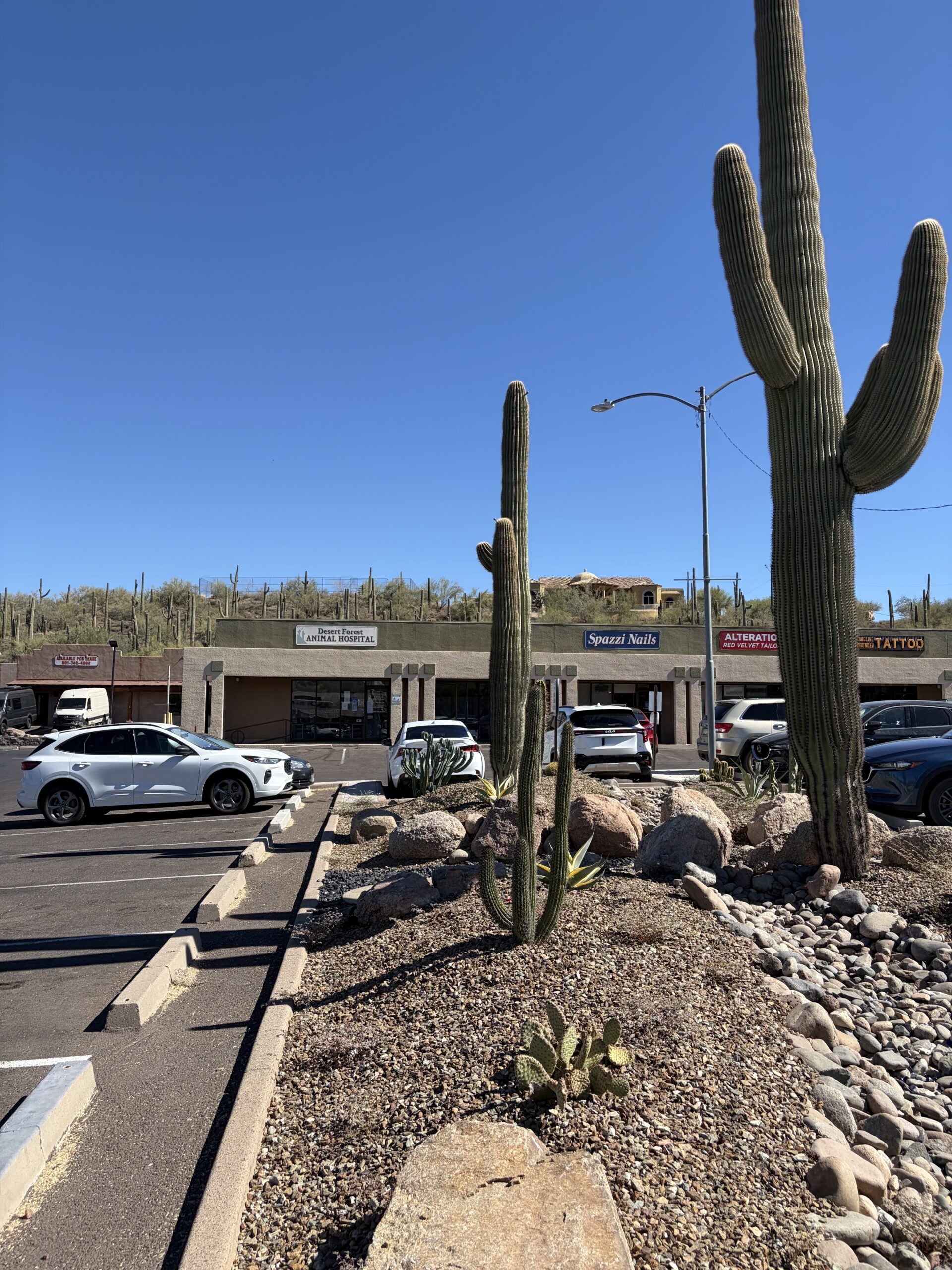
We welcome cat owners from Cave Creek, Carefree, Desert Mountain, Tatum Ranch, Desert Hills, and North Scottsdale, with appointments at our single hospital on East Cave Creek Road.
Frequently asked questions about tooth resorption in cats
Is feline tooth resorption the same as a cavity?
No. Both can damage teeth, but feline tooth resorption involves progressive destruction of the tooth’s mineralized structure through a different process. It is not something that can simply be fixed with a routine filling.
Can an indoor-only cat develop tooth resorption?
Yes. Indoor cats can develop tooth resorption. There is no evidence that staying indoors eliminates the risk.
Why does my cat eat normally if a tooth is painful?
Cats may continue eating because the drive to eat is strong and because they can change how they chew. Continuing to eat does not establish that the mouth is pain-free.
Can a dental cleaning alone treat resorptive lesions?
No. Cleaning may address plaque and tartar, but painful tooth resorption generally requires treatment directed at the affected tooth, guided by dental radiographs.
Can it affect more teeth later?
Yes. Treating one painful tooth does not prevent future lesions in other teeth. Regular dental examinations remain important after the initial treatment.
How do I know if my cat needs prompt care?
Call a veterinarian promptly if your cat is not eating, has persistent drooling, obvious oral pain, facial swelling, oral bleeding, or suddenly changes its chewing habits. A cat that has not eaten for approximately 24 hours should be evaluated promptly, particularly if it is overweight or has another medical condition. Do not wait for a routine dental cleaning when your cat appears unwell.
Schedule a feline dental evaluation in Cave Creek, AZ
If your cat is chewing differently, avoiding dry food, drooling, or simply due for a dental assessment, our team can help you determine the appropriate next step.
Desert Forest Animal Hospital
6554 E Cave Creek Road, Cave Creek, AZ 85331
Call: (480) 488-2010
Monday–Friday, 9:00 a.m.–6:00 p.m. | Closed weekends
Learn about cat and dog dental care · Request an appointment
This article is educational and does not replace an examination or an individualized veterinary treatment plan.
Veterinary references: Cornell Feline Health Center: Tooth Resorption · Merck Veterinary Manual: Tooth Resorption · 2025 FelineVMA Feline Oral Health and Dental Care Guidelines · American Veterinary Dental College position statement