

Hip Dysplasia in Dogs: Symptoms, Diagnosis, Medications, Surgery & Every Treatment Option
Dog hip dysplasia is not automatically a sentence to lifelong pain or surgery. Many dogs can enjoy good mobility with individualized pain management, weight control, rehabilitation, and appropriate care.
But treatments are not interchangeable. NSAIDs, Librela, Adequan, physical therapy, supplements, regenerative injections, and hip surgery have different purposes, different evidence, and different risks.
This comprehensive guide explains what actually helps, what remains uncertain, which medications must never be combined, and when early surgical treatment may change a puppy’s future.
Desert Forest Animal Hospital provides orthopedic examinations and diagnostic radiography for dogs in Cave Creek, Carefree, Desert Mountain, and nearby North Scottsdale communities. Advanced hip surgery may require specialist referral.
Medical review: Bryan Hayter, DVM | Owner & Medical Director
Last medically reviewed: November 16, 2026

What Is Hip Dysplasia in Dogs?
Quick answer: Canine hip dysplasia is a developmental orthopedic condition in which the ball of the femur and the socket of the pelvis do not fit together securely. Excessive hip-joint laxity can allow abnormal movement and partial displacement (subluxation), leading over time to inflammation, cartilage damage, painful osteoarthritis, and muscle loss.
A normal hip is a ball-and-socket joint. The rounded femoral head sits within the acetabulum, supported by a joint capsule, ligamentous structures, and surrounding muscles.
In a dysplastic hip, the socket may be shallow, the joint may be abnormally loose, or the femoral head may not remain adequately covered. Repeated abnormal loading contributes to degenerative joint disease.
Hip dysplasia is not the same as arthritis. Hip dysplasia is the structural or developmental abnormality; osteoarthritis is a frequent consequence. A young dog may have substantial hip laxity with little visible arthritis. An older dog may have significant arthritis despite a history of relatively subtle symptoms.
The severity of X-ray changes and the severity of pain do not always match. Treatment decisions should consider the dog’s actual mobility, daily activities, pain, age, and overall health.
What Causes Hip Dysplasia?
Hip dysplasia is multifactorial, with genetics being a major contributor. Environmental and developmental factors can influence its expression and severity.
- Genetic predisposition: commonly associated with large and giant breeds, but dogs of almost any breed and size can be affected.
- Growth and nutrition: excess calorie intake and overly rapid growth can worsen orthopedic stress in susceptible puppies.
- Body weight: excess weight increases loading on an already unstable or arthritic joint.
- Exercise and muscle conditioning: appropriate activity supports joint function, while injury and poorly matched activity may aggravate symptoms.
Breeds frequently associated with the condition include German Shepherds, Labrador Retrievers, Golden Retrievers, Rottweilers, Saint Bernards, and many other large dogs. Smaller dogs are not exempt.
Can Hip Dysplasia Start in Puppies?
Yes. Hip laxity begins during growth, sometimes long before severe pain becomes apparent. This matters because certain corrective procedures are available only during narrow developmental windows.
An at-risk puppy should not have to wait until arthritis becomes visible to receive a proper orthopedic evaluation.
What Are the Signs of Hip Dysplasia?
Signs in Puppies and Young Dogs
- Bunny-hopping when running
- Reluctance to jump or climb stairs
- Difficulty rising after rest
- Swaying or abnormal hindquarter movement
- Exercise intolerance
- Hind-limb lameness
- Pain when the hips are extended
- Reduced interest in active play
Signs in Mature and Senior Dogs
- Stiffness after sleeping
- Slower walks or shortened strides
- Difficulty entering a car
- Hesitation on slick floors
- Less willingness to jump
- Hindquarter muscle loss
- Intermittent or persistent limping
- Difficulty squatting or positioning to eliminate
When is limping urgent? New inability to bear weight, severe pain, marked swelling, or a rapidly worsening limp warrants prompt veterinary evaluation. Major trauma, suspected fracture or complete traumatic hip luxation, paralysis, collapse, or inability to stand requires immediate emergency assessment.
A suddenly painful hind limb may have causes other than hip dysplasia. Do not assume an established hip diagnosis explains every new episode of lameness.
Other Conditions That Can Look Like Hip Dysplasia
Hind-leg limping may originate from cranial cruciate ligament disease, patellar luxation, lumbosacral disease, spinal or neurologic disorders, muscle injuries, fractures, or other causes.
In Arizona, Valley Fever involving bone is another important differential diagnosis for unexplained lameness or painful bone lesions. It is not diagnosed from limping alone.
Learn more about why dogs limp and when to seek care and Valley Fever in Arizona dogs .
How Do Veterinarians Diagnose Hip Dysplasia?
Diagnosis combines clinical history, gait and orthopedic examination, and properly positioned radiographs. Neither a bunny-hopping gait nor an X-ray alone gives the full clinical picture.
Medical and Activity History
The veterinarian reviews age, breed, previous injuries, symptom duration, exercise tolerance, current medications, and changes in daily function. Videos recorded at home can be useful when lameness is intermittent.
Orthopedic and Neurologic Examination
Evaluation may include gait observation, joint range of motion, hip extension, pain localization, muscle condition, and selected hip-laxity maneuvers. An Ortolani examination, sometimes performed under sedation, may help identify excessive joint laxity.
Digital Hip Radiographs
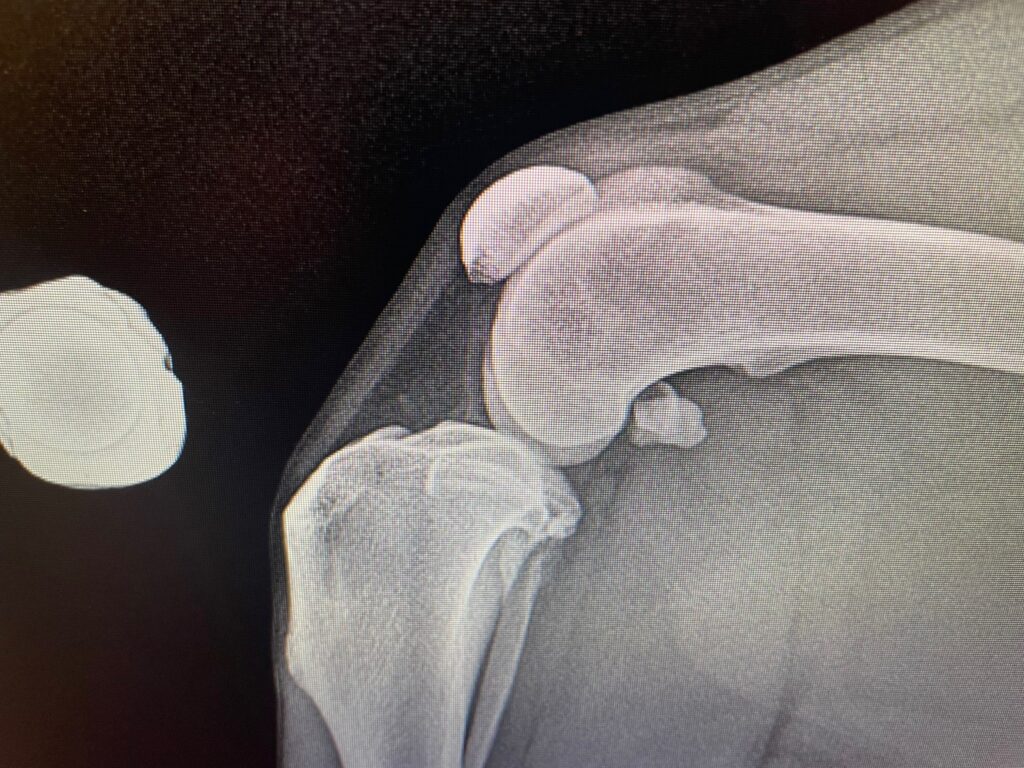
Appropriate pelvis and hip views help assess femoral-head coverage, subluxation, joint congruity, and osteoarthritis. Sedation is often needed to achieve positioning that supports reliable interpretation.
Screening and Treatment Planning
PennHIP evaluates hip laxity and can be performed in young puppies by appropriately trained professionals. OFA hip certification is generally finalized at 24 months or older, although preliminary screening is possible earlier.
What Do Hip X-Rays Show?
Veterinarians assess the relationship between the femoral head and socket, acetabular depth, femoral-head coverage, degenerative remodeling, osteophytes, and other joint changes.
The correct imaging technique matters. A dog may have pathologic laxity before conventional X-rays demonstrate advanced arthritis.
In mature dogs with multiple pain sources, hip abnormalities may coexist with knee disease or spinal disorders. Accurate diagnosis prevents treatment of the wrong condition.
DFAH offers digital veterinary X-rays and in-house laboratory diagnostics when indicated.
What Is the Best Treatment for Canine Hip Dysplasia?
For many adult dogs with painful hip arthritis, first-line medical care consists of maintaining a lean body condition, controlled low-impact activity, and an appropriately selected veterinary NSAID. These are supported by substantially stronger evidence than most supplements and alternative therapies.
Additional medications, physical rehabilitation, injections, and surgical treatment may improve outcomes in selected patients. Early surgical assessment is particularly important in affected puppies.
| Treatment | Primary Role | Evidence / Priority |
|---|---|---|
| Lean body condition | Reduces joint loading and metabolic inflammation | Foundational; strong recommendation |
| Veterinary NSAIDs | Relieve osteoarthritis pain and inflammation | First-line; strong clinical evidence |
| Controlled exercise | Preserves muscle and functional mobility | Foundational; strong recommendation |
| Marine omega-3 EPA/DHA | Supports anti-inflammatory nutritional management | Meaningful supporting evidence |
| Rehabilitation | Improves strength, motion and conditioning | Important individualized adjunct |
| Librela | Anti-NGF treatment for OA pain | Effective option; updated safety considerations |
| Adequan Canine | Injectable polysulfated glycosaminoglycan | Approved adjunct; evidence less robust than NSAIDs |
| Gabapentin / amantadine | Additional pain-modifying therapy | Selected cases; variable evidence |
| PRP / stem-cell products | Investigational or emerging joint interventions | Limited and heterogeneous studies |
| Hip surgery | Corrects selected structural problems or removes/replaces painful joint surfaces | Can provide major benefit in properly selected dogs |
Why Weight Management Matters So Much
Excess fat contributes to inflammatory signaling, while excess body mass increases mechanical forces through painful hips. Maintaining an appropriate body condition is often one of the most valuable long-term interventions.
This does not mean restricting food indiscriminately. Puppies require complete, growth-appropriate diets, while older dogs require enough high-quality nutrition to maintain muscle. Weight management should consider both body-condition and muscle-condition scores.
Exercise: Controlled, Not Eliminated
For stable chronic arthritis, regular low-impact exercise is generally preferable to prolonged inactivity. Short leash walks, controlled strengthening, and appropriate water-based exercise may be helpful.
Sprinting, repetitive jumping, rough play, and high-impact activities may worsen discomfort in some dogs. Acute injuries and postoperative patients need different restrictions determined by the veterinarian.
Medications for Hip Dysplasia and Arthritis in Dogs
Medication is directed primarily at pain and inflammation. Most medications do not correct the underlying shape of a dysplastic hip. Selection requires assessment of other medical conditions, monitoring needs, and the individual dog’s response.
1. NSAIDs: A First-Line, Often Effective Treatment
Nonsteroidal anti-inflammatory drugs (NSAIDs) remain a cornerstone of canine osteoarthritis management. They reduce prostaglandin-mediated pain and inflammation and can provide clinically meaningful improvements in comfort, walking, and daily activity.
Common veterinary options include carprofen, meloxicam, firocoxib, deracoxib, and other approved medications. The best choice depends on the patient. No single NSAID is universally most effective or safest for every dog.
For many patients, a properly chosen oral NSAID is a relatively straightforward and effective treatment compared with more invasive or costly interventions. Long-term use may be appropriate when benefit outweighs risk and monitoring is satisfactory.
Safety: NSAIDs can cause vomiting, diarrhea, gastrointestinal ulceration or bleeding, kidney injury, and liver injury. Risk may be higher with dehydration, certain concurrent medications, or existing disease.
- Obtain an appropriate history, examination, and baseline laboratory evaluation.
- Reassess tolerability and functional improvement after starting treatment.
- Repeat examinations and laboratory monitoring as clinically indicated.
- Use the prescribed dose; do not increase, combine, or switch drugs independently.
- Contact the veterinarian promptly for vomiting, black stools, loss of appetite, marked lethargy, jaundice, or changes in drinking or urination.
Critical medication rule: Never combine an NSAID with another NSAID or a corticosteroid such as prednisone unless a veterinarian specifically directs a carefully managed transition. Such combinations substantially increase the risk of gastrointestinal ulceration, bleeding, perforation, and other serious complications.
A veterinarian-directed washout period may be needed when changing medications.
2. Galliprant (Grapiprant): A Different Type of NSAID
Galliprant is a veterinary NSAID that selectively antagonizes the prostaglandin E2 EP4 receptor rather than directly inhibiting cyclooxygenase enzymes. It is approved for control of pain and inflammation associated with osteoarthritis in dogs.
This newer mechanism makes it a useful option to consider in certain patients. However, it is not accurate to say that Galliprant is proven safer for dogs with established kidney or liver disease.
Important FDA safety update: Galliprant’s U.S. labeling was strengthened in December 2024 to state that its safety profile is similar to other veterinary NSAIDs. Gastrointestinal, kidney, and liver adverse effects remain possible, and patients with preexisting renal or hepatic disease require particular caution.
Some clinicians may find a traditional NSAID provides a more satisfactory response in a particular patient, but Galliprant is not established as uniformly weaker. Comparative effectiveness varies, and a predictable ranking of all NSAIDs is not supported.
Galliprant must not be combined with another NSAID or corticosteroid. It should not be presented as a kidney-safe substitute.
3. Librela (Bedinvetmab): Benefits and Important Safety Updates
Librela is an injectable monoclonal antibody directed against nerve growth factor (NGF). It is approved for control of pain associated with osteoarthritis in dogs and is generally administered approximately once monthly by a veterinarian.
Some dogs experience substantial improvement in mobility and comfort. Librela does not reconstruct damaged hips or reverse dysplasia, and pain reduction should not be mistaken for restoration of joint stability.
What Has Changed About Librela Safety?
Following its U.S. introduction, the FDA evaluated post-approval adverse-event reports. In 2025, U.S. labeling was updated to include reports of ataxia, weakness, proprioceptive deficits, paresis, paralysis, seizures, urinary changes, lameness, and other symptoms. Some reports involved death or euthanasia.
These are reported events, not proof that Librela caused every event. Spontaneous reporting cannot reliably establish incidence or causation, particularly in older dogs with concurrent diseases.
European regulators also reviewed rare musculoskeletal concerns in 2026. Updated information includes very rare reports involving new or increased joint pain or swelling, abnormal periarticular bone formation, and other bone or joint disorders. Some cases have involved fractures.
Reports mentioning joint luxation or spinal injury should prompt careful investigation, but those specific outcomes should not be presented as definitively caused by Librela without stronger evidence.
Practical Precautions Before and After Librela
- Review baseline gait, neurologic function, joint stability, and other diagnoses.
- Discuss the current client information sheet before each injection.
- Monitor for new weakness, ataxia, difficulty standing, seizures, urinary changes, or worsening lameness.
- Reassess new joint swelling or pain rather than automatically attributing it to ordinary arthritis.
- Increase exercise gradually if pain relief allows the dog to become more active. Sudden vigorous activity can increase the risk of injury in an unconditioned dog.
The FDA’s updated labeling and European pharmacovigilance information should be part of the individual risk-benefit discussion. The decision to use or continue Librela belongs with the treating veterinarian and informed owner.
Official information: FDA Librela safety communication and UK 2026 musculoskeletal safety update .
4. Gabapentin: An Adjunct, Not a Replacement for Core Arthritis Care
Gabapentin is widely used in veterinary multimodal pain plans and may be considered when neuropathic or centrally amplified pain is suspected.
However, high-quality evidence for meaningful analgesia from gabapentin alone in chronic canine osteoarthritis remains limited. Sedation, ataxia, and reduced coordination can occur, complicating mobility assessment.
Gabapentin may have a role in selected combination plans, but is not a reliable substitute for an effective first-line anti-inflammatory strategy.
5. Amantadine and Other Adjuvant Pain Medications
Amantadine acts through NMDA-receptor mechanisms and may be considered as an adjunct in dogs with persistent or sensitized chronic pain. Evidence is limited but supports considering it in selected cases.
Other specialist-directed options may include pregabalin, certain antidepressants, or short-term analgesic combinations. These choices require an individualized diagnosis and monitoring plan.
6. Tramadol: Why Its Use Has Declined
Oral tramadol was once prescribed frequently for canine orthopedic pain. Its routine use for chronic canine osteoarthritis has decreased as better research has shown disappointing effectiveness.
A randomized, blinded, placebo-controlled canine osteoarthritis study published in 2018 found no meaningful benefit for pain and joint dysfunction from oral tramadol alone.
AAHA pain-management guidelines now place tramadol among lower-priority options for chronic canine pain. Its role may still be considered in exceptional multimodal circumstances, but it should not be presented as equivalent to NSAIDs.
7. Corticosteroids: Selected Roles, Important Limitations
Corticosteroids such as prednisone are powerful anti-inflammatory drugs, but they are generally not preferred as routine long-term treatment of degenerative canine hip arthritis.
Potential concerns include increased thirst and urination, increased appetite, panting, muscle wasting, susceptibility to infection, and other systemic complications. Repeated or inappropriate intra-articular steroid use may also have detrimental effects on cartilage.
They may be considered for particular indications when NSAIDs are unsuitable, but require a carefully reasoned plan. NSAIDs and corticosteroids must not be used together.
8. Doxycycline and Matrix Metalloproteinases
Doxycycline has been investigated for possible disease-modifying effects beyond its antimicrobial activity. Experimental work suggests it may inhibit certain matrix metalloproteinases (MMPs), enzymes involved in cartilage matrix degradation.
A small randomized study involving 25 dogs with hip osteoarthritis reported improvements in selected clinical measures with doxycycline.
However, larger and higher-quality veterinary evidence has not established doxycycline as a reliably effective osteoarthritis treatment or proven cartilage-preserving therapy.
Clinical position: Doxycycline should not be routinely prescribed for hip dysplasia simply to inhibit MMPs. Unnecessary antibiotic exposure has adverse-effect and antimicrobial-stewardship implications. This remains an investigational or exceptional off-label consideration, not standard arthritis care.
9. Topical Lidocaine Cream or Patches
Lidocaine can provide local surface or regional analgesia in appropriate veterinary applications. However, topical lidocaine cream is not an established treatment for pain arising deep within the canine hip joint.
Skin penetration does not guarantee meaningful delivery into a deep osteoarthritic hip. Accidental licking, chewing, or ingestion of topical formulations or patches may cause toxicity.
Do not apply human topical pain creams, mixed anesthetic preparations, or medicated patches to a dog without specific veterinary instructions.
Physical Therapy and Home Care for Hip Dysplasia
Physical rehabilitation may improve muscle strength, stability, range of motion, confidence, and functional activity. A professional rehabilitation assessment can determine which movements are appropriate and which should be avoided.
Controlled Leash Walking
Short, frequent, comfortable walks can help maintain conditioning. Distance, pace, surface, and rest periods should be adjusted to the dog’s response. Longer exercise is not necessarily better.
Underwater Treadmill and Water Therapy
Water buoyancy reduces effective weight bearing while allowing controlled movement. An underwater treadmill permits graded resistance and assisted walking. Unsupervised swimming is not appropriate for every painful, weak, or postsurgical dog.
Passive Range of Motion and Bicycle Movements
Gentle therapist-directed flexion and extension or bicycle-style hind-leg movements may be incorporated for selected patients. These should be taught by a rehabilitation professional and performed without forcing the joint or provoking pain. They are contraindicated in some unstable injuries and postoperative situations.
Strengthening and Balance Exercises
Controlled sit-to-stand work, appropriate weight shifts, gradual inclines, cavaletti rails, and supported balance exercises may help maintain muscles that support the hips. Progression should be individualized.
Cold and Heat Therapy
Cold may help manage acute inflammatory flare-ups or certain postoperative conditions. Gentle warmth may ease chronic stiffness before movement. Use protective barriers, avoid excessive temperatures, and follow veterinary directions to prevent injury.
Massage and Soft-Tissue Techniques
Appropriate massage may help relieve compensatory muscle tension and support comfort. It should not be applied aggressively over an unstable, acutely injured, swollen, or severely painful hip.
Acupuncture
Acupuncture is used as an adjunct for chronic musculoskeletal discomfort. Some patients may benefit, but study quality and overall evidence remain variable. It should not replace diagnosis, effective analgesia, or surgical referral when indicated. DFAH does not currently advertise acupuncture as an on-site service.
Therapeutic Laser / Photobiomodulation
Cold-laser therapy may be incorporated into some rehabilitation programs. Protocols and published outcomes vary, and evidence is not sufficient to establish it as a consistently effective standalone treatment. It does not correct hip laxity.
Home Modifications That Often Help
- Nonslip runners and traction mats on tile floors
- Ramps where the dog can use them safely
- Supportive, accessible sleeping areas
- Appropriately fitted mobility harnesses
- Maintaining nails and paw hair for traction
- Restricting repeated uncontrolled stair use if painful
- Consistent exercise rather than strenuous weekend activity
- Providing shade and avoiding hot-pavement exercise in Arizona
Additional rehabilitation options include carefully selected therapeutic ultrasound, transcutaneous electrical nerve stimulation, pulsed electromagnetic field therapy, and extracorporeal shockwave therapy. Their evidence and appropriate indications vary; they should be considered adjuncts rather than proven replacements for foundational management.
Can Supplements or Injections Help Dogs With Hip Dysplasia?
Some supplements and injectable therapies may contribute to multimodal treatment, but they differ markedly in quality of evidence. A plausible biochemical mechanism is not the same as demonstrated clinical benefit.
Adequan Canine: Polysulfated Glycosaminoglycan
Adequan Canine is an FDA-approved injectable polysulfated glycosaminoglycan (PSGAG) for specified degenerative and traumatic arthritis indications in dogs. It is given by a veterinarian according to an approved treatment regimen.
PSGAGs have proposed effects on cartilage metabolism and joint inflammation. Evidence supports considering them as an adjunct, particularly in some earlier-stage arthritic cases, but they are not a cure for abnormal hip anatomy.
Adequan has its own safety precautions, including considerations involving bleeding disorders, anticoagulant treatments, and certain organ conditions. It should be prescribed according to the patient’s clinical needs.
High-EPA/DHA Fish Oil
Marine-derived omega-3 fatty acids, especially EPA and DHA, have stronger supportive clinical evidence in canine osteoarthritis than many popular joint supplements.
Therapeutic diets or veterinary-directed fish-oil supplementation may help reduce inflammatory signaling and improve some measures of comfort or mobility.
High-dose does not mean unlimited-dose. Fish-oil labels vary greatly in actual EPA/DHA concentration. Excess supplementation may cause gastrointestinal symptoms, extra calorie intake, and other concerns. The veterinarian should calculate an appropriate total EPA/DHA intake based on the diet, body weight, and medical history.
Glucosamine, Chondroitin and Avocado-Soybean Unsaponifiables
Glucosamine and chondroitin are commonly included in canine joint-support products. Some formulations also contain avocado-soybean unsaponifiables (ASU), undenatured type II collagen, or other ingredients.
Although these compounds have biologically plausible roles in cartilage metabolism, systematic reviews have generally found weak or inconsistent evidence for meaningful pain relief from glucosamine/chondroitin alone.
Combination products containing ASU may be considered as optional adjuncts, but no specific combination should be described as reliably regenerating cartilage or correcting dysplasia.
Turmeric and Curcumin
Curcumin, a component of turmeric, has anti-inflammatory effects in laboratory studies. Veterinary clinical evidence remains limited and formulations differ substantially in absorption and bioavailability.
Turmeric should not replace established pain treatment. Concentrated preparations can cause digestive problems and may interact with medications. Avoid using human formulations without veterinary review.
Antioxidants and Other Nutritional Adjuncts
Vitamin E and other antioxidants, green-lipped mussel products, undenatured type II collagen, Boswellia, and selected nutritional combinations have been studied for joint health.
Evidence varies by ingredient and formulation. An adequate, balanced diet is more important than indiscriminately adding multiple supplements, especially in dogs with concurrent disease.
Platelet-Rich Plasma (PRP)
PRP is prepared from concentrated platelets obtained from blood. It contains growth factors and other signaling molecules that may influence joint inflammation and tissue responses.
Small studies of intra-articular PRP in dogs with degenerative joint disease have reported improvements in selected pain and mobility outcomes. However, studies vary in patient selection, product preparation, injection frequency, and follow-up duration.
PRP has not been proven to reconstruct a dysplastic socket or reliably reverse advanced hip arthritis. It should be considered a specialized adjunct, not a universal first-line treatment.
Stem Cells and Other Regenerative Treatments
Mesenchymal stromal/stem-cell products are being investigated for effects on joint inflammation and osteoarthritis symptoms. Products may differ in tissue source, processing, cell composition, manufacturing standards, and administration route.
Early clinical studies are promising in selected settings, but many are small and short-term. Standardization and high-quality comparative evidence remain limited.
These therapies have not been shown to reliably produce a normal hip joint in dogs with dysplasia. Product regulatory status, cost, adverse events, and the qualifications of the treating specialist matter.
Hyaluronic Acid and Other Joint Interventions
Other specialist-directed interventions may include intra-articular hyaluronic acid, autologous protein preparations, and selected joint injections. Evidence for hip arthritis is variable, and every invasive injection carries procedural considerations.
These treatments should not be advertised as routinely available at DFAH unless current staffing, equipment, and service availability are separately confirmed.
Practical treatment hierarchy: Prioritize effective pain control, lean body condition, appropriate exercise, and diagnosis-specific rehabilitation before spending heavily on treatments with uncertain clinical benefit.
When Does Hip Dysplasia Require Surgery?
Surgery may be particularly valuable for young dogs with severe hip laxity, active dogs with substantial dysfunction, or patients whose comfort and mobility remain inadequate despite well-designed medical treatment.
Four important procedures are juvenile pubic symphysiodesis (JPS), double or triple pelvic osteotomy (DPO/TPO), femoral head and neck ostectomy (FHO), and total hip replacement (THR).
| Procedure | Typical Candidate | Purpose / Limitations |
|---|---|---|
| JPS | Very young puppies, ideally approximately 10–18 weeks | Alters pelvic growth to improve future femoral-head coverage; narrow age window |
| DPO / TPO | Selected immature dogs, often under 8–10 months, without established hip arthritis | Repositions the socket to improve hip coverage and stability |
| FHO / FHNE | Selected painful cases at various ages | Removes the femoral head and neck; forms a functional fibrous articulation rather than a normal ball-and-socket joint |
| THR | Suitable skeletally mature dogs with substantial hip disease | Replaces joint components; can restore excellent function, but requires specialty surgery and follow-up |
1. Juvenile Pubic Symphysiodesis (JPS)
This is likely the early puppy procedure sometimes confused with a hip replacement. JPS is not a hip replacement.
It is performed in carefully selected very young puppies, generally before approximately 18–20 weeks of age, with the greatest potential benefit when performed early.
The surgeon closes a portion of the pelvic growth plate to alter growth of the pelvis, potentially improving femoral-head coverage as the puppy matures.
Because symptoms may not yet be obvious, early screening is important in genetically at-risk puppies. Referral must occur promptly because the therapeutic window closes quickly.
2. Double or Triple Pelvic Osteotomy (DPO/TPO)
DPO and TPO are procedures designed to improve coverage of the femoral head by surgically rotating a portion of the pelvis.
They are generally considered for selected young dogs with hip laxity but without established degenerative arthritic changes.
These procedures are typically performed in immature dogs, often before approximately 8–10 months of age, depending on skeletal development, degree of instability, and specialist assessment.
They are more invasive than JPS and require orthopedic surgical expertise and suitable fixation equipment.
3. Femoral Head and Neck Ostectomy (FHO/FHNE)
FHO removes the painful femoral head and neck, eliminating direct contact between the diseased ball and socket. A functional fibrous articulation develops during healing.
FHO can be appropriate for selected patients with severe pain, hip injury, or significant joint disease. Outcomes depend on body size, muscle strength, rehabilitation, and other factors.
Small, well-muscled dogs may do particularly well, but FHO may also be selected in larger patients. Some degree of altered limb mechanics or residual dysfunction may remain.
Active postoperative rehabilitation is often important for developing useful limb function.
4. Total Hip Replacement (THR)
Total hip replacement removes and replaces the affected ball and socket with prosthetic components. It is a specialized procedure, not a routine general-practice operation.
In suitable patients treated by an experienced orthopedic surgeon, THR can offer excellent pain relief and restoration of near-normal joint function.
Nevertheless, it is major surgery with meaningful potential complications, including prosthetic luxation, infection, implant loosening, femoral fracture, nerve injury, and need for revision surgery.
Cost, surgical expertise, patient size, anatomy, medical conditions, postoperative restrictions, and caregiver ability to manage recovery must all be considered.
THR is generally reserved for appropriately selected patients rather than recommended simply because an X-ray shows dysplasia. It may be a better long-term option than FHO for some large or highly active dogs.
Less Common or Historical Surgical Approaches
Other procedures, such as pectineal myectomy, joint capsule denervation, and selected corrective osteotomies, have been described. Their use is more limited and should be discussed only in the context of specialist evaluation and current evidence.
Important about DFAH: Desert Forest Animal Hospital can evaluate orthopedic pain and perform diagnostic testing, but availability of JPS, DPO/TPO, FHO, or total hip replacement on-site should never be assumed. Advanced orthopedic procedures may require referral.
Learn about DFAH veterinary surgery evaluations and referrals .
How Is a Hip Dysplasia Treatment Plan Selected?
Very Young Puppy
Screen for pathologic hip laxity when risk factors are present. Consider early specialist referral for JPS while the short age window remains open.
Older Puppy / Adolescent
Assess joint laxity and early arthritic change. DPO/TPO may be considered in selected dogs without established degeneration.
Adult Dog With Manageable Pain
Prioritize lean body condition, appropriate NSAID therapy, controlled exercise, omega-3 nutrition, rehabilitation and reassessment.
Adult Dog With Persistent Severe Dysfunction
Reassess for other pain sources, optimize medical treatment, and discuss orthopedic surgical consultation for THR or selected salvage procedures.
How Do You Know Whether Treatment Is Working?
Improvement should be measured by more than whether the dog appears happier for a day or two. Useful measures include:
- Ease of standing after rest
- Willingness to walk at a comfortable pace
- Ability to use steps or get into a car
- Quality of sleep and resting behavior
- Muscle preservation and body condition
- Frequency and severity of lameness
- Medication tolerability and laboratory findings
- Owner-recorded quality-of-life scores or mobility videos
Structured pain tools such as the Canine Brief Pain Inventory or Liverpool Osteoarthritis in Dogs questionnaire can help clinicians monitor changes over time.
Treatment is a cycle of assessment, intervention, monitoring, and adjustment—not a fixed collection of supplements prescribed indefinitely.
Can Hip Dysplasia Be Prevented?
Genetic predisposition cannot be completely eliminated by diet, exercise, or supplements. Responsible breeding programs and hip screening are important ways to reduce risk.
Large-breed puppies should receive complete, growth-appropriate nutrition without overfeeding, unnecessary calcium supplementation, or forced rapid weight gain. Appropriate conditioning and avoidance of excess body weight support healthy musculoskeletal development.
Hip Dysplasia Frequently Asked Questions
Can a dog live a normal life with hip dysplasia?
Many dogs maintain a good quality of life with appropriate weight management, pain treatment, controlled exercise, rehabilitation, and follow-up. Some require surgery for satisfactory long-term function. Prognosis varies considerably.
Does hip dysplasia always require surgery?
No. Many adult dogs can be managed medically. Surgery is considered according to age, instability, pain, activity needs, and response to treatment. Very young puppies merit prompt evaluation because some preventive surgical windows close early.
Are NSAIDs the best first medication for hip arthritis?
For many dogs without contraindications, veterinary NSAIDs are among the most predictably effective first-line treatments for osteoarthritis pain. The appropriate drug and monitoring schedule depend on the individual patient.
Is Galliprant safer for dogs with kidney or liver disease?
It has a different mechanism from conventional COX-inhibiting NSAIDs, but it should not be regarded as proven safe for dogs with preexisting kidney or liver disease. FDA labeling specifically warns about gastrointestinal, renal, and hepatic adverse effects.
Should my dog receive Librela?
Librela can provide meaningful osteoarthritis pain relief in selected dogs. It also has important updated neurologic and musculoskeletal safety information. Discuss baseline mobility, concurrent disease, alternatives, potential adverse events, and monitoring with your veterinarian.
Can Librela cause joint damage or spinal injury?
Post-approval reports have included neurologic signs, new joint problems, and other musculoskeletal events. European regulators updated safety information in 2026. However, individual reports do not automatically establish that the medication caused a specific spinal injury or traumatic luxation. New symptoms require veterinary assessment.
Can I give prednisone with carprofen or meloxicam?
No. NSAIDs and corticosteroids must not be combined in routine use because of serious gastrointestinal and other risks. A veterinarian must direct any medication transition and appropriate washout period.
Does gabapentin work for dog hip dysplasia?
Gabapentin may be used as an adjunct in selected multimodal plans, particularly when neuropathic or centrally amplified pain is suspected. Evidence for strong pain relief from gabapentin alone in canine osteoarthritis is limited.
Is tramadol still recommended for canine arthritis?
Routine oral tramadol has fallen out of favor because controlled studies have shown limited effectiveness for chronic canine osteoarthritis. It is generally a lower-priority option than established therapies.
Does Adequan rebuild damaged hip cartilage?
Adequan has potential effects on cartilage-related joint processes and is used as an adjunct for selected arthritic dogs. It has not been demonstrated to reliably rebuild a normal hip joint or reverse established hip dysplasia.
Are fish oil and turmeric equally effective?
No. Marine omega-3 EPA/DHA has more consistent supportive clinical evidence for canine osteoarthritis than turmeric or most antioxidant supplements. Dose, formulation, and safety still require veterinary review.
Can PRP or stem cells cure hip dysplasia?
No regenerative treatment has been proven to reliably reconstruct abnormal hip anatomy. PRP and stem-cell approaches have shown some promising pain-related outcomes in small studies, but evidence is limited and products differ.
What is the hip surgery for puppies under six months?
Juvenile pubic symphysiodesis (JPS) is performed very early, usually before about 18–20 weeks. Double or triple pelvic osteotomy (DPO/TPO) is considered in selected somewhat older puppies without established hip arthritis. Neither procedure is a hip replacement.
What is the difference between FHO and total hip replacement?
FHO removes the femoral head and neck to create a functional fibrous articulation. Total hip replacement installs prosthetic joint components to restore ball-and-socket mechanics. Suitability depends on size, functional goals, medical risks, cost, and surgeon assessment.
Can Valley Fever mimic hip dysplasia in Arizona?
Yes. Valley Fever involving bone can cause painful lameness. Some dogs may also have spinal, knee, or other musculoskeletal disorders. Examination, imaging, and targeted testing help distinguish these conditions.
When should my limping dog see a veterinarian?
Arrange an examination for persistent, recurrent, or worsening lameness, stiffness, or mobility changes. Seek urgent evaluation for inability to bear weight or marked pain. Major trauma, collapse, paralysis, or suspected severe joint displacement needs immediate emergency care.
Hip Dysplasia and Mobility Care at DFAH
Desert Forest Animal Hospital provides independent veterinary care for dogs from Cave Creek, Carefree, Desert Mountain, Terravita, Dove Valley Ranch, Tatum Ranch, and surrounding North Scottsdale communities.
Our team evaluates lameness, pain, and mobility concerns with history-taking, physical examination, diagnostic radiography, and appropriate laboratory tests.
Treatment discussions may include pain management, weight and nutrition recommendations, exercise modification, monitoring, and referral when advanced orthopedic assessment or procedures are indicated.
We do not advertise every medication, rehabilitation modality, injection, or advanced surgery described in this article as currently performed at DFAH. Actual treatment availability is confirmed during consultation.
For related information, visit Orthopedic FAQs for Dogs and Cats , Senior Pet Care , Veterinary Radiology , and Veterinary Surgery .
Veterinary References
This guide draws on veterinary surgical resources, consensus pain-management guidelines, regulatory safety updates, and peer-reviewed literature. The strength of evidence differs among treatments.
- American College of Veterinary Surgeons: Canine Hip Dysplasia — diagnosis, JPS, DPO/TPO, FHO and THR.
- American College of Veterinary Surgeons: Osteoarthritis in Dogs — multimodal treatment and surgery.
- 2022 AAHA Pain Management Guidelines — pharmacologic and nonpharmacologic priorities.
- COAST International Consensus Guidelines for Canine Osteoarthritis — staged OA management.
- FDA: NSAID Safety in Dogs and Cats — monitoring and drug interactions.
- FDA: Animal Drug Safety-Related Labeling Changes — Galliprant and Librela updates.
- UK Veterinary Medicines Directorate: 2026 Librela Safety Update .
- Budsberg et al., 2018: Tramadol for Canine Osteoarthritis .
- Doxycycline in Canine Hip Osteoarthritis: Small Clinical Trial .
- Advances in Pharmaceutical Treatment of Canine Osteoarthritis — evidence and limitations of proposed disease-modifying therapies.
- PRP and Stem-Cell Treatments in Canine Degenerative Hip Disease .
- Colorado State University: Canine Fish Oil Guidance .
Educational information only. No article can establish an individual dog’s diagnosis or replace veterinary assessment. Product labeling, evidence, and treatment availability may change.