
Local Veterinary Care · Cave Creek, Arizona
Veterinarian Near Desert Mountain & North Scottsdale, AZ
Living in Desert Mountain offers Sonoran Desert open space, scenic trails, golf-course landscapes, abundant wildlife and a lifestyle that often includes seasonal travel.
These surroundings create unique considerations for your dog’s or cat’s health. At Desert Forest Animal Hospital, we combine personalized veterinary care with an understanding of desert living, travel exposure and individual medical needs.
Veterinary Care Near Desert Mountain
Visit our independently owned hospital at 6554 E Cave Creek Road, Cave Creek, AZ for preventive care, dentistry, surgery, diagnostic testing and evaluation of many stable illnesses and injuries.
Same-day sick-pet evaluations are available during regular business hours when staffing, medical needs and appointment capacity permit.
Monday–Friday, 9 AM–6 PM. Closed Saturday and Sunday. We are not a 24-hour emergency hospital. See our urgent care and emergency referral guide.

Thoughtful Veterinary Care for Desert Mountain Families
Desert Mountain pets may spend time on irrigated golf-course turf, hike through native desert, encounter wildlife or travel between Arizona and other states. These differences matter when choosing preventive care and investigating illness.
A dog with irritated paws after a walk may have contacted landscaping products, but allergies, skin infections or foreign material can cause similar symptoms. A dog returning from another state may bring tick or mosquito exposure uncommon in central Arizona. A seasonal resident may need continuity between two veterinary hospitals.
We ask about your pet’s environment, daily routine, travel, previous testing and preventive medications because the right veterinary plan begins with the individual patient.
Veterinary Care for Desert Mountain Dogs and Cats
Desert Mountain’s combination of golf courses, native Sonoran Desert, trails, seasonal residents and wildlife presents a varied range of exposures. The Desert Mountain Club describes its extensive golf facilities and desert setting on its official golf website.
During your pet’s examination, useful questions may include:
- Does your dog hike on desert trails?
- Does your pet walk on irrigated turf?
- Have landscaping products recently been applied?
- Has your pet encountered wildlife?
- Does your pet drink from outdoor water sources?
- Where has your pet traveled recently?
- What parasite prevention does your pet receive?
- Has your pet developed symptoms after returning to Arizona?
We use the answers to guide discussions about vaccinations, parasite control, diagnostics and overall preventive care.
Golf-Course Landscaping and Turf Hazards for Desert Mountain Dogs
Professionally managed turf and irrigated landscaping are important parts of the surrounding environment. This does not mean normal golf-course landscaping is inherently dangerous or that every skin problem is related to a chemical exposure.
Depending on the products used, dogs may encounter fertilizers, herbicides, fungicides, pesticides or treated irrigation areas. Risk depends on the specific substance, concentration, dose, contact time and route of exposure.
Paw and Skin Irritation After Turf Contact
Some landscape products may irritate paws, skin or the gastrointestinal tract. Dogs may also ingest residues while licking their feet.
Signs that deserve attention include:
- Sudden paw licking or chewing
- Redness between the toes
- Abdominal skin irritation
- Drooling
- Vomiting or diarrhea
- Loss of appetite
- Tremors, weakness or abnormal behavior
Follow posted application and re-entry instructions. Keep pets away from treated areas until the product label indicates access is safe.
For product-related guidance, see the EPA’s pet pesticide safety information.
Not Every Skin Problem Is a Chemical Reaction
Recurring paw licking, itchy ears or skin inflammation may involve allergies, yeast, bacteria, parasites, pain or foreign material. An examination and targeted tests such as skin or ear cytology can help identify the likely cause.
Related guidance: veterinary dermatology, pet allergies and ear infections in dogs and cats.
What to Do if Exposure Is Suspected
Record the product name, active ingredient, label or information provided by the applicator. This information can make a substantial difference in deciding whether observation, decontamination or emergency treatment is appropriate.
Do not administer home remedies or induce vomiting unless directed by a veterinary professional.
Golf-Course Ponds and Outdoor Water Sources
Provide your dog with clean drinking water rather than allowing drinking from unfamiliar ponds, irrigation water or outdoor features.
Some freshwater environments can support cyanobacteria, also called blue-green algae. Certain cyanobacterial toxins can cause severe liver or neurologic disease. Warm weather and nutrient-rich water may favor harmful blooms.
Sudden vomiting, weakness, tremors, seizures, collapse or breathing problems after water exposure require immediate veterinary attention.
Read the Merck Veterinary Manual’s information on algal poisoning.
Digestive symptoms have many potential causes. Our vomiting and diarrhea guide explains when veterinary evaluation is needed.
Mushrooms in Irrigated Landscapes
Irrigated turf, shade and seasonal rain can allow mushrooms to grow even in the desert. Some mushrooms can be toxic, and safe identification can be difficult.
If your dog eats an unidentified mushroom, photograph it, preserve a sample if safe and contact a veterinarian or animal poison-control service immediately. Do not wait for signs of illness before seeking advice.
Golf Carts, Maintenance Vehicles and Foreign Bodies
Golf carts, maintenance equipment, cart paths and landscaped recreational areas introduce risks unrelated to chemicals.
Vehicle impacts and falls can cause fractures, wounds or internal injuries, even when a pet initially walks normally.
Golf balls, tees, wrappers and discarded objects may also create choking or intestinal foreign-body concerns.
Repeated vomiting, abdominal pain, loss of appetite or lethargy after suspected ingestion can warrant blood testing, digital radiographs or abdominal ultrasound, depending on clinical findings.
Desert Mountain Trails: Beautiful, but Still the Sonoran Desert
Desert Mountain’s trails provide outdoor opportunities for residents and their dogs. The Desert Mountain HOA trail information advises keeping pets on leashes no longer than six feet and bringing extra water.
Potential trail hazards include:
- Heat exhaustion and heatstroke
- Dehydration
- Hot ground and paw burns
- Cactus and cholla spines
- Thorns and plant material
- Foxtails and grass awns
- Rattlesnake encounters
- Scorpion stings
- Coyotes and other wildlife
- Falls, strains and torn nails
Dogs investigate vegetation, holes and rocks closely with their noses and paws, increasing exposure to hazards their owners might not notice.
For more information, read our Sonoran Desert pet-safety guide and scorpion-sting guidance.
Rattlesnake Bites Near Desert Mountain
Rattlesnake encounters are among the most serious veterinary hazards associated with desert living and hiking.
A suspected bite is an emergency even if swelling has not yet appeared. Venom effects and the need for treatment depend on the bite, species, exposure and patient.
If your dog or cat may have been bitten:
- Move away from the snake.
- Do not attempt to capture or kill it.
- Keep your pet as calm and still as possible.
- Do not use ice, a tourniquet, suction or incision.
- Contact a veterinary hospital immediately.
Antivenom at DFAH: Desert Forest Animal Hospital stocks crotalid antivenom for veterinary patients. Call immediately to confirm availability and determine whether our hospital or an emergency center is the safest destination. Do not delay transport while waiting for a return call.
Coyotes, Javelina, Bobcats and Other Desert Wildlife
Desert Mountain residents share surrounding habitat with coyotes, javelina, bobcats, mountain lions, rattlesnakes and Sonoran Desert toads. See the Desert Mountain HOA wildlife guidance.
Coyotes
Small dogs and outdoor cats may be particularly vulnerable. Do not assume an ordinary residential fence makes a yard wildlife-proof; supervise small pets outdoors when activity is a concern.
Javelina
Javelina can defend themselves, especially when approached by dogs. Encounters may cause puncture wounds, lacerations and other serious injuries.
Bobcats and Mountain Lions
Avoid situations where dogs chase, corner or approach wild animals. Keep pets under control during walks and around open desert terrain.
Sonoran Desert Toads
Dogs may investigate toads by licking or mouthing them. Suspected toxic toad exposure may cause excessive drooling, pawing at the mouth, vomiting, abnormal behavior, tremors, seizures or collapse.
Seek immediate veterinary guidance after suspected exposure, especially when neurologic or systemic signs occur.
Cholla and Cactus Injuries in Dogs
Cholla segments can detach and fall onto trails or other open ground. Dogs may step on them, brush against them or investigate them with the face.
Eye, nose, mouth and deeply embedded cactus injuries deserve particular caution. Multiple spines and retained fragments can require careful professional removal.
Extreme Heat Still Threatens Desert-Experienced Dogs
Living in Arizona does not make dogs immune to heatstroke. Long walks, exposed trails, hot pavement, limited shade and high ambient temperatures can rapidly produce dangerous conditions.
Older pets, overweight pets, dogs with heart or respiratory disease and short-nosed breeds may be particularly vulnerable.
Warning signs include excessive panting, weakness, vomiting, confusion, collapse, abnormal gum color or difficulty standing.
Heatstroke is an emergency. Begin cooling your dog with cool water while arranging immediate transport to a veterinary hospital. Avoid ice baths and do not delay professional treatment.
Veterinary Care for Snowbirds and Traveling Pets
Many Desert Mountain families spend part of the year in Arizona and part elsewhere. A dog may winter in North Scottsdale and spend summers in Colorado, Minnesota, Wisconsin, Michigan, California or another region with different infectious-disease exposures.
For veterinarians, this means one pet can have more than one medical geography.
When visiting DFAH, tell us where your pet has lived or traveled during the past year. That information may influence testing and preventive recommendations.
Lyme Disease and Tick-Borne Infections
Lyme disease is much more common in certain northeastern, upper midwestern and other regions than in central Arizona. Dogs that test positive in a nonendemic area may have been exposed elsewhere.
Ehrlichiosis and anaplasmosis are additional tick-associated concerns whose risks vary by region.
Unexplained fever, lethargy, joint pain, swollen lymph nodes or abnormal platelet counts in a traveling pet may warrant discussion of tick exposure.
Review CAPC Lyme disease guidance →
Heartworm Risk Travels With Your Dog
Heartworm risk varies geographically and depends on mosquito transmission. Consistent prevention and an appropriate testing schedule remain important even when pets spend only part of the year in Arizona.
The Companion Animal Parasite Council recommends year-round heartworm prevention and annual testing for dogs.
See our parasite prevention services and Arizona heartworm guide.
Travel, Vaccinations and Nutrition
Travel destinations, boarding, daycare, hiking, wildlife encounters and the age or health of your pet may influence preventive recommendations.
At DFAH, we review pet vaccinations, parasite control and nutrition when relevant to your pet’s lifestyle and medical history.
Valley Fever in Desert Mountain Dogs and Cats
Valley Fever results from inhaling microscopic Coccidioides spores from soil and dust in endemic regions, including much of Arizona.
Travel itself does not cause Valley Fever. Spending time where the fungus occurs creates an opportunity for environmental exposure.
Construction, wind, digging and other activities disturbing soil may contribute to airborne dust exposure.
See the CDC’s Valley Fever prevention information.
A Snowbird Dog May Become Ill After Leaving Arizona
A dog exposed in Desert Mountain may develop recognizable symptoms after returning to another state.
Persistent coughing, fever, fatigue, weight loss, poor appetite, lameness or bone and joint discomfort should prompt veterinary consultation. Mention any previous time spent in Arizona.
Explore Valley Fever diagnosis and care at DFAH →
Travel History Works in Both Directions
Not every sick dog returning to Arizona has an Arizona-acquired disease. Exposure to ticks, mosquitoes, freshwater and unfamiliar environments elsewhere may be equally relevant.
Useful questions include:
- Where did your pet spend the summer?
- Was there hiking in wooded or grassy areas?
- Were ticks found?
- Was heartworm prevention given consistently?
- Did your pet swim in lakes or ponds?
- Was there wildlife or livestock contact?
- Did symptoms begin during travel?
- Were tests performed at another clinic?
A detailed travel history helps us evaluate possible causes without assuming the diagnosis.
New to Desert Mountain? Transfer Your Pet’s Medical Records
Continuity between veterinarians is especially valuable for seasonal residents.
Bring or transfer:
- Vaccination records
- Recent laboratory results
- Imaging reports
- Medication and supplement lists
- Known allergies
- Infectious-disease testing
- Heartworm and flea/tick prevention history
- Previous major diagnoses or surgeries
Reviewing what has already been investigated helps us identify trends and avoid unnecessary duplication of testing.
Same-Day Veterinary Urgent Care Near Desert Mountain
Some problems cannot comfortably wait for a routine appointment. During regular business hours, DFAH evaluates many stable sick and injured dogs and cats, depending on appointment capacity and medical needs.
Concerns we may evaluate include:
- Vomiting or diarrhea
- Sudden appetite loss
- Lethargy or weakness
- Abdominal discomfort
- Limping or injured paws
- Skin reactions or facial swelling
- Wounds and punctures
- Cactus injuries
- Urinary changes
- Coughing
- Possible toxin exposure
- Suspected rattlesnake bites
Call (480) 488-2010 before traveling. Our team can discuss symptoms, availability and whether DFAH or a 24-hour emergency hospital is appropriate.
Severe breathing difficulty, collapse, uncontrolled bleeding or suspected urinary obstruction require emergency direction rather than waiting for a routine appointment.
On-Site Diagnostics and Individualized Treatment
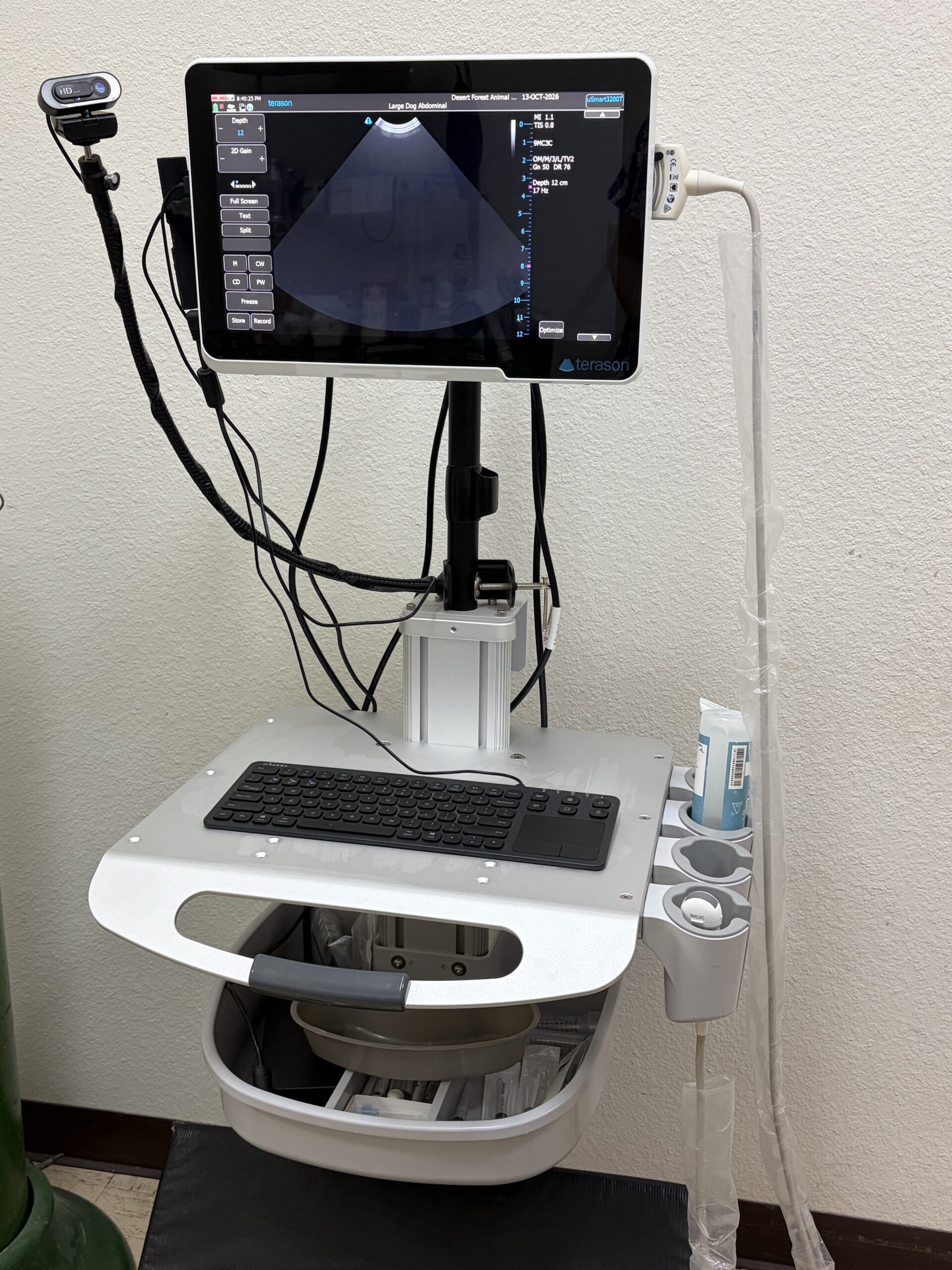
One advantage of a full-service animal hospital is the opportunity to move from physical examination to appropriate testing without unnecessary delays.
Depending on your pet’s symptoms, DFAH may recommend laboratory work, digital imaging, ultrasound, urine testing, ear or skin cytology or eye examinations.
CBC and chemistry panels help investigate anemia, inflammation, infection, diabetes and kidney or liver concerns.
Imaging helps evaluate bones, internal structures and teeth when medically indicated.
Microscopic examinations can help identify yeast, bacteria and inflammatory changes associated with otitis externa, pyoderma and other conditions.
Fluorescein staining, Schirmer tear testing and tonometry help investigate corneal ulcers, dry eye and eye-pressure disorders such as glaucoma.
Transparent Estimates and Treatment Choices
At Desert Forest Animal Hospital, our doctors discuss findings, recommended testing and reasonable treatment choices in light of each patient’s medical needs and the owner’s budget, goals and values.
We provide an itemized estimate for approval before proposed diagnostics and treatment proceed. Our goal is to recommend clinically justified care rather than unnecessary add-ons or extras.
When appropriate, treatment can often begin during the same appointment, and prescribed medications may be dispensed for home use depending on availability and the patient’s condition.
Learn more about diagnostics and blood work, digital radiology, abdominal ultrasound and payment and financing.
Fear Free Veterinary Care for Desert Mountain Pets
Illness, pain, travel and unfamiliar medical handling may increase stress during a veterinary visit.
Dr. Quinn Bauer, DVM, is individually Fear Free Certified. When medically appropriate, the veterinary team may use treats, acclimation, modified handling, careful positioning, pre-visit medication or sedation for patient comfort and safety.
This individual qualification should not be confused with hospital-wide Fear Free certification.
Learn more about our approach to lower-stress veterinary care and Dr. Bauer.
An Independently Owned Veterinarian Near Desert Mountain
Desert Forest Animal Hospital has served the Cave Creek area since 1984 and remains independently owned.
We emphasize individualized veterinary care, clear communication, medically justified diagnostic recommendations and established relationships with pet owners.
Our Cave Creek hospital welcomes dogs and cats from Desert Mountain, North Scottsdale, Carefree, Cave Creek, Tatum Ranch, Terravita, Desert Hills, Anthem and surrounding North Valley communities.
Learn more about our independently owned hospital, meet the veterinary team or explore pet dentistry.
Frequently Asked Questions About Veterinary Care Near Desert Mountain
Is Desert Forest Animal Hospital located in Desert Mountain?
No. Our hospital is at 6554 E Cave Creek Road in Cave Creek, Arizona. We welcome dogs and cats from Desert Mountain and North Scottsdale.
Can my sick pet be seen the same day?
We evaluate many stable sick or injured pets during regular business hours when appointment capacity and medical needs permit. Call (480) 488-2010 before coming.
Does DFAH stock rattlesnake antivenom?
Yes. We stock crotalid antivenom for veterinary patients. A suspected bite is an emergency; call immediately and confirm current availability.
Can golf-course chemicals cause paw irritation?
They can, depending on the product and exposure. Allergies, infection, foreign material and other dermatologic conditions can cause similar symptoms.
Should my dog drink from a golf-course pond?
Provide clean water instead. Certain freshwater environments can develop harmful cyanobacterial blooms, and other contaminants may be present.
Does traveling to Desert Mountain cause Valley Fever?
No. Valley Fever results from inhaling Coccidioides spores found in endemic soil and dust. Spending time in Arizona can create an opportunity for exposure.
Can a dog develop Valley Fever after leaving Arizona?
Yes. Illness can develop after a dog returns to another state. Tell your veterinarian about previous Arizona residence or travel.
Why do you ask where my pet travels?
Different regions have different infectious-disease, parasite and environmental risks. Travel history may influence diagnostic testing and preventive recommendations.
Are Desert Mountain trails dog-friendly?
Desert Mountain HOA describes its trails as pet-friendly and advises owners to use leashes no longer than six feet and carry extra water. Heat and wildlife remain important concerns.
Will DFAH discuss costs before testing or treatment?
Yes. We explain our recommended approach and provide an itemized estimate for approval before proceeding with proposed diagnostics or treatment.
Looking for a Veterinarian Near Desert Mountain?
Whether you live full-time in Desert Mountain, spend winters in North Scottsdale or divide your year between states, our team can help create a veterinary plan based on your pet’s individual needs and lifestyle.
Desert Forest Animal Hospital
6554 E Cave Creek Road
Cave Creek, AZ 85331
Monday–Friday: 9:00 AM–6:00 PM
Saturday–Sunday: Closed
Medical Information and Editorial Standards
Desert Forest Animal Hospital is independently owned by Bryan Hayter, DVM, who serves as owner and medical director.
This page is intended to provide general educational information for Desert Mountain and North Scottsdale pet owners. It cannot diagnose individual symptoms or replace an examination and individualized veterinary advice.
Editorial and internal-link update: November 2026. The revised clinical content should be reviewed by a DFAH veterinarian before publication. Do not assign a new medical-review date until that review is completed.