

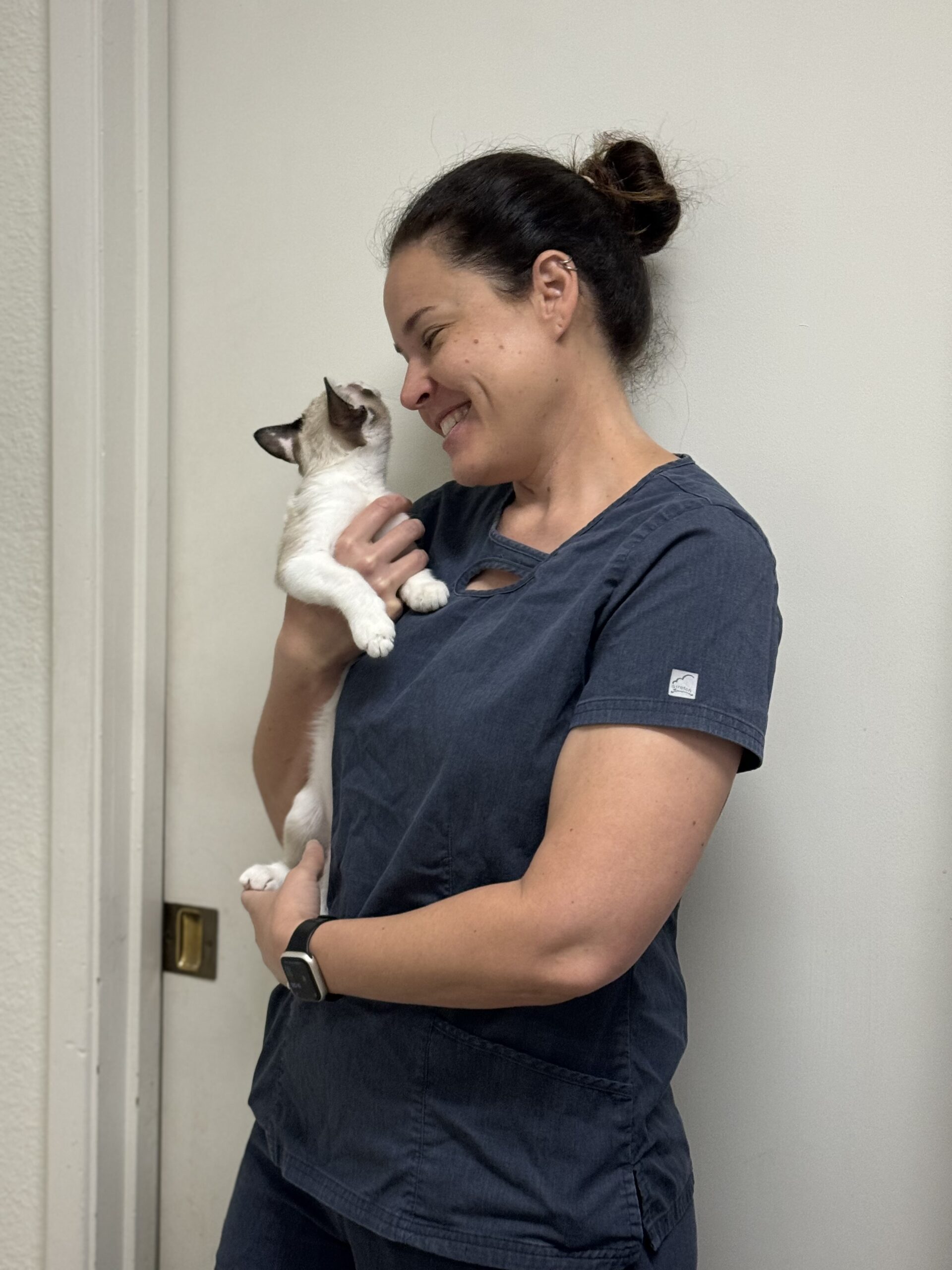

Medical review: Bryan Hayter, DVM | Owner & Medical Director, Desert Forest Animal Hospital
Last medically reviewed: September 2026
Arizona’s Sonoran Desert may look like an unlikely place for a mosquito-borne parasite, but dogs and cats in Arizona can still be exposed to heartworm disease.
Heartworms are transmitted by mosquitoes. In Cave Creek, Carefree, Desert Mountain, North Scottsdale, and surrounding North Valley communities, mosquito exposure can occur around irrigated landscaping, monsoon moisture, pools, fountains, drains, containers, and other small collections of standing water.
Maricopa County conducts year-round mosquito surveillance and control , and its public-health guidance specifically encourages residents to eliminate standing water, particularly after rain and during the monsoon season.
At Desert Forest Animal Hospital in Cave Creek, we recommend year-round heartworm prevention as part of an individualized parasite-prevention plan for dogs and cats .
Recommendations are based on your pet’s species, age, weight, medical history, current medications, travel, lifestyle, outdoor exposure, and other parasite risks.
What Is Heartworm Disease?
Heartworm disease is caused by the parasitic worm Dirofilaria immitis. It is transmitted through the bite of an infected mosquito.
The mosquito is an essential part of the heartworm life cycle. A mosquito becomes infected after feeding on an animal carrying circulating heartworm larvae called microfilariae. The parasite then develops inside the mosquito before infective larvae are transmitted when the mosquito feeds again.
Once inside a susceptible animal, the larvae continue developing over several months.
The American Heartworm Society publishes current peer-reviewed guidance for heartworm prevention, diagnosis, and treatment in dogs and cats.
Can Dogs Really Get Heartworm in Arizona?
Yes.
Arizona’s low humidity and desert climate may reduce mosquito activity in some environments, but they do not eliminate mosquitoes or heartworm transmission risk.
Local mosquito habitat can include:
- Irrigated yards and landscaped areas
- Swimming pools and pool equipment
- Fountains and decorative water features
- Monsoon-associated standing water
- Plant saucers and containers
- Drains
- Bird baths
- Areas where water collects around homes or businesses
Travel also matters. Dogs that visit other parts of Arizona or travel out of state may experience mosquito exposure very different from what they encounter at home.
This is one reason the American Heartworm Society and the Companion Animal Parasite Council recommend continuous year-round heartworm prevention rather than attempting to predict a completely “safe” mosquito season.
Why Year-Round Heartworm Prevention Matters
Heartworm prevention works best when it is consistent.
Interrupting prevention because the weather appears cool, dry, or mosquito-free creates an avoidable gap in protection. Mosquito activity can vary with weather, irrigation, travel, microclimates, and individual properties.
The American Heartworm Society recommends year-round FDA-approved heartworm prevention for dogs and cats.
No preventive medication should be considered an absolute guarantee, however. Heartworm preventives are highly effective when administered correctly and on schedule, which is why regular testing and reliable administration both matter.
How Heartworm Disease Affects Dogs
Dogs are the natural host for Dirofilaria immitis, meaning the parasite can mature, reproduce, and establish substantial adult worm burdens in infected dogs.
Adult heartworms primarily live in the pulmonary arteries—the blood vessels that carry blood from the heart to the lungs.
Over time, infection can cause:
- Inflammation of the pulmonary arteries
- Damage to lung tissue and blood vessels
- Pulmonary hypertension
- Reduced ability to exercise
- Right-sided heart strain
- Heart failure in advanced disease
- Potentially life-threatening cardiovascular complications
Dogs may be infected for months before owners notice obvious symptoms.
Signs of Heartworm Disease in Dogs
Early heartworm infection may cause no outward signs. As disease progresses, possible symptoms include:
- Persistent or intermittent coughing
- Reduced stamina
- Fatigue after normal activity
- Reluctance to exercise
- Weight loss
- Reduced appetite
- Rapid breathing
- Difficulty breathing
- Weakness
- Abdominal swelling caused by fluid accumulation
- Collapse in severe cases
These symptoms are not specific to heartworm disease. Heart disease, respiratory disease, Valley Fever, infection, metabolic disease, cancer, and other conditions can produce similar signs.
If your dog is coughing or breathing abnormally, read our guide to coughing and difficulty breathing in dogs and cats .
What Is Caval Syndrome?
Caval syndrome is an advanced, life-threatening complication of canine heartworm disease.
In severely affected dogs, adult heartworms can interfere with blood flow through the right side of the heart and major veins, leading to serious cardiovascular compromise and destruction of red blood cells.
Signs may include:
- Sudden severe weakness
- Collapse
- Difficulty breathing
- Pale gums
- Dark urine
- Signs of shock
Caval syndrome requires immediate veterinary stabilization and may require mechanical removal of adult heartworms at an emergency or specialty hospital.
Heartworm Disease in Cats Is Different—and Often Overlooked
Heartworm is not only a dog disease.
Cats can also become infected after being bitten by an infected mosquito, but cats are an atypical host. Most heartworms in cats do not mature into adult worms, and cats usually carry far fewer adult worms than infected dogs.
That does not make heartworm harmless in cats.
Even immature heartworms can trigger significant inflammation in the lungs, a condition often called heartworm-associated respiratory disease (HARD).
According to the American Heartworm Society’s feline heartworm guidance , even one or two heartworms can cause serious disease in a cat.
Signs of Heartworm Disease in Cats
Heartworm disease in cats can be difficult to recognize because the signs may resemble feline asthma, bronchitis, gastrointestinal disease, or other disorders.
Possible symptoms include:
- Coughing
- Wheezing
- Rapid breathing
- Difficulty breathing
- Vomiting
- Reduced appetite
- Weight loss
- Lethargy
- Neurologic abnormalities in uncommon cases
- Collapse
- Sudden death in severe cases
The American Heartworm Society updated its feline recommendations to emphasize that heartworm disease in cats is frequently underdiagnosed and that prevention is particularly important because there is no approved drug therapy that safely eliminates adult heartworms in cats.
Does an Indoor Cat Need Heartworm Prevention?
Indoor living lowers some environmental risks, but it does not create a mosquito-proof environment.
Mosquitoes can enter homes through doors, windows, garages, and small openings. Cats may also spend limited time on patios, porches, balconies, or during transportation to veterinary appointments.
The Companion Animal Parasite Council recommends year-round heartworm prevention for cats regardless of lifestyle.
If you have an indoor cat and are unsure which preventive strategy is appropriate, discuss it during your cat’s preventive veterinary examination .
Why Heartworm Testing Is Important for Dogs
The American Heartworm Society and CAPC recommend that dogs undergo annual heartworm testing even when prevention is given consistently.
Current guidance recommends testing dogs for both:
- Heartworm antigen — primarily detects proteins associated with adult female heartworms
- Circulating microfilariae — detects immature heartworms in the bloodstream
Annual testing matters because no preventive is 100% effective and real-world administration is not always perfect.
Protection can potentially be compromised if:
- A monthly dose is missed
- A dose is given late
- A dog spits out a chewable tablet
- A dog vomits shortly after receiving medication
- A topical product is not applied or absorbed properly
- A product is stored incorrectly
- The prevention history is uncertain
How Is Heartworm Testing Different in Cats?
Diagnosing heartworm infection in cats is more complicated because cats frequently have small worm burdens and may never develop adult female worms detectable on a standard antigen test.
Current feline heartworm guidance may use a combination of:
- Heartworm antigen testing
- Heartworm antibody testing
- Chest X-rays
- Ultrasound or echocardiography when appropriate
- Other diagnostic tests based on the cat’s symptoms
The American Heartworm Society’s current feline guidance emphasizes using multiple sources of information rather than relying on a single negative test to exclude feline heartworm disease.
Heartworm Testing and Diagnostics at Desert Forest Animal Hospital
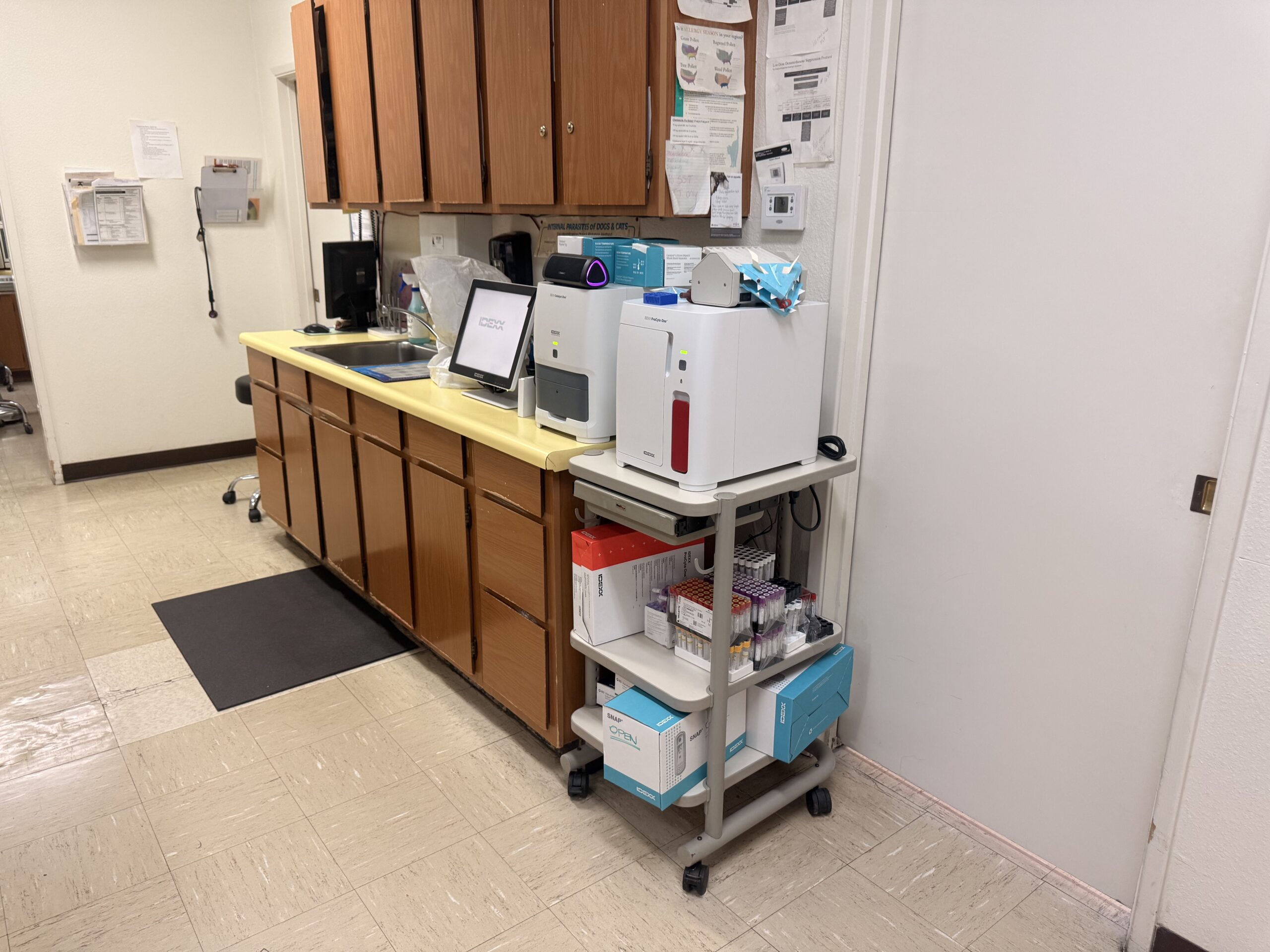
Desert Forest Animal Hospital provides in-house blood work and veterinary diagnostic testing in Cave Creek when medically appropriate.
A dog or cat with respiratory signs, weakness, abnormal examination findings, or suspected heartworm disease may need additional evaluation depending on the clinical situation.
Testing may include:
- Heartworm-specific testing
- Complete blood count
- Blood chemistry
- Urinalysis
- Digital chest X-rays
- Ultrasound when medically relevant
- Specialty echocardiography or referral when indicated
What If My Dog Missed Heartworm Prevention?
Do not panic, but do not assume that simply restarting medication resolves every concern.
Contact your veterinarian if:
- One or more doses were missed
- You do not know when the last dose was given
- Your dog has been off prevention for several months
- You adopted a dog with an uncertain history
- Your dog recently moved from another region
- Your dog traveled to an area with different mosquito exposure
Heartworm infection is not immediately detectable after exposure. It takes months for an infection to mature enough to be identified reliably by standard testing.
That means a negative test obtained shortly after a gap in prevention does not necessarily exclude a recent infection.
Your veterinarian can determine whether prevention should be restarted immediately and when follow-up testing should occur.
Do not double doses or change products without veterinary guidance.
Can Puppies and Kittens Start Heartworm Prevention?
Yes. Appropriate heartworm prevention can begin early in life, according to the approved minimum age and weight for the specific product.
The best medication depends on species, age, weight, medical history, and what additional parasites the product is intended to control.
Heartworm prevention is only one part of first-year care. Learn more about puppy and kitten veterinary care in Cave Creek , including vaccination, intestinal-parasite testing, nutrition, microchipping, and preventive health planning.
What Types of Heartworm Prevention Are Available?
FDA-approved heartworm prevention is available in several formulations.
Depending on species and product, options may include:
- Monthly oral medications
- Monthly topical medications
- Long-acting injectable prevention for eligible dogs
Some products protect against heartworm alone or in combination with selected intestinal parasites. Others may also protect against fleas, ticks, mites, or additional parasites.
No product should be assumed to cover every parasite.
The American Heartworm Society maintains a current list of FDA-approved heartworm preventives for dogs and cats.
Your veterinarian can help select a product according to your pet’s species, weight, lifestyle, exposure, medical history, and other parasite-prevention needs.
What Happens if a Dog Tests Positive for Heartworm?
A positive heartworm test is the beginning of a medical evaluation—not the end of one.
Additional testing may be recommended to:
- Confirm infection
- Assess overall health
- Evaluate the lungs and cardiovascular system
- Determine the severity of disease
- Identify factors that may affect treatment risk
The American Heartworm Society’s current canine treatment protocol uses a carefully staged approach that may include a heartworm preventive, doxycycline, anti-inflammatory treatment when indicated, strict exercise restriction, and the adulticide medication melarsomine.
Melarsomine is the FDA-approved adulticide used to eliminate adult heartworms in dogs.
The American Heartworm Society Canine Guidelines recommend a three-injection melarsomine protocol as part of standard adulticide therapy.
Treatment should be supervised by a veterinarian and tailored to the dog’s clinical condition.
Why Exercise Restriction Is So Important During Heartworm Treatment
Exercise restriction is not an optional part of heartworm treatment.
As adult worms die, fragments of the worms and associated inflammation can interfere with blood flow through the lungs.
Increasing heart rate and pulmonary blood flow through exercise or excitement can increase the risk of serious pulmonary complications.
The American Heartworm Society recommends restricting activity throughout heartworm treatment and for a period after adulticide injections according to the dog’s medical plan.
Why “Slow Kill” Is Not the Preferred Treatment for Dogs
Giving preventive medication alone over a prolonged period is not considered an equivalent substitute for appropriate adulticide treatment in dogs that can safely receive standard therapy.
Adult worms may remain alive for an extended period while continuing to damage the lungs and pulmonary arteries.
The American Heartworm Society therefore recommends eliminating adult infection as efficiently and safely as possible using an appropriate veterinary treatment protocol.
What Happens if a Cat Tests Positive for Heartworm?
Feline heartworm disease is managed very differently from canine heartworm disease.
There is currently no approved medication that safely eliminates adult heartworms in cats in the way melarsomine is used in dogs.
Management may therefore focus on:
- Confirming or further evaluating the diagnosis
- Monitoring respiratory and cardiovascular status
- Managing inflammation or respiratory symptoms when appropriate
- Providing supportive care when needed
- Continuing heartworm prevention to prevent new infections
- Referral or advanced intervention for selected severe cases
This difference is one of the strongest reasons to prevent heartworm infection in cats rather than relying on treatment after infection occurs.
Can Heartworm Prevention Fail?
Heartworm preventive medications are highly effective when used correctly, but no medical preventive strategy is perfect.
Failure may occur because of:
- Missed or delayed doses
- Improper administration
- Vomiting or failure to ingest medication
- Topical application problems
- Incorrect dosing or storage
- Uncertain prevention history
- Rare infection despite apparently appropriate prevention
This is why year-round prevention should be paired with appropriate veterinary testing rather than viewed as a replacement for testing.
Is There a Natural Alternative to Prescription Heartworm Prevention?
There is currently no proven herbal, nutritional, essential-oil, dietary, or other “natural” product that has been demonstrated to reliably prevent heartworm infection.
Because heartworm disease can cause permanent cardiopulmonary injury and can be fatal, prevention should rely on appropriately selected FDA-approved medication rather than unproven alternatives.
Heartworm Prevention Is Part of Broader Parasite Control
Heartworm is only one parasite concern for Arizona pets.
Depending on lifestyle, dogs and cats may also require protection or screening for:
- Roundworms
- Hookworms
- Whipworms in dogs
- Tapeworms
- Giardia
- Fleas
- Ticks
- Other regionally or travel-associated parasites
The Companion Animal Parasite Council’s general guidelines recommend year-round broad-spectrum parasite control, with testing and prevention adjusted for the individual patient’s health and environmental exposure.
Learn more about parasite prevention for dogs and cats at Desert Forest Animal Hospital .
When Heartworm-Like Symptoms Need Urgent Veterinary Care
Coughing alone does not prove that a pet has heartworm disease. Respiratory and cardiovascular symptoms can have many causes.
Contact a veterinarian promptly if your dog or cat develops:
- Persistent or worsening coughing
- Unexplained weakness
- Reduced exercise tolerance
- Rapid breathing
- Unusual lethargy
- Reduced appetite with other concerning symptoms
Seek immediate emergency veterinary care for:
- Severe difficulty breathing
- Blue, gray, or very pale gums
- Collapse
- Persistent unconsciousness
- Profound weakness
- Another rapidly worsening, life-threatening condition
During regular business hours, Desert Forest Animal Hospital provides same-day urgent veterinary care in Cave Creek for many stable sick dogs and cats when staffing, capacity, and the patient’s medical needs allow.
DFAH is not a 24-hour emergency hospital. Call (480) 488-2010 before coming so our team can help determine the safest next step.
Heartworm Prevention for Cave Creek, Carefree & North Scottsdale Pets
Desert Forest Animal Hospital provides individualized preventive care for dogs and cats from:
- Cave Creek
- Carefree
- Desert Mountain
- North Scottsdale
- Tatum Ranch
- Terravita
- Desert Hills
- Anthem
- Surrounding North Valley communities
Families in Carefree can learn more about veterinary care near Carefree, Arizona .
Heartworm prevention can also be reviewed during your pet’s wellness and preventive-care examination .
Frequently Asked Questions About Heartworm Prevention in Arizona
Do dogs really get heartworm in Arizona?
Yes. Arizona’s desert climate does not eliminate mosquitoes. Irrigation, monsoon rainfall, pools, fountains, landscaping, drains, containers, and other sources of standing water can support mosquito activity. Travel can also increase exposure.
Does my dog need heartworm prevention all year in Arizona?
Yes. The American Heartworm Society and Companion Animal Parasite Council recommend year-round heartworm prevention rather than attempting to stop and restart prevention according to season.
Can cats get heartworm in Arizona?
Yes. Cats become infected through mosquito bites just as dogs do. Cats are atypical hosts, but even immature worms or a small number of adult worms can cause significant respiratory disease.
Does an indoor cat need heartworm prevention?
Indoor cats can still be exposed to mosquitoes that enter the home. Current parasite guidelines recommend year-round prevention for cats rather than assuming that indoor living eliminates heartworm risk.
Is heartworm prevention 100% effective?
No. FDA-approved heartworm preventives are highly effective when administered properly and on schedule, but they are not considered 100% effective. Regular veterinary testing remains important.
Why does my dog need heartworm testing if prevention is given every month?
Annual testing helps confirm that the prevention program is working and can identify infection before disease becomes more advanced. Current guidelines recommend both antigen and microfilaria testing in dogs.
What should I do if my dog misses a dose of heartworm prevention?
Contact your veterinarian. The appropriate restart and testing schedule depends on the product, how long prevention was interrupted, the dog’s previous testing history, age, travel, and exposure risk. Do not double doses unless specifically instructed.
Can I tell if my dog has heartworm just by symptoms?
No. Early infection may produce no visible symptoms, and coughing, weakness, or exercise intolerance can have many other causes. Diagnosis requires appropriate veterinary testing.
Can heartworm disease be cured in dogs?
Many infected dogs can be treated successfully. Current American Heartworm Society treatment generally involves staged therapy, strict activity restriction, and melarsomine adulticide treatment when medically appropriate. The individual treatment plan depends on the dog’s condition.
Can heartworm disease be cured in cats?
There is currently no approved adulticide medication for eliminating heartworm infection in cats. Management focuses on diagnosis, monitoring, symptom control, supportive care, and preventing additional infection. This makes prevention especially important.
Is there a natural heartworm preventive?
There is no proven natural or herbal alternative that reliably prevents heartworm disease. Veterinary guidelines recommend FDA-approved heartworm preventives administered according to an individualized veterinary plan.
Can mosquitoes still be a problem in Cave Creek during dry weather?
Yes. Mosquito activity depends on local water, weather, irrigation, and microenvironment. Maricopa County conducts mosquito surveillance year-round, and small amounts of standing water can support mosquito development.
Trusted Heartworm & Arizona Mosquito Resources
- American Heartworm Society — Canine & Feline Heartworm Guidelines
- American Heartworm Society — Heartworm Preventives
- American Heartworm Society — Heartworm Disease in Cats
- Companion Animal Parasite Council — Heartworm Guidelines
- Maricopa County Environmental Services — Mosquito & Vector Control
Protect Your Dog or Cat Year-Round
Heartworm disease is highly preventable when an appropriate preventive is administered consistently and paired with recommended veterinary testing.
The goal is not to wait for a cough or other symptom. Dogs may carry adult heartworms for months before obvious signs develop, while feline heartworm disease can be difficult to diagnose and may cause serious respiratory disease with only a very small worm burden.
At Desert Forest Animal Hospital, heartworm prevention is part of a broader individualized preventive-care strategy rather than a one-size-fits-all medication recommendation.
Desert Forest Animal Hospital
6554 E Cave Creek Road
Cave Creek, AZ 85331
(480) 488-2010
New to Desert Forest Animal Hospital? Learn what to expect at your first visit.
Medical Review
Bryan Hayter, DVM
Owner & Medical Director
Desert Forest Animal Hospital
Cave Creek, Arizona
This article provides general educational information and does not replace a veterinary examination, diagnostic testing, or an individualized parasite-prevention recommendation. If your dog or cat is experiencing severe difficulty breathing, collapse, profound weakness, blue or gray gums, or another immediately life-threatening problem, seek emergency veterinary care promptly.