

Desert Forest Animal Hospital | Cave Creek, Arizona
Cats can be remarkably good at hiding both illness and fear.
A cat who seems quiet at home may become frozen and withdrawn at the veterinary hospital. Another may hiss, struggle, hide in the back of the carrier, refuse treats or try desperately to escape. A normally affectionate cat may behave completely differently when pain, nausea, unfamiliar smells, travel and handling are added together.
Those reactions do not mean a cat is “bad.” They are information.
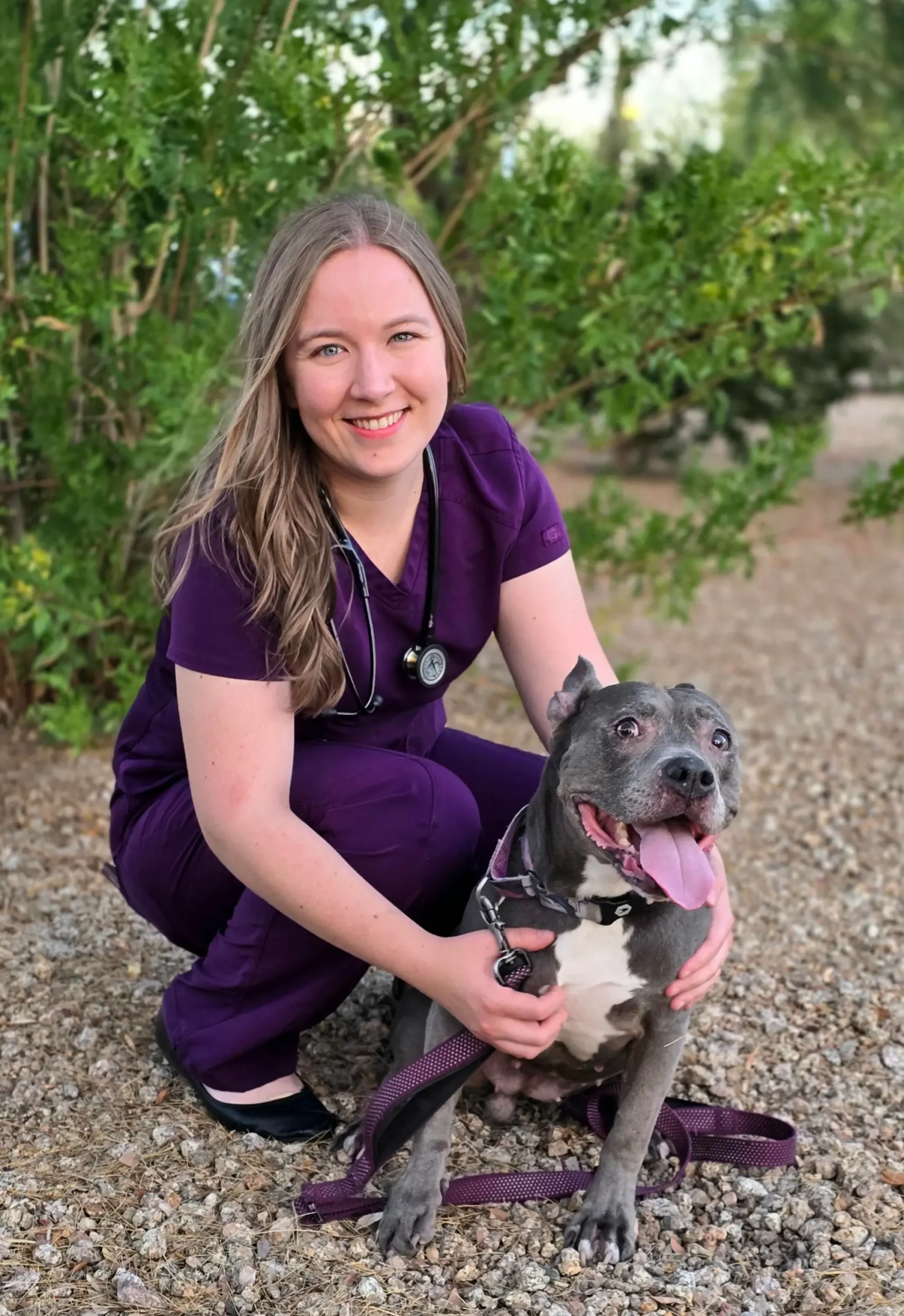
At Desert Forest Animal Hospital in Cave Creek, Dr. Quinn Bauer is a Fear Free Certified veterinarian with a particular interest in helping nervous, sensitive and previously fearful pets receive the medical care they need.
That philosophy can be especially valuable for cats.
But Fear Free care is sometimes misunderstood.
It does not mean avoiding necessary examinations, blood tests, X-rays or treatment. It does not mean that an injured or critically ill cat must be allowed unlimited time to acclimate before receiving care. And it does not mean that medication or sedation is a failure.
Fear Free veterinary care means considering a cat’s emotional state alongside physical health and choosing the least stressful safe approach whenever circumstances allow.
That principle applies during preventive visits, sick-patient examinations, diagnostic testing and even same-day urgent veterinary care.
Why Veterinary Visits Can Be Especially Difficult for Cats
Cats experience the world differently from people—and in important ways, differently from dogs.
They are highly sensitive to unfamiliar territory, scents, sounds, movement and loss of control. A trip to the veterinarian may involve several stressful events before the examination even begins:
- Being placed into a carrier
- Leaving familiar territory
- Traveling in a moving vehicle
- Encountering unfamiliar smells and noises
- Hearing or seeing dogs and other animals
- Being handled by unfamiliar people
- Experiencing pain, nausea or weakness while all of this is happening
The 2022 AAFP/ISFM Cat Friendly Veterinary Interaction Guidelines, now maintained by the Feline Veterinary Medical Association, emphasize understanding a cat’s emotional state and adapting veterinary interactions to the individual patient.
Companion guidelines addressing the veterinary environment explain that stress associated with veterinary visits can affect feline welfare, handling and even some clinical findings. Read the FelineVMA/ISFM Cat Friendly Veterinary Environment Guidelines.
This is one reason thoughtful feline handling is more than a customer-service issue.
It is part of good medicine.
What Does “Fear Free” Mean for a Cat?
Fear Free veterinary medicine focuses on recognizing and reducing fear, anxiety and stress whenever doing so is medically appropriate.
Dr. Bauer is an individually Fear Free Certified veterinary professional. This is different from facility-level Fear Free Practice Certification.
Fear Free professional education teaches veterinary teams to recognize a pet’s emotional state and consider approaches that may reduce unnecessary distress while maintaining medical safety.
The official Fear Free Veterinary Certification Program focuses specifically on recognizing and addressing fear, anxiety and stress in veterinary patients.
For an individual cat, a lower-stress approach may involve:
- Allowing time to observe the cat’s body language before handling
- Giving the cat an opportunity to remain in a familiar carrier or bedding when practical
- Using gentle, deliberate handling
- Avoiding unnecessary restraint
- Allowing examination in a position the cat tolerates well when possible
- Using towels, familiar scents or environmental adjustments appropriately
- Using food rewards when medically appropriate and welcomed by the cat
- Performing the most important parts of an examination efficiently
- Changing the order of procedures based on the cat’s emotional state
- Using pain control when pain is contributing to distress
- Considering pre-visit medication for selected cats
- Using sedation when it provides a safer, more humane examination or procedure
There is no single Fear Free protocol that is correct for every cat.
A curious kitten, a painful senior cat, a frightened rescue cat and a male cat with urinary obstruction may require four very different approaches.
A Frightened Cat Is Not a “Difficult” Cat
One of the most useful shifts in feline medicine is recognizing behavior as communication.
A cat may communicate discomfort or fear by:
- Hiding
- Freezing
- Crouching
- Flattening the ears
- Turning away
- Attempting to retreat
- Refusing treats
- Growling
- Hissing
- Swatting
- Trying to escape
Waiting until a cat hisses or bites before recognizing distress misses many earlier signals.
Dr. Bauer’s approach is to consider what the cat’s behavior may be communicating and modify the interaction when medically appropriate rather than assuming the animal is being intentionally uncooperative.
Learn more about Dr. Quinn Bauer, DVM, Fear Free Certified and her approach to veterinary care.
Why Reducing Stress May Help the Medical Examination
Veterinary medicine requires accurate information.
When a cat is intensely frightened, the veterinary team may be dealing simultaneously with the disease process and a substantial stress response.
The FelineVMA/ISFM cat-friendly guidelines note that stressful veterinary experiences can contribute to patient distress, handling difficulty and potentially misleading clinical findings.
Reducing unnecessary stress can therefore support several goals at once:
- Improved patient welfare
- Safer handling
- A more thorough examination when possible
- More efficient sample collection
- Improved caregiver confidence
- Better future veterinary experiences
That does not mean stress can or should be eliminated completely.
The practical goal is to prevent avoidable distress while still getting the medical information the patient needs.
What Happens When the Cat Is Sick or the Visit Is Urgent?
This is where Fear Free principles become particularly important—and where they must also remain medically realistic.
A sick cat may already be experiencing:
- Pain
- Nausea
- Weakness
- Dehydration
- Difficulty breathing
- Urinary discomfort
- Abdominal pain
- Neurologic abnormalities
- Fear related to the illness itself
A cat that normally tolerates handling may therefore respond very differently during an urgent visit.
Desert Forest Animal Hospital provides same-day urgent veterinary care for cats and dogs in Cave Creek during regular business hours when staffing, current case volume and the patient’s medical needs allow.
During an urgent feline visit, Fear Free principles may include:
- Recognizing pain and fear early
- Limiting unnecessary handling
- Planning the examination and diagnostics efficiently
- Using positioning that minimizes discomfort when possible
- Providing appropriate pain control
- Using sedation when it is medically appropriate and makes care safer
- Keeping the cat’s carrier, towel or familiar items available when useful
- Reducing unnecessary delays between examination, diagnostics and treatment
In other words, Fear Free urgent care does not necessarily mean slower care.
For some cats, a well-planned and efficient medical approach may actually reduce the total amount of handling and stress.
Fear Free Care Never Takes Priority Over a Life-Threatening Emergency
There are situations in which rapid examination and stabilization must come first.
The Merck Veterinary Manual’s guidance on dog and cat emergencies identifies problems such as severe breathing difficulty, major trauma, shock, poisoning, uncontrolled bleeding, seizures, loss of consciousness and blocked urine flow as conditions requiring immediate attention.
A cat experiencing a true emergency may require:
- Rapid triage
- Oxygen support
- Immediate vascular access
- Emergency medications
- Diagnostic sampling
- Procedural restraint
- Sedation or anesthesia
- Transfer to a 24-hour emergency or specialty hospital
In those situations, protecting life takes priority.
The Fear Free principle becomes:
Provide the necessary care as efficiently, compassionately and safely as possible without delaying stabilization.
A Male Cat Straining to Urinate Is an Emergency
One feline emergency deserves particular emphasis because owners can mistake it for constipation or a minor urinary problem.
A male cat repeatedly entering the litter box, straining and producing little or no urine may have a urethral obstruction.
Other signs can include:
- Frequent unsuccessful attempts to urinate
- Vocalizing in the litter box
- Restlessness
- Excessive licking of the genital area
- Lethargy
- Loss of appetite
- Vomiting
- Weakness
A urinary blockage can cause dangerous electrolyte abnormalities and accumulation of metabolic waste.
The Merck Veterinary Manual describes complete urinary obstruction as a condition capable of causing life-threatening electrolyte disturbances and severe postrenal azotemia.
A cat that may be unable to urinate needs immediate veterinary evaluation.
Do not delay care in an attempt to create a perfectly calm or Fear Free experience at home.
Other Signs a Cat May Need Same-Day Veterinary Care
Cats often hide illness until a problem has progressed.
Contact a veterinarian promptly if your cat develops changes such as:
- Repeated vomiting
- Persistent diarrhea
- Not eating
- Marked lethargy
- Sudden hiding combined with other signs of illness
- New pain or difficulty walking
- Eye pain, squinting or sudden eye changes
- Urinary changes
- Coughing
- Rapid or unusual breathing
- Wounds or suspected bites
- Possible toxin exposure
- Sudden weakness
- Significant behavior change
Some of these problems may be appropriate for same-day urgent care at our Cave Creek animal hospital.
Others may require a 24-hour emergency hospital immediately.
Call Desert Forest Animal Hospital at (480) 488-2010 before driving in. Our team can discuss your cat’s signs, current availability and whether DFAH or a 24-hour emergency facility is the safer destination.
When Breathing Trouble Is an Emergency
Respiratory distress in a cat should be taken seriously.
Signs can include:
- Open-mouth breathing
- Markedly increased breathing effort
- Blue, gray or very pale gums
- Collapse
- Severe weakness associated with breathing difficulty
A cat struggling to breathe is not a patient who should be repeatedly removed from the carrier or handled unnecessarily at home.
Call ahead while seeking immediate veterinary care.
Desert Forest Animal Hospital is not a 24-hour emergency or intensive-care hospital. Severe respiratory distress or another immediately life-threatening problem may require direct evaluation at a 24-hour emergency facility.
Fear Free Principles During Blood Work and Diagnostics
Many sick cats require diagnostic testing to determine what is wrong.
At DFAH, available diagnostic capabilities include in-house blood work and veterinary diagnostics, urinalysis, digital X-rays and additional testing when appropriate.
The objective is not simply to “get the sample.”
The veterinary team must balance:
- Diagnostic quality
- Medical urgency
- Patient positioning
- Pain
- Fear
- Safety
- The amount of restraint required
Sometimes gentle positioning and a calm environment are enough.
Sometimes a painful or intensely frightened cat is actually better served by sedation than by escalating physical restraint.
Sedation is a medical decision based on the individual patient, procedure and health status.
Fear Free Does Not Mean “No Sedation”
Some owners understandably worry that medication means their cat has “failed” at the veterinary visit.
That is not how we view it.
There are situations in which attempting to force a frightened cat through an examination or procedure may increase distress and risk injury to both the patient and veterinary team.
When medically appropriate, medication can sometimes allow:
- A safer examination
- More accurate diagnostic imaging
- Blood sampling with less struggle
- Careful wound treatment
- More comfortable painful procedures
- Reduced escalation of fear
Fear Free educational resources also recognize the role of pre-visit pharmaceuticals for selected fearful or anxious patients.
Any pre-visit medication should be specifically prescribed for your cat. Do not give human medication, another pet’s prescription or leftover sedatives without veterinary direction.
Pre-Visit Medication Can Be Especially Helpful for Some Cats
Some cats become intensely frightened before they ever reach the hospital.
For selected patients, Dr. Bauer may recommend medication before a future appointment to reduce anxiety and make transport and handling safer.
This is especially worth discussing if your cat has previously:
- Panicked when placed in a carrier
- Become severely distressed during car rides
- Hidden or frozen throughout appointments
- Hissed, scratched or bitten during handling
- Required an examination to be stopped because of fear
- Needed repeated veterinary visits for a chronic condition
Pre-visit medication is not appropriate for every cat or every medical situation.
If your cat is acutely ill, vomiting, weak, having difficulty breathing or experiencing another urgent problem, call us before giving previously prescribed pre-visit medication. The current medical condition may change the plan.
The Fear Free Cat Visit Starts at Home
For a routine appointment, the veterinary experience begins long before a cat reaches the examination room.
The FelineVMA’s 2025 position statement on transporting cats recommends helping cats become accustomed to their carriers and using secure transport practices.
For cats who have time to prepare for a scheduled visit, consider:
1. Make the carrier part of normal life
Rather than storing the carrier in a garage until vaccination day, consider leaving it accessible in the home.
Place familiar bedding, treats or toys inside so the carrier becomes less strongly associated with unpleasant travel.
2. Use a secure, appropriate carrier
A sturdy carrier provides physical protection and gives a cat a smaller, more predictable space during transport.
A carrier that opens from the top or can be partially disassembled may also make some veterinary interactions easier because the cat may not need to be pulled through a narrow front door.
3. Add familiar bedding
A towel or blanket carrying familiar household scent may provide comfort.
The FelineVMA also notes that partially covering a carrier can provide cats with an opportunity to hide during transport.
4. Secure the carrier in the vehicle
The FelineVMA recommends secure carrier placement during automobile travel and specifically discusses placement on the floor behind the driver or passenger seat, with appropriately crash-tested restraint systems used when applicable.
5. Tell us about your cat before the appointment
When scheduling, let the veterinary team know if your cat:
- Hates the carrier
- Vomits during travel
- Has previously panicked at a veterinary hospital
- Has bitten or scratched during medical handling
- Does better with particular treats or positioning
- Has responded well to previous medications
This information helps us plan.
Fear Free Happy Homes also provides practical guidance for preparing cats for veterinary visits beginning at home.
What If My Cat Is Already Sick and I Have No Time to Prepare?
Then do not delay necessary medical care trying to create the ideal veterinary visit.
Place your cat safely in a secure carrier and call the veterinary hospital.
If possible, bring:
- Your cat’s current medication list
- Information about when symptoms started
- Recent laboratory or specialty records if readily available
- Photos or videos of intermittent symptoms
- Any packaging associated with a suspected toxin or medication exposure
- A familiar towel or blanket if doing so does not delay departure
For an urgent patient, the goal changes from long-term preparation to safe transportation and efficient medical evaluation.
Why Videos From Home Can Be Helpful
Cats often behave differently at home than they do at an animal hospital.
If a concerning behavior is intermittent and your cat is stable enough for you to record it safely, a short video can sometimes provide useful context.
Examples include:
- Abnormal walking
- Episodes of coughing
- Unusual respiratory sounds
- Intermittent tremors
- Episodes of apparent pain
- Changes in litter-box behavior
Do not delay emergency care in order to make a recording.
Fear Free Care for Senior Cats
Senior cats may face additional challenges during veterinary visits.
They may have:
- Arthritis
- Reduced mobility
- Vision changes
- Hearing changes
- Chronic kidney disease
- Hyperthyroidism
- Dental pain
- Multiple medications
- Greater sensitivity to unfamiliar environments
A cat who suddenly resists handling may not simply have become “grumpy.”
Pain or illness may be contributing.
For these patients, thoughtful positioning, minimizing unnecessary movement and tailoring the examination to the individual cat can be particularly important.
Fear Free Care for Kittens Can Help Shape Future Visits
Fear Free principles are not reserved for frightened adult cats.
A kitten’s early veterinary experiences can influence how future handling and travel are perceived.
Starting with:
- Positive carrier experiences
- Gentle handling
- Food rewards when appropriate
- Short periods of acclimation
- Comfortable examination techniques
may help create better associations with veterinary care.
The goal is not merely getting through the kitten’s first visit.
It is helping make a lifetime of healthcare easier.
Does Fear Free Care Make Sense in a Full-Service Animal Hospital?
Absolutely.
Fear Free principles and comprehensive veterinary medicine are not competing ideas.
A modern animal hospital may need to perform blood work, diagnostic imaging, surgery, dentistry, fluid therapy and urgent medical treatment.
The question is not whether those procedures should be avoided because they may create stress.
The better question is:
How can medically necessary care be performed as safely, compassionately and efficiently as possible for this individual cat?
That is particularly relevant at Desert Forest Animal Hospital because our care extends beyond preventive visits.
Our veterinary services in Cave Creek include preventive medicine, diagnostics, dentistry, surgery, chronic-disease management and same-day urgent care when appropriate.
When an Urgent Cat May Need Diagnostic Testing
A cat arriving for urgent care may need testing if the physical examination alone cannot adequately explain the problem.
Depending on the symptoms, the veterinarian may consider:
- Complete blood count and chemistry testing
- Urinalysis
- Blood glucose measurement
- Electrolyte testing
- Digital veterinary X-rays
- Ultrasound when medically appropriate and available
- Cytology
- Additional reference-laboratory testing
The medical question should drive the test.
Good veterinary care is not about running every available diagnostic panel. It is about identifying the information most likely to change what happens next.
Fear Free Care When a Cat Needs X-Rays
Diagnostic imaging requires appropriate positioning.
Some cats tolerate positioning well with gentle handling. Others may be painful, frightened or unable to remain still enough for diagnostic-quality images.
In those situations, the veterinarian may consider whether medication or sedation provides a safer and more humane path to obtaining useful images.
Desert Forest Animal Hospital provides digital X-ray services in Cave Creek, with board-certified veterinary radiology consultation available when additional interpretation is appropriate.
When Referral Is Better Than Continuing at a General Animal Hospital
Being a capable animal hospital also means recognizing the limits of general practice.
A cat may require referral when it needs:
- 24-hour intensive monitoring
- Mechanical ventilation
- Advanced CT or MRI imaging
- Complex specialty surgery
- Advanced cardiology
- Neurology
- Oncology
- Specialty internal medicine
- Another service not available safely at our hospital
Desert Forest Animal Hospital is not a 24-hour emergency hospital and does not provide overnight intensive-care monitoring.
When transfer provides an important medical advantage, recommending referral is part of good veterinary medicine.
Our guide What Does “Animal Hospital” Mean Today? When Your General Vet Can Help—and When Referral Is Best explains this relationship in greater detail.
Fear Free Cat Care for Cave Creek, Carefree and Desert Mountain Families
Desert Forest Animal Hospital is an independently owned animal hospital in Cave Creek, Arizona, providing veterinary care for dogs and cats.
We regularly care for feline patients from:
- Cave Creek
- Carefree
- Desert Mountain
- North Scottsdale
- Tatum Ranch
- Dove Valley Ranch
- Terravita
- Desert Hills
- Anthem
- Nearby North Valley communities
For cat owners in Desert Mountain or North Scottsdale searching for a veterinarian who can combine lower-stress handling with diagnostics and treatment when a cat becomes ill, our location on East Cave Creek Road provides access to a full-service general veterinary hospital rather than a wellness-only setting.
Learn more about Desert Forest Animal Hospital and our independently owned approach to veterinary medicine.
Frequently Asked Questions About Fear Free Veterinary Care for Cats
What is a Fear Free Certified veterinarian?
A Fear Free Certified veterinary professional has completed specialized education focused on recognizing, preventing and reducing fear, anxiety and stress in veterinary patients. Dr. Quinn Bauer is an individually Fear Free Certified veterinarian at Desert Forest Animal Hospital.
Professional certification is different from facility-level Fear Free Veterinary Practice Certification.
Is Desert Forest Animal Hospital a Fear Free Certified hospital?
Dr. Quinn Bauer is an individually Fear Free Certified veterinary professional. Desert Forest Animal Hospital does not represent itself as a facility-level Fear Free Certified Practice.
Can Fear Free techniques be used when my cat is sick?
Yes, when medically appropriate. Sick cats may benefit from gentle handling, thoughtful positioning, efficient diagnostic planning, pain management and sedation when indicated. Medical urgency always takes priority over gradual acclimation.
Can Fear Free care be used during a cat emergency?
Fear Free principles can still guide how the veterinary team approaches an emergency patient, but lifesaving care cannot be delayed. A cat with severe breathing difficulty, collapse, uncontrolled bleeding, seizures, urinary obstruction or another immediately life-threatening problem may require rapid examination and stabilization.
My cat becomes aggressive at the vet. Can you still help?
Often, yes. Hissing, swatting or attempting to bite may be signs of fear, pain or distress. Tell us about previous experiences when you schedule. Depending on your cat’s health and circumstances, Dr. Bauer may recommend environmental adjustments, modified handling, pre-visit medication or sedation.
Should I give my cat a sedative before an urgent appointment?
Not unless a veterinarian specifically tells you to do so for the current situation. If your cat is suddenly ill or injured, call us before administering previously prescribed pre-visit medication because the medical condition may change what is appropriate.
Should I take my cat out of the carrier when I arrive?
Usually, keeping a cat securely contained until the veterinary team is ready is safer than allowing the cat to become loose in an unfamiliar environment. Follow the team’s instructions when you arrive.
Does my cat need to fast before a Fear Free appointment?
It depends on the appointment. Food rewards can be helpful for some cats, while anesthesia, sedation or certain diagnostic procedures may require fasting. Ask when scheduling rather than fasting your cat automatically.
What should I bring to my cat’s appointment?
Bring your cat in a secure carrier along with a current medication list and relevant medical information. For routine visits, familiar bedding and favorite treats may also be useful when medically appropriate.
Does Desert Forest Animal Hospital provide urgent care for cats?
Yes. Desert Forest Animal Hospital provides same-day urgent veterinary care for cats and dogs in Cave Creek during regular business hours when availability and the patient’s medical needs allow.
Is Desert Forest Animal Hospital a 24-hour emergency hospital?
No. DFAH is a general animal hospital that provides same-day urgent evaluation during regular business hours but is not a 24-hour emergency or intensive-care facility. Patients requiring continuous overnight monitoring or another higher level of care may need transfer to a 24-hour emergency or specialty hospital.
Call Before Bringing in an Urgent Cat
If your cat becomes sick, injured, painful or suddenly behaves abnormally during our regular hospital hours, call before you come.
Calling ahead allows our team to:
- Discuss your cat’s symptoms
- Assess apparent urgency
- Confirm current availability
- Prepare for your cat when possible
- Help determine whether DFAH or a 24-hour emergency hospital is the safer destination
Desert Forest Animal Hospital
6554 E Cave Creek Road
Cave Creek, AZ 85331
Phone: (480) 488-2010
Regular Hours:
Monday-Friday: 9:00 a.m.-6:00 p.m.
Saturday: Closed
Sunday: Closed
Learn about same-day urgent veterinary care →
Learn about Fear Free veterinary care with Dr. Quinn Bauer →
Explore in-house diagnostics and blood work →
Medical Review & Editorial Standards
Clinical review planned: Quinn Bauer, DVM
Fear Free Certified Veterinarian
Desert Forest Animal Hospital
Practice: Desert Forest Animal Hospital, Cave Creek, Arizona
This article is intended to provide pet owners with practical, medically responsible information about feline veterinary stress, Fear Free care and urgent veterinary evaluation. Clinical recommendations should always be individualized to the patient’s condition.
The article draws on guidance and educational resources from the Feline Veterinary Medical Association, International Society of Feline Medicine, Fear Free, and Merck Veterinary Manual, together with the clinical services and protocols available at Desert Forest Animal Hospital.
Authoritative Feline and Veterinary Resources
- FelineVMA / ISFM — Cat Friendly Veterinary Interaction Guidelines: Approach and Handling Techniques
- FelineVMA / ISFM — Cat Friendly Veterinary Environment Guidelines
- Feline Veterinary Medical Association — Transportation of Cats in Motor Vehicles Position Statement
- Fear Free — Veterinary Certification Program
- Fear Free Happy Homes — Your Cat’s Vet Visit Begins at Home
- Fear Free Happy Homes — Understanding Pre-Visit Pharmaceuticals
- Merck Veterinary Manual — Evaluation and Initial Treatment of Dog and Cat Emergencies
- Merck Veterinary Manual — Obstructive Uropathy in Dogs and Cats
Important Medical Disclaimer
This article provides general educational information and is not a substitute for examination by a veterinarian. Cats can deteriorate rapidly and may hide signs of serious illness. If your cat is having difficulty breathing, cannot urinate, has collapsed, is having repeated seizures, has uncontrolled bleeding, has sustained major trauma or appears critically ill, seek immediate veterinary care. Do not delay emergency treatment in an attempt to reduce stress or complete Fear Free preparation steps.