

Medical review: Bryan Hayter, DVM | Owner & Medical Director, Desert Forest Animal Hospital
Last medically reviewed: September 2026
If your dog trembles in the parking lot, your cat disappears when the carrier comes out, or your pet becomes tense, vocal, defensive, or difficult to examine at the veterinary hospital, you are not alone.
Fear, anxiety, and stress during veterinary visits are common in both dogs and cats. Those responses are not simply inconvenient behavior. A frightened pet may have a harder time tolerating examination, diagnostic testing, nail trims, injections, blood draws, or other necessary care.
The good news is that veterinary visits do not have to become an escalating cycle of fear. With preparation at home, thoughtful transportation, behavior-aware handling, positive reinforcement, and—when medically appropriate—pre-visit medication or sedation, many dogs and cats can have substantially better veterinary experiences.
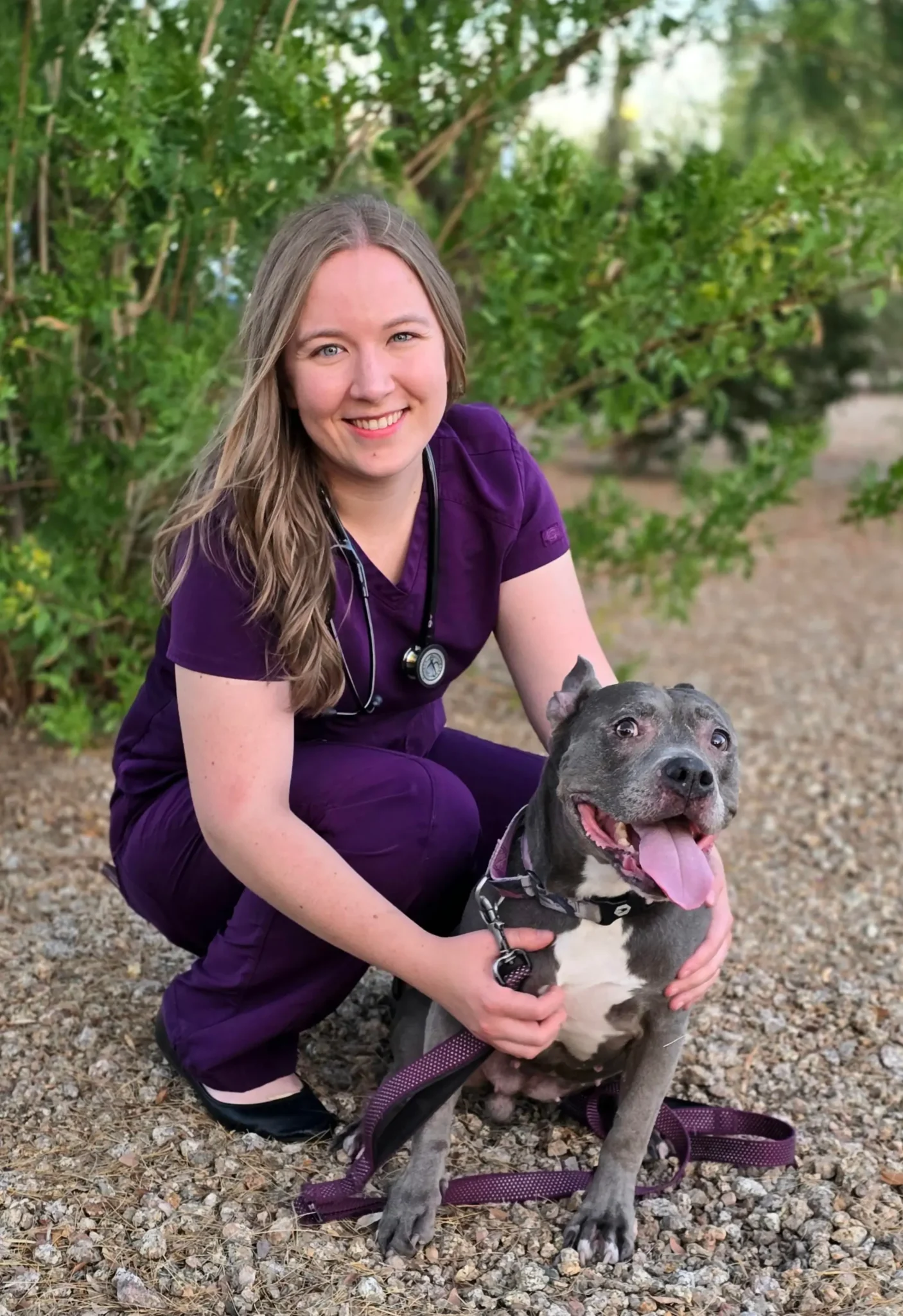
At Desert Forest Animal Hospital in Cave Creek, Dr. Quinn Bauer is a Fear Free Certified veterinarian , and our team incorporates Fear Free-informed veterinary care when medically appropriate.
We care for dogs and cats from Cave Creek, Carefree, Desert Mountain, North Scottsdale, Tatum Ranch, Terravita, Desert Hills, Anthem, and surrounding North Valley communities.
What Does “Fear Free” Veterinary Care Actually Mean?
Fear Free veterinary care focuses on recognizing and reducing fear, anxiety, and stress associated with veterinary visits.
It does not mean that every procedure will be completely comfortable or that a veterinarian will avoid medically necessary treatment simply because a pet is nervous.
Instead, the goal is to ask:
- What is this patient communicating through body language?
- Which parts of the visit are creating the most stress?
- Can we change the environment or handling technique?
- Can positive reinforcement help?
- Is pain contributing to the reaction?
- Would pre-visit medication make the experience safer and less frightening?
- Does this procedure truly need to happen today?
- Would sedation be kinder and safer than escalating physical restraint?
The Fear Free Veterinary Certification Program specifically trains veterinary professionals to recognize fear, anxiety, and stress and to modify transport, hospital environments, examinations, procedures, medication strategies, sedation, anesthesia, and analgesia accordingly.
How Can I Tell if My Dog or Cat Is Stressed at the Veterinarian?
Stress does not always look dramatic.
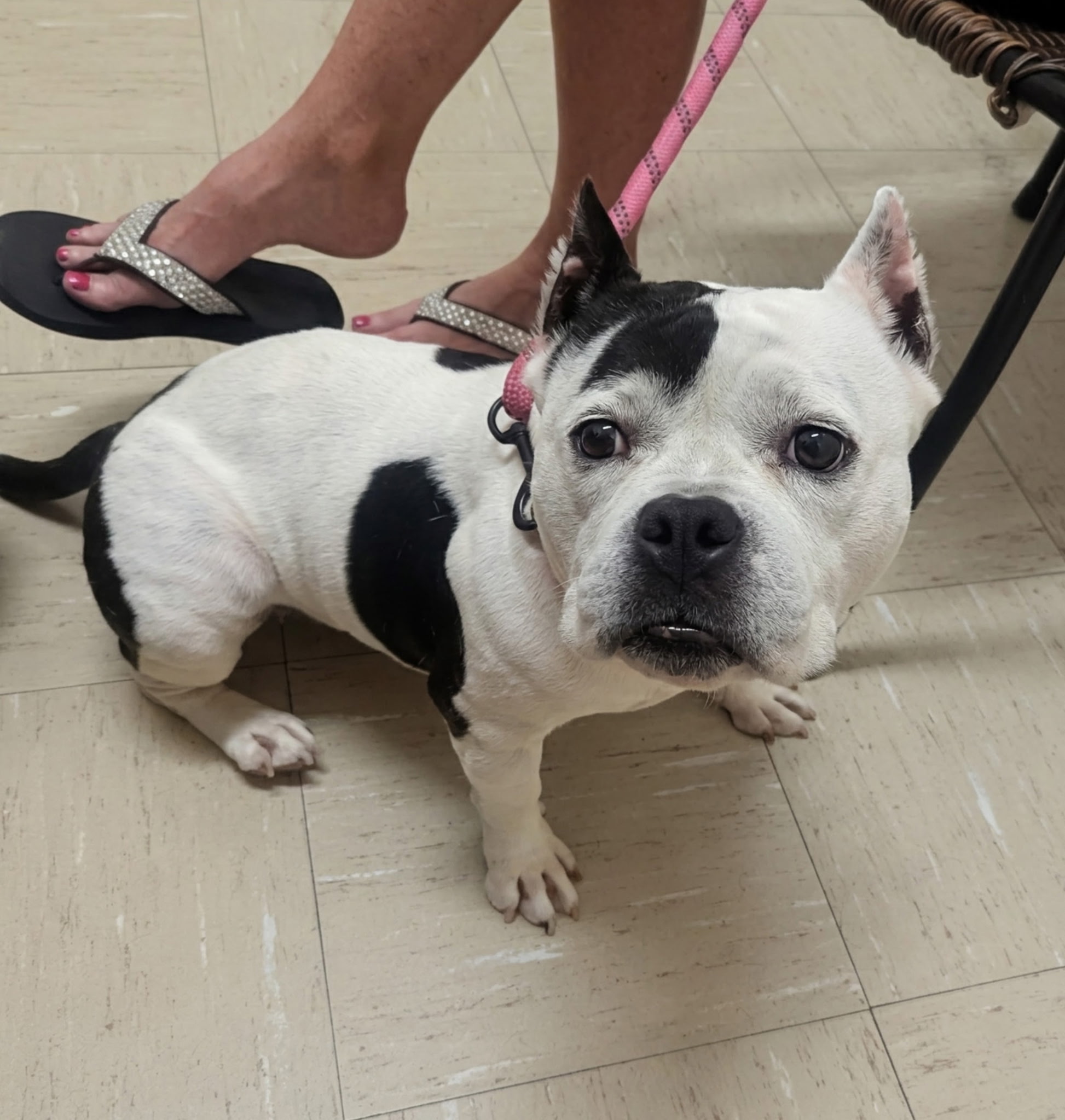
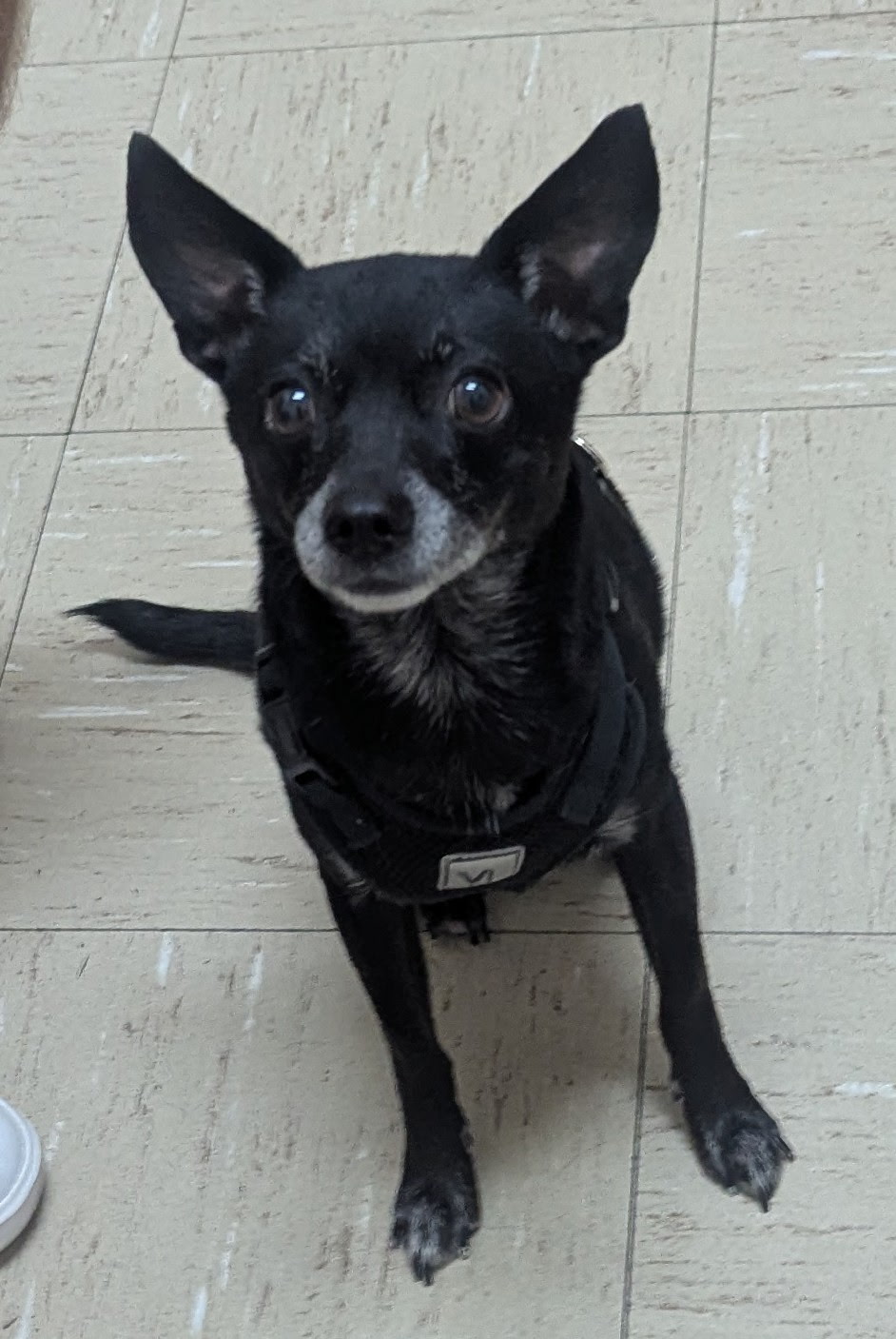
A growling dog or hissing cat is clearly uncomfortable, but many pets communicate fear much earlier and much more subtly.
Possible signs of stress in dogs include:
- Panting when not hot
- Trembling
- Pacing
- Freezing
- Trying to hide behind the owner
- Repeated lip licking
- Yawning outside a normal sleepy context
- Turning the head away
- Avoiding eye contact
- Refusing treats they normally love
- Trying to escape
- Growling, snapping, or barking defensively
Possible signs of stress in cats include:
- Crouching tightly in the carrier
- Hiding beneath bedding
- Flattened ears
- Dilated pupils
- Tail wrapped tightly around the body
- Freezing
- Rapid breathing
- Growling or hissing
- Swatting
- Trying to escape
- Refusing food
These behaviors should not automatically be interpreted as a pet being “bad” or “aggressive.”
They may be communication from an animal that feels frightened, threatened, painful, overwhelmed, or unable to escape.
The Best Fear Free Veterinary Visit Starts Before You Leave Home
One of the most effective ways to improve veterinary visits is to prepare before the appointment day.
The American Animal Hospital Association’s guidance for preparing pets for veterinary visits emphasizes positive handling practice, gradual carrier familiarity, and discussing additional support with the veterinary team when a pet experiences substantial fear.
1. Tell the Veterinary Team About Your Pet’s Fear Before the Appointment
Do not wait until your frightened dog is already struggling in the lobby or your cat is hissing from the back of the carrier.
Tell us in advance if your pet has previously:
- Trembled or panicked during veterinary visits
- Hidden or refused to leave the carrier
- Growled, snapped, scratched, or bitten
- Needed heavy restraint
- Required sedation
- Experienced motion sickness
- Been particularly afraid of nail trims, injections, ear exams, or blood draws
- Had a negative experience at another veterinary hospital
Previous behavior gives the veterinary team valuable information for planning the next visit.
2. Ask About Pre-Visit Medication Before a Difficult Appointment
For some pets, environmental changes and treats are not enough.
A veterinarian may prescribe medication to reduce fear and anxiety before the pet ever leaves home.
This is known as a pre-visit pharmaceutical or pre-visit medication plan.
Medications commonly used in veterinary behavior and Fear Free protocols vary according to species, age, health, medications, and the patient’s previous response. They should therefore be selected and prescribed by a veterinarian for the individual pet.
Fear Free’s veterinary curriculum recognizes pre-visit medication as a tool for reducing fear, anxiety, and stress and improving safety during transport and veterinary care.
AAHA behavior and anesthesia guidance likewise supports the use of anxiolytic medication for appropriately selected fearful dogs and cats.
Do not give leftover human medication, another pet’s medication, Benadryl, CBD, sedatives, or supplements specifically for a veterinary visit unless your veterinarian has told you to do so.
3. Do Not Think of Sedation as a Failure
This is one of the most important concepts for owners of highly fearful pets.
Fear Free care does not mean avoiding sedation at all costs.
There are situations in which repeatedly holding down a terrified animal is more stressful and potentially less safe than using appropriate chemical restraint or sedation.
Sedation may allow:
- A more complete examination
- Safer diagnostic testing
- Accurate positioning for X-rays
- Less physical restraint
- Reduced risk of injury to the pet
- Reduced risk of injury to veterinary personnel
- A less frightening experience for the patient
The decision depends on the medical urgency, procedure, patient’s health, and degree of fear or defensive behavior.
Sometimes the most compassionate plan is medication. Sometimes it is sedation. Sometimes it is stopping a non-urgent procedure and trying again under a better plan.
4. Help Your Cat Learn That the Carrier Is Not a Warning Signal
For many cats, stress begins long before they arrive at the hospital.
If the carrier appears only once a year immediately before a frightening trip, the cat can quickly learn that the carrier predicts something unpleasant.
Instead:
- Leave the carrier out as part of the home environment.
- Place comfortable bedding inside.
- Offer treats or meals near or inside it.
- Allow your cat to enter and exit voluntarily.
- Avoid chasing the cat around the house immediately before the appointment whenever possible.
A sturdy carrier with easy access—such as one with a removable top—can make veterinary handling easier because some cats can initially remain in the bottom half during portions of the examination.
The Feline Veterinary Medical Association’s Cat Friendly resources include practical carrier-training and transport guidance for cat owners.
For more feline-specific guidance, see our article on Fear Free veterinary care for cats in Cave Creek .
5. Practice Calm Handling at Home
Veterinary examinations involve touching parts of the body that a pet may not normally have handled.
When your pet is relaxed, brief positive practice sessions can help build familiarity with:
- Touching the ears
- Lifting the lips
- Looking at the teeth
- Touching paws
- Handling legs
- Briefly touching the abdomen
- Standing on a mat
Keep sessions short and pair them with something your pet values.
Never force repeated handling if your pet becomes frightened or defensive. The goal is gradual familiarity, not proving that the pet will tolerate restraint.
6. Bring Rewards Your Pet Actually Loves
Food can be a powerful tool for creating positive associations and distracting a pet during selected procedures.
Consider bringing small portions of your pet’s favorite treats unless your veterinary team has instructed you to withhold food for anesthesia, diagnostic testing, or another medical reason.
Some pets prefer:
- Soft training treats
- Small pieces of a familiar high-value food
- Lickable cat treats
- A favorite toy
- A familiar blanket
- Attention from their owner
Not every frightened pet will eat. Refusing a normally irresistible treat can itself be a useful indication that the patient’s stress level has become high.
7. Make the Car Ride Part of the Plan
Some pets are already highly stressed before they reach the hospital because they associate the car with fear, nausea, or veterinary visits.
For dogs, gradual positive car exposure can be helpful when there is enough time before the appointment.
For cats:
- Transport the cat in a secure carrier.
- Prevent the carrier from sliding around the vehicle.
- Use familiar bedding.
- Consider partially covering the carrier if visual stimulation increases stress.
- Keep the vehicle environment calm.
If your pet drools, vomits, vocalizes intensely, or appears nauseated during travel, tell your veterinarian. Motion sickness can make the entire veterinary experience worse, and medication may be appropriate for some patients.
8. Arizona Heat Changes the Transportation Plan
Pet owners in Cave Creek and the surrounding North Valley need to consider something that may be less important in cooler climates: extreme heat.
Never leave a dog or cat unattended in a parked vehicle while waiting for an appointment, even for a short period during warm Arizona weather.
If your pet becomes less stressed by avoiding a busy reception area, contact the hospital before your visit and ask what arrival or check-in options may be available that day rather than waiting in an uncooled vehicle.
Dogs and cats that develop excessive panting, weakness, collapse, or other signs of heat illness need prompt veterinary attention.
Learn more about heatstroke in dogs and cats in Cave Creek .
9. Nonslip Surfaces Can Make a Big Difference
A frightened dog standing on a slick examination table may feel even more unstable and threatened.
Depending on the patient and procedure, veterinary teams may use:
- Non-slip mats
- Towels
- Familiar bedding
- Floor-level examination when appropriate
- Alternative positioning
The goal is to give the patient secure footing and avoid adding unnecessary physical instability to an already unfamiliar environment.
10. More Restraint Is Not Always Better Restraint
Traditional veterinary handling sometimes relied heavily on physically overpowering an animal to complete a procedure.
Modern behavior-aware handling asks whether the same medical goal can be accomplished with less force.
Depending on the situation, this can involve:
- Changing the patient’s position
- Pausing
- Using food distraction
- Allowing the pet to remain on the floor
- Using a towel strategically with a cat
- Changing personnel or approach
- Using pre-visit medication
- Using sedation when appropriate
AAHA recommends stress-reducing handling and positive reinforcement and notes that medication or sedation can be appropriate when a patient’s fear is substantial.
11. Sometimes the Best Decision Is to Stop and Try Again
If a procedure is elective and a pet’s fear continues escalating despite reasonable modifications, forcing completion may make future care more difficult.
When medically safe, the veterinarian may decide to postpone a non-urgent procedure and develop a better plan for the next attempt.
That plan might include:
- Pre-visit medication
- Different appointment timing
- A different handling approach
- Additional behavior preparation
- Sedation
This decision changes when a pet is seriously ill or injured. Urgent medical needs sometimes require procedures despite fear because delaying care would pose a greater risk.
Fear Free Care Does Not Mean Delaying Necessary Medical Care
A dog struggling to breathe, a blocked male cat, a collapsed patient, or an animal with serious trauma cannot always be acclimated slowly to every part of the hospital experience.
In urgent situations, stabilization comes first.
Fear-reducing handling, analgesia, anxiolysis, or sedation can still be incorporated whenever they are compatible with safe medical treatment.
Desert Forest Animal Hospital provides same-day urgent veterinary care in Cave Creek for many stable sick and injured dogs and cats during regular business hours when staffing, capacity, and the patient’s medical needs allow.
DFAH is not a 24-hour emergency hospital. Call (480) 488-2010 before arriving with an urgent concern so our team can help determine the safest next step.
Fear Free Veterinary Visits for Cats
Cats deserve particular attention because many experience stress from several events stacked together:
- Seeing the carrier
- Being placed inside it
- Car travel
- Unfamiliar smells
- Dogs or unfamiliar people
- Leaving the carrier
- Physical handling
- Diagnostic procedures
By the time the examination begins, the cat may already be highly aroused.
Reducing stress therefore begins at home—not once the cat is already on the examination table.
Useful strategies may include carrier conditioning, familiar bedding, reducing visual stimulation, gentle handling, positive reinforcement, and pre-visit medication for selected patients.
Fear Free Visits for Puppies and Kittens
The best time to prevent veterinary fear is before it becomes deeply established.
Early visits can help puppies and kittens learn that veterinary handling predicts good things.
During puppy and kitten visits , positive experiences can be built around:
- Treats
- Gentle handling
- Brief examination
- Comfortable surfaces
- Appropriate socialization
- Carrier familiarity for kittens
- Practice handling at home
The goal is not merely to finish a vaccine series. It is also to establish a lifetime relationship in which veterinary care is as manageable as possible.
Senior Pets May Become More Fearful Because Something Hurts
A senior dog that suddenly resists having a leg handled or a cat that becomes defensive when lifted may not simply be “getting grouchy.”
Pain from arthritis, dental disease, spinal disease, or another medical problem can substantially change how an animal responds to handling.
Senior patients may also have:
- Vision changes
- Hearing loss
- Reduced mobility
- Cognitive changes
- Chronic pain
Our senior pet care in Cave Creek takes mobility, pain, behavior, chronic disease, and quality of life into account.
Dental Pain Can Also Make a Pet Resistant to Handling
A dog or cat with painful oral disease may resist having the muzzle touched, pull away during examination, or become defensive when the mouth is opened.
That is another reason behavior should be interpreted medically rather than automatically labeled as disobedience.
Learn about signs of dental pain and oral disease in dogs and cats and our veterinary dental care in Cave Creek .
What About Pheromones, Calming Supplements, and Other Products?
Some pets may benefit from adjunctive strategies such as species-specific pheromone products or other calming aids, but response varies among individuals and these products should not be expected to overcome severe fear by themselves.
Fear Free resources include environmental modification, pheromones, positive reinforcement, and pharmacologic support as potential components of a broader plan.
If your pet has substantial fear, ask your veterinarian which strategies have meaningful evidence and are appropriate for your pet’s health rather than purchasing multiple products without a coordinated plan.
What Should I Bring to a Fearful Pet’s Veterinary Appointment?
When medically appropriate, useful items may include:
- Your pet’s favorite small treats
- A favorite toy
- Familiar bedding or a small blanket
- Your cat’s familiar carrier
- A list of medications and supplements
- Video of concerning behavior or symptoms at home
- Information about previous difficult veterinary experiences
Most importantly, tell the veterinary team what has and has not worked before.
What Should I Do After the Veterinary Visit?
Some dogs and cats return home and immediately behave normally. Others need time to decompress.
After a stressful or medically involved visit:
- Provide a quiet place to rest.
- Allow your pet to choose when to interact.
- Avoid unnecessary handling.
- Follow all medication and recovery instructions.
- Monitor for medical problems related to the condition being treated.
For cats in multi-cat households, unfamiliar hospital odors may occasionally affect interactions when the patient returns home. A quiet reintroduction period can be helpful when needed.
Fear Free Veterinary Care in Cave Creek, Carefree & North Scottsdale
Desert Forest Animal Hospital is located at:
6554 E Cave Creek Road
Cave Creek, AZ 85331
We provide veterinary care for dogs and cats from:
- Cave Creek
- Carefree
- Desert Mountain
- North Scottsdale
- Tatum Ranch
- Terravita
- Desert Hills
- Anthem
- Nearby North Valley communities
Families living nearby can learn more about veterinary care near Carefree, Arizona .
If your pet is new to DFAH, visit our New Clients page before your first appointment.
Frequently Asked Questions About Fear Free Veterinary Visits
What is a Fear Free Certified veterinarian?
A Fear Free Certified veterinary professional has completed specialized education focused on recognizing and reducing fear, anxiety, and stress associated with veterinary care. Fear Free certification includes training in transport, hospital environment, handling, procedures, behavior, pre-visit medication, sedation, anesthesia, and related patient-care strategies.
Is Desert Forest Animal Hospital a Fear Free Certified Practice?
Dr. Quinn Bauer is a Fear Free Certified veterinarian, and Desert Forest Animal Hospital incorporates Fear Free principles into patient care when medically appropriate. Individual professional certification and certification of an entire veterinary facility are separate Fear Free designations.
Can my dog take medication before a veterinary appointment?
For some dogs, a veterinarian may prescribe pre-visit anti-anxiety medication to reduce fear and make transportation, examination, or treatment safer and less stressful. Medication choice and dosing must be individualized by a veterinarian who understands the dog’s health and medication history.
Can my cat take medication before going to the veterinarian?
Yes, selected cats benefit substantially from veterinarian-prescribed pre-visit medication. The appropriate medication depends on the individual cat’s health, age, other medications, previous behavior, and the type of appointment.
Does Fear Free care mean my pet will never need sedation?
No. Sedation can sometimes be an important part of Fear Free care. For a highly frightened, painful, or defensive animal, appropriate sedation may be safer and less distressing than escalating physical restraint.
Should I skip my pet’s breakfast before a veterinary visit?
Only when appropriate for that individual pet and appointment. Food motivation can be useful for positive reinforcement, but some pets should not be fasted because of age, disease, medication needs, or the reason for the visit. Pets undergoing anesthesia or certain diagnostic procedures may receive specific fasting instructions. Follow your veterinary team’s directions.
Why is my cat so afraid of the carrier?
Many cats learn that the carrier predicts an unpleasant car ride or veterinary visit because it appears only when they are about to leave home. Leaving the carrier accessible between appointments and pairing it with bedding, food, or treats can help change that association.
Can I stay with my pet during the examination?
Often owners can remain with their pets for routine examinations, but the safest arrangement depends on the patient, procedure, hospital workflow, and medical situation. Some procedures must be performed in a treatment or diagnostic area.
What if my pet is too frightened to complete the examination?
If the medical situation is not urgent, the veterinarian may decide that stopping and developing a better plan is safer than escalating restraint. A future visit may involve pre-visit medication, different handling, additional preparation, or sedation.
Can Fear Free techniques be used during an urgent veterinary visit?
Yes, whenever they are compatible with the patient’s medical needs. In an emergency, stabilization and necessary treatment come first, but gentle handling, pain control, anxiolysis, and sedation can still be incorporated when appropriate.
What can I do if my puppy or kitten is not afraid of the vet yet?
That is the ideal time to build positive associations. Practice gentle handling at home, make carriers and car travel familiar, use positive reinforcement, and help early veterinary visits remain as calm and predictable as possible.
Trusted Resources for Lower-Stress Veterinary Visits
- Fear Free — Veterinary Certification Program and Principles
- Fear Free — Certified Professional and Practice Directory
- American Animal Hospital Association — Preparing Your Pet for a Successful Veterinary Visit
- AAHA — Medications for Fearful Dogs and Cats
- Feline Veterinary Medical Association — Cat Friendly Resources
Help Your Pet Have a Better Veterinary Experience
If your dog or cat has been frightened during previous veterinary visits, tell us before the next appointment.
There is rarely one single solution for every fearful patient. The most effective plan may involve a combination of preparation at home, environmental changes, positive reinforcement, different handling, pain management, pre-visit medication, or sedation.
The goal is not merely to make the appointment easier for the veterinary team.
The goal is to provide the medical care your pet needs while minimizing avoidable fear, anxiety, stress, and pain.
Desert Forest Animal Hospital
6554 E Cave Creek Road
Cave Creek, AZ 85331
(480) 488-2010
Learn more about Fear Free veterinary care at Desert Forest Animal Hospital.
New to DFAH? Learn what to expect at your first visit.
Medical Review
Bryan Hayter, DVM
Owner & Medical Director
Desert Forest Animal Hospital
Cave Creek, Arizona
This article provides general educational information and does not replace veterinary examination, behavioral assessment, or individualized medication recommendations. Do not give sedatives, anti-anxiety medication, supplements, or other medications for a veterinary visit unless directed by your veterinarian.