

Pancreatitis is inflammation of the pancreas, an organ that plays an important role in digestion and blood-sugar regulation. In some pets, pancreatitis causes a relatively mild episode of nausea, decreased appetite, or gastrointestinal upset. In others, inflammation can become severe enough to cause dehydration, significant abdominal pain, electrolyte abnormalities, systemic inflammation, and complications involving other organs.
That wide range is one reason pancreatitis can be frustrating for pet owners. Two dogs with the same diagnosis may need very different levels of treatment.
A stable dog with mild nausea and abdominal discomfort may be able to recover at home with medication, dietary management, and close monitoring. A dehydrated or painful patient who is repeatedly vomiting may require hospitalization, intravenous fluids, injectable medications, nutritional support, and monitoring for several days.
Cats can be even more difficult to recognize because feline pancreatitis often causes subtle signs rather than dramatic vomiting.
At Desert Forest Animal Hospital, we evaluate dogs and cats with vomiting, decreased appetite, abdominal discomfort, lethargy, and other gastrointestinal symptoms. During regular hospital hours, many stable patients can be evaluated through our same-day urgent veterinary care in Cave Creek service.
If your pet is sick, call (480) 488-2010 before coming in so our team can discuss the symptoms and help determine the appropriate level of care.
What Is Pancreatitis?
The pancreas sits near the stomach and small intestine and has two major jobs. It produces hormones such as insulin, which help regulate blood sugar, and digestive enzymes that help the intestine break down food.
Normally, digestive enzymes remain inactive until they reach the intestinal tract.
With pancreatitis, inflammatory processes involving the pancreas can damage pancreatic tissue and surrounding structures. In more severe disease, the inflammatory response may extend beyond the pancreas and affect circulation, hydration, electrolytes, blood pressure, and other organs.
Pancreatitis may occur as an isolated acute episode or recur over time. Some pets develop chronic pancreatic inflammation that can lead to repeated bouts of gastrointestinal illness.
The distinction between acute and chronic pancreatitis is technically based on changes within pancreatic tissue rather than simply how suddenly the pet became sick. For a pet owner, the more useful question is usually:
How sick is my pet right now, and what level of treatment does my pet need?
The Merck Veterinary Manual describes pancreatitis as one of the most common diseases of the exocrine pancreas in dogs and cats and emphasizes that severity can range from subclinical disease to serious systemic illness.
What Are the Signs of Pancreatitis in Dogs?
Dogs with pancreatitis may show:
- Repeated vomiting
- Decreased or absent appetite
- Lethargy
- Abdominal pain
- Diarrhea
- Dehydration
- Weakness
- Restlessness
- A hunched posture
- Reluctance to move
- An unusual “prayer position” with the front end lowered and rear end elevated
Some dogs simply appear uncomfortable and do not want to eat.
Mild pancreatitis can be much less obvious. A dog may have decreased appetite, one or two episodes of vomiting, softer stool, or simply seem quieter than normal.
That overlap matters because the same symptoms can also occur with intestinal obstruction, dietary indiscretion, kidney or liver disease, toxin exposure, gastrointestinal inflammation, infection, Addison’s disease, cancer, and many other conditions.
Vomiting does not automatically mean pancreatitis, and a pancreatic test should not be interpreted without considering the rest of the patient.
Pancreatitis in Cats Can Look Very Different
Cats with pancreatitis often do not present like dogs.
A cat may simply stop eating, hide, become lethargic, lose weight, become dehydrated, or seem uncomfortable. Vomiting can occur, but it may be absent.
Cats with pancreatic inflammation may also have concurrent intestinal or liver disease. Veterinarians sometimes use the term triaditis when pancreatic, intestinal, and hepatobiliary inflammation occur together.
Merck discusses the association between pancreatitis and concurrent gastrointestinal or hepatobiliary disease in cats in its professional overview of pancreatitis in dogs and cats.
That is one reason a cat that suddenly stops eating deserves attention even when there is no vomiting.
Learn more in our guide: Cat Not Eating? When Loss of Appetite Is Urgent.
What Causes Pancreatitis?
In many dogs and cats, we never identify one definitive trigger.
That does not mean the disease is mysterious or untreatable. It means pancreatitis is often the final result of several possible risk factors rather than one simple cause.
In dogs, dietary indiscretion—especially unusually fatty foods, table scraps, garbage, or a large high-fat meal—can be associated with an episode. Elevated blood triglycerides, obesity, certain medications, endocrine disease, previous pancreatitis, and individual genetic susceptibility may also increase risk.
Miniature Schnauzers are one well-known example because some have inherited abnormalities in triglyceride metabolism.
Cats often develop pancreatitis without an obvious dietary trigger, and concurrent gastrointestinal or liver disease may be more relevant than dietary fat alone.
The Merck Veterinary Manual’s pet-owner guide to pancreatitis also notes that many cases occur without an identifiable underlying cause.
How Do Veterinarians Diagnose Pancreatitis?
There is no single finding that should be interpreted in isolation as “proof” of pancreatitis.
A thoughtful diagnosis combines the pet’s history, physical examination, symptoms, laboratory findings, pancreas-specific lipase testing, and diagnostic imaging when appropriate.
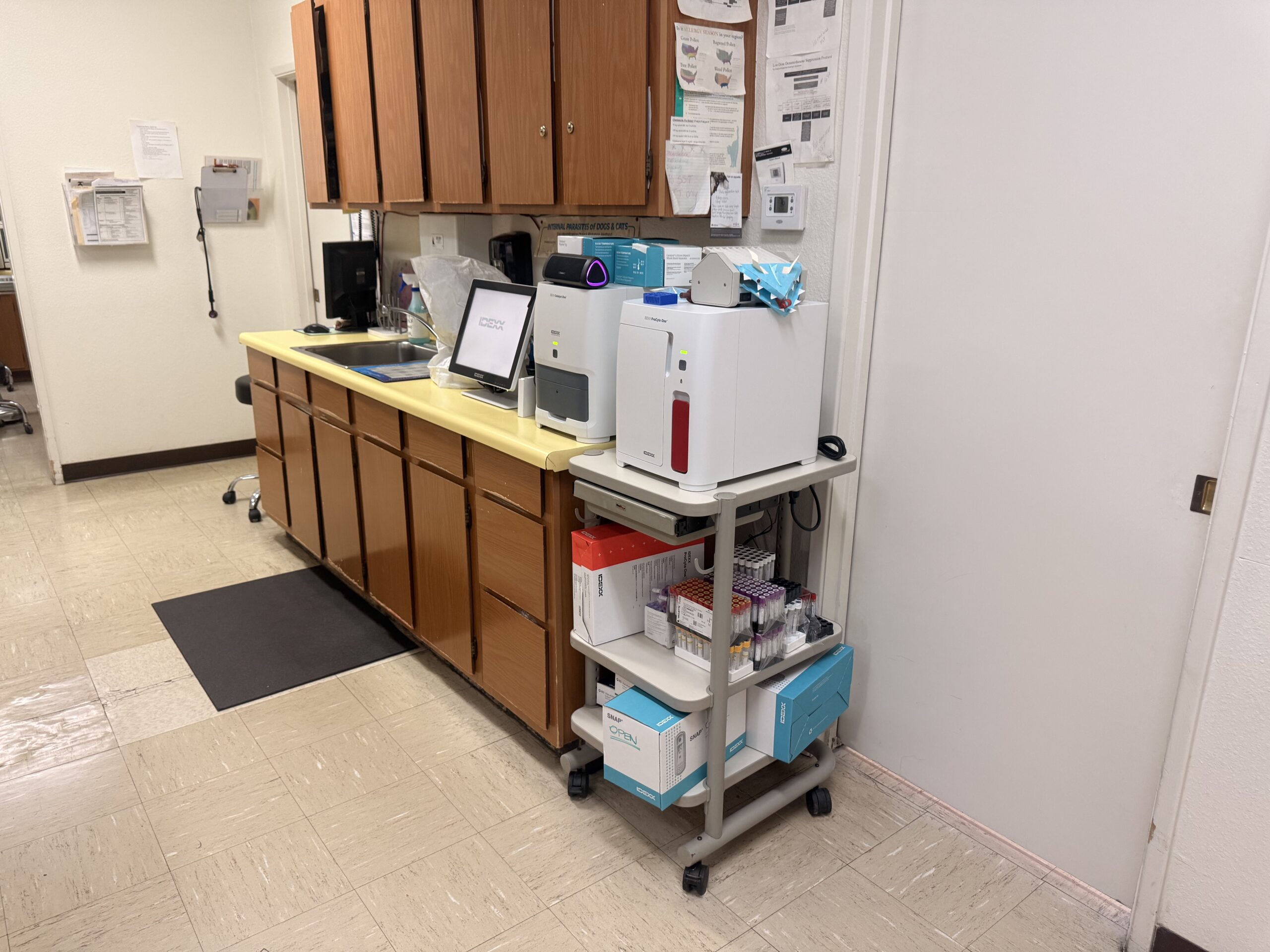
At Desert Forest Animal Hospital, evaluation may begin with a physical examination and in-house diagnostic blood work.
Blood testing can help us assess:
- Hydration
- Red and white blood cells
- Platelets
- Kidney values
- Liver values
- Blood glucose
- Electrolytes
- Other abnormalities that may influence treatment decisions
A veterinarian may also recommend a pancreas-specific lipase test.
These tests can provide valuable evidence, but the result still needs to be interpreted along with the entire clinical picture. A veterinarian should not diagnose or exclude pancreatitis based solely on one laboratory number.
Can an Ultrasound Diagnose Pancreatitis?
Abdominal ultrasound can be particularly useful because it allows the veterinarian to examine the pancreas as well as the stomach, intestines, liver, gallbladder, kidneys, lymph nodes, and surrounding tissues.
Ultrasound may identify pancreatic enlargement, inflammatory changes around the pancreas, abdominal fluid, abnormalities involving nearby organs, or another explanation for the pet’s symptoms.
However, a normal ultrasound does not necessarily rule out pancreatitis, particularly with early or mild disease.
That is why diagnosis is based on the combination of clinical signs, laboratory testing, imaging, and response to treatment rather than one test alone. The Merck Veterinary Manual likewise recommends interpreting pancreatic lipase testing and diagnostic imaging in the context of the complete clinical picture.
Desert Forest Animal Hospital offers abdominal ultrasound for dogs and cats in Cave Creek, including same-day availability in many cases when medically appropriate and scheduling allows.
What About X-Rays?
X-rays usually cannot confirm pancreatitis by themselves.
They may still be very useful.
A vomiting dog with abdominal pain could have swallowed a foreign object, developed an intestinal obstruction, have abnormal gas patterns, an enlarged organ, abdominal fluid, or another condition that changes the treatment plan entirely.
Digital X-rays and ultrasound therefore answer different questions and are sometimes used together.
Learn more about digital veterinary X-rays and radiology at Desert Forest Animal Hospital.
How Is Pancreatitis Treated?
The foundation of pancreatitis treatment remains supportive care.
The goal is to control pain and nausea, restore hydration and electrolyte balance, provide appropriate nutrition, identify complicating factors, and allow the pancreas and gastrointestinal system time to recover.
The severity of the patient determines whether that can safely happen at home or requires hospitalization.
Mild Pancreatitis May Be Treated as an Outpatient
Not every patient with pancreatitis needs hospitalization.
A dog or cat with mild disease may be a reasonable outpatient candidate when the patient is cardiovascularly stable, dehydration is mild or absent, vomiting is controlled, medications can be given at home, discomfort can be adequately managed, there are no major laboratory or organ abnormalities, and the pet is able to begin eating.
Outpatient treatment may include:
- Anti-nausea medication
- Pain medication when needed
- Dietary modification
- Hydration support
- Close monitoring at home
- Follow-up examination or laboratory testing when indicated
These patients still need monitoring.
Pancreatitis can change over time, and a patient that appeared mildly affected earlier in the day may require a different treatment plan if vomiting, pain, dehydration, weakness, or appetite loss progresses.
Moderate to Severe Pancreatitis May Require Hospitalization
A pet that is repeatedly vomiting, dehydrated, significantly painful, profoundly lethargic, unable to eat, weak, or showing concerning laboratory abnormalities may need hospitalization.
Hospital treatment may include:
- Intravenous fluids
- Injectable anti-nausea medication
- Pain medication
- Electrolyte correction
- Nutritional support
- Repeat laboratory testing
- Frequent reassessment of hydration, pain, appetite, and overall stability
Some patients improve substantially within a day.
Others with moderate to severe pancreatitis may require hospitalization with IV fluids, pain medication, nausea control, and supportive treatment for several days before hydration, comfort, appetite, and laboratory abnormalities improve enough for safe outpatient care.
The American Animal Hospital Association describes fluid therapy, pain management, anti-nausea treatment, and nutritional support as important components of pancreatitis care.
Desert Forest Animal Hospital can provide fluid therapy and medical stabilization when appropriate during regular hospital hours. Because DFAH is not a 24-hour emergency or intensive-care hospital, a pet requiring overnight IV fluids, continuous monitoring, advanced emergency treatment, or intensive care may need transfer to a 24-hour emergency or specialty hospital.
Learn more about same-day urgent veterinary care and emergency triage at DFAH.
That decision is based on the individual patient—not simply the diagnosis of pancreatitis.
Pain Control Matters
Pancreatitis can be painful even when a pet does not cry, whine, or react dramatically.
Dogs may stand hunched, hesitate to lie down, repeatedly change position, tense their abdomen, or become reluctant to move.
Cats frequently hide pain.
Current internal-medicine guidance supports recognizing and treating abdominal pain rather than waiting for a pet to display dramatic pain behaviors. The Merck Veterinary Manual pancreatitis guidance includes analgesia as an important component of supportive treatment.
Good pain control is not simply about comfort. A painful patient may also be less likely to eat, drink, rest, and recover normally.
Treating Nausea Is Just as Important as Treating Vomiting
A pet does not have to be actively vomiting to be nauseated.
Possible signs of nausea include:
- Lip licking
- Drooling
- Repeated swallowing
- Turning away from food
- Sniffing food and walking away
- Hiding
- Refusing favorite foods
Anti-nausea medication can make an important difference in appetite and comfort.
Should a Dog With Pancreatitis Be Fasted?
Older pancreatitis treatment often involved withholding food for prolonged periods in an effort to “rest the pancreas.”
That approach has changed.
Unless vomiting remains uncontrolled despite appropriate treatment, modern veterinary internal-medicine recommendations generally favor early enteral nutrition rather than prolonged fasting.
The Merck Veterinary Manual discusses early nutritional support as part of current pancreatitis management.
Once nausea and vomiting are adequately controlled, we generally want the gastrointestinal tract receiving appropriate nutrition.
What Should a Dog Eat After Pancreatitis?
For dogs recovering from an uncomplicated pancreatitis episode, Desert Forest Animal Hospital commonly recommends a highly digestible, low-fat diet for approximately one to two weeks after the episode, depending on the individual patient and response to treatment.
Meals may initially be smaller and more frequent.
After recovery, the long-term diet should be reconsidered rather than automatically returning every patient to the exact diet that was being fed before the episode.
For a dog that experienced an isolated event after unusual dietary indiscretion and has no other risk factors, permanent strict fat restriction may not always be necessary.
However, dogs with:
- Repeated bouts of pancreatitis
- Hypertriglyceridemia
- Obesity
- Previous dietary-associated episodes
- Other predisposing medical conditions
may benefit from a long-term or permanent reduction in dietary fat.
The appropriate long-term diet should still be complete and balanced and should account for the dog’s other medical and nutritional needs.
If your dog has experienced pancreatitis—particularly more than once—our team can help review the complete diet, treats, chews, table food, calorie intake, body condition, and relevant laboratory findings through individualized pet nutrition counseling.
Does a Cat With Pancreatitis Need a Low-Fat Diet?
Cats are different.
Dietary fat appears to play a less central role in feline pancreatitis than it does in canine pancreatitis, so aggressive fat restriction is not automatically appropriate for every cat.
For cats, one of the most important nutritional priorities is often getting the patient to eat an appropriate and well-tolerated diet.
This is especially important because prolonged inadequate food intake can create additional medical problems in cats.
Diet recommendations for a cat with pancreatitis should therefore be individualized based on appetite, body condition, weight, concurrent intestinal or liver disease, and the overall clinical picture.
What Is PANOQUELL-CA1?
Pet owners may now hear about a newer medication called PANOQUELL-CA1, or fuzapladib sodium.
PANOQUELL-CA1 has conditional FDA approval for the management of clinical signs associated with acute-onset pancreatitis in dogs. It is given intravenously and targets part of the inflammatory process involved in pancreatitis. It is not approved for cats.
You can review the official FDA Freedom of Information summary for PANOQUELL-CA1.
This is an interesting addition to veterinary medicine, but it is important to understand what the available evidence does—and does not—show.
In a randomized controlled multicenter clinical study, dogs treated with fuzapladib showed greater improvement in a composite clinical activity score than dogs receiving placebo. However, the study did not establish that the medication improves survival or shortens hospitalization.
The study can be reviewed through PubMed and the Journal of Veterinary Internal Medicine.
Does Every Dog With Pancreatitis Need PANOQUELL?
No.
At Desert Forest Animal Hospital, we view PANOQUELL as one possible treatment option rather than an automatic requirement for every dog diagnosed with pancreatitis.
Supportive treatment—including appropriate fluid therapy, pain control, nausea control, nutrition, and management of complications—remains the foundation of pancreatitis care.
In our clinical experience, PANOQUELL can also add significant expense to the treatment plan.
Like other medications, it has potential adverse effects. FDA safety information describes adverse events observed during clinical studies and post-approval use, including gastrointestinal, respiratory, liver-related, and injection-site abnormalities.
That does not mean the medication is inappropriate or unsafe when properly prescribed. It means the veterinarian and pet owner should consider the potential benefit, severity of disease, cost, available evidence, and possible adverse effects for the individual patient.
For some dogs—particularly selected patients with acute pancreatitis—it may be reasonable to consider.
For other dogs, especially mild cases that are responding appropriately to conventional supportive care, we may determine with the pet owner that the additional medication, cost, and potential adverse effects are not necessary for successful treatment.
Our goal is to explain what a treatment is expected to add to the plan rather than recommending a medication simply because it is new.
Do Dogs With Pancreatitis Need Antibiotics?
Usually not solely because they have pancreatitis.
Pancreatitis is primarily an inflammatory disease, not automatically a bacterial infection.
Current internal-medicine guidance does not recommend routine antibiotic treatment for uncomplicated pancreatitis. Antibiotics may still be appropriate if another infection or a specific complication is identified.
The Merck Veterinary Manual’s professional pancreatitis guidance discusses antimicrobial use and the circumstances in which additional treatment may be appropriate.
This is another example of why treatment should be tailored to the individual patient rather than using the same medication package for every case.
Can Pancreatitis Come Back?
Yes.
Some pets experience one isolated episode and never have another.
Others develop repeated bouts.
When pancreatitis recurs, we start thinking beyond treatment of the immediate episode.
The veterinarian may review:
- The pet’s complete diet
- Treats, chews, and table food
- Body condition and weight
- Blood triglyceride levels
- Current medications
- Endocrine disease
- Gastrointestinal disease
- Liver or gallbladder disease
- Previous laboratory abnormalities
- Other possible contributing factors
In dogs with repeated episodes, a long-term low-fat diet may become an important part of reducing future risk, particularly when high triglycerides, obesity, or previous dietary triggers are present.
Repeated or chronic pancreatic disease can also occasionally contribute to complications such as diabetes mellitus or exocrine pancreatic insufficiency, so long-term monitoring may be recommended.
Pet owners interested in longer-term dietary planning can learn more about pet nutrition counseling at Desert Forest Animal Hospital.
When Is Pancreatitis an Urgent Veterinary Problem?
A dog or cat with repeated vomiting, abdominal pain, refusal of food, dehydration, or substantial lethargy should be evaluated promptly.
A stable patient may be appropriate for same-day urgent evaluation at Desert Forest Animal Hospital during regular hospital hours.
More severe signs can indicate that the patient needs a higher level of emergency care.
Seek urgent veterinary guidance for signs such as:
- Repeated or uncontrolled vomiting
- Significant abdominal pain
- Refusal of food combined with lethargy or vomiting
- Progressive dehydration
- Marked weakness
- Collapse or loss of consciousness
- Inability to stand
- Severe difficulty breathing
- Very pale or abnormal-colored gums
- Marked abdominal distension
- Rapidly worsening condition
If you are uncertain, call before driving.
Desert Forest Animal Hospital can help determine whether your dog or cat is an appropriate patient for our same-day urgent veterinary service or whether going directly to a 24-hour emergency hospital is safer.
Pancreatitis Treatment in Cave Creek, Arizona
Desert Forest Animal Hospital evaluates dogs and cats with vomiting, diarrhea, abdominal pain, decreased appetite, lethargy, dehydration, and other gastrointestinal concerns.
Depending on the patient, evaluation may include:
- Physical examination
- In-house laboratory testing
- Pancreatic lipase testing when appropriate
- Digital veterinary X-rays
- Abdominal ultrasound when medically appropriate and available
- Fluid therapy
- Pain and nausea management
- Dietary and nutritional planning
Having these diagnostic tools available locally can help answer an important question quickly:
Is this a mild gastrointestinal illness that can safely be treated at home, pancreatitis requiring more intensive treatment, or another abdominal disease entirely?
We provide veterinary care for dogs and cats from Cave Creek, Carefree, Desert Mountain, North Scottsdale, Tatum Ranch, Terravita, Desert Hills, Anthem, and surrounding North Valley communities.
Desert Forest Animal Hospital is not a 24-hour hospital. When a patient requires overnight monitoring, continuous IV therapy, advanced critical care, or specialty treatment, we will discuss referral or transfer to an appropriate facility.
Frequently Asked Questions About Pancreatitis in Dogs and Cats
Can a dog recover from pancreatitis at home?
Yes, some mild and stable cases can be treated as outpatients with medication, dietary management, hydration support, and close monitoring.
Dogs that are dehydrated, repeatedly vomiting, significantly painful, weak, unable to eat, or showing concerning laboratory abnormalities may require hospitalization.
How long is a dog hospitalized for pancreatitis?
It depends on the severity of illness and response to treatment. Some dogs improve relatively quickly, while moderate or severe cases may need IV fluids, pain medication, anti-nausea treatment, nutritional support, and monitoring for several days.
Can pancreatitis be fatal?
Severe pancreatitis can become life-threatening, particularly when it produces significant systemic inflammation, circulatory changes, or complications involving other organs.
Mild disease generally carries a much better prognosis. The Merck Veterinary Manual describes prognosis as favorable in many mild cases but more guarded when severe systemic disease develops.
Can one fatty meal cause pancreatitis?
Dietary indiscretion and unusually fatty foods are recognized risk factors for pancreatitis in dogs, although many cases occur without one identifiable dietary trigger.
Does pancreatitis always cause vomiting?
No. Mildly affected dogs may show nonspecific signs, and cats in particular may develop decreased appetite or lethargy without dramatic vomiting.
Is there a blood test for pancreatitis?
Pancreas-specific lipase testing can support the diagnosis, but no laboratory result should be interpreted alone. The veterinarian considers the result together with the examination, symptoms, other laboratory findings, and diagnostic imaging when indicated.
Does my dog need an ultrasound for pancreatitis?
Not every dog does.
Ultrasound can be particularly useful when the diagnosis is uncertain, symptoms are severe or persistent, laboratory findings are concerning, or the veterinarian needs to evaluate the pancreas and other abdominal organs for another possible cause.
Learn more about abdominal ultrasound for dogs and cats.
Does my dog need PANOQUELL for pancreatitis?
Not necessarily.
PANOQUELL-CA1 is a conditionally FDA-approved option for managing clinical signs associated with acute-onset pancreatitis in dogs, but supportive care remains fundamental.
We consider the severity of illness, potential benefit, cost, current evidence, possible adverse effects, and how the individual dog is responding to conventional treatment before deciding whether it makes sense to add PANOQUELL.
What should I feed my dog after pancreatitis?
For dogs, we commonly recommend a highly digestible, low-fat diet for approximately one to two weeks after an acute episode, followed by reassessment.
Dogs with repeat episodes, elevated triglycerides, obesity, dietary triggers, or other risk factors may benefit from a longer-term or permanent low-fat diet.
Dietary recommendations should be individualized. Learn more about our pet nutrition counseling in Cave Creek.
Can pancreatitis recur?
Yes. Some pets experience only one episode, while others have recurrent disease.
Repeated episodes should prompt consideration of diet, triglycerides, medications, body condition, concurrent gastrointestinal or endocrine disease, and whether a long-term dietary change is appropriate.
When should vomiting be treated as urgent?
Repeated vomiting, worsening lethargy, abdominal pain, inability to keep water down, dehydration, weakness, collapse, or significant appetite loss should prompt veterinary evaluation.
During regular hospital hours, call Desert Forest Animal Hospital at (480) 488-2010 before coming in so we can discuss whether your pet is appropriate for urgent veterinary care for vomiting and abdominal pain in Cave Creek or needs a 24-hour emergency facility.
Worried Your Dog or Cat May Have Pancreatitis?
Vomiting, abdominal pain, refusal to eat, or sudden lethargy can have many causes, and the appropriate treatment depends on what is actually happening.
During regular hospital hours, call Desert Forest Animal Hospital at (480) 488-2010 before coming in. We evaluate many stable sick dogs and cats through our same-day urgent-care service and can discuss whether your pet should be seen here or at a 24-hour emergency hospital.
Desert Forest Animal Hospital
6554 E Cave Creek Road
Cave Creek, AZ 85331
(480) 488-2010
Learn About Same-Day Urgent Veterinary Care →
Explore In-House Diagnostics & Blood Work →
Learn About Abdominal Ultrasound →
Medical Review & Editorial Standards
Reviewed for medical accuracy by Bryan Hayter, DVM — Owner & Medical Director
Last medically reviewed: October 2026
Dr. Hayter provides ownership and medical leadership for Desert Forest Animal Hospital and supports the hospital’s commitment to thoughtful, evidence-informed veterinary care for dogs and cats.
Medical information on this page is intended to help pet owners better understand pancreatitis and the questions they may wish to discuss with their veterinarian. It is not a substitute for examination, diagnosis, or an individualized treatment plan.
Learn more about Desert Forest Animal Hospital and our veterinary team →
Veterinary References
- Merck Veterinary Manual: Pancreatitis in Dogs and Cats
- Merck Veterinary Manual: Pancreatitis and Other Disorders of the Pancreas in Dogs
- American Animal Hospital Association: Understanding Pancreatitis in Pets
- U.S. Food and Drug Administration: PANOQUELL-CA1 Freedom of Information Summary
- Journal of Veterinary Internal Medicine / PubMed: Clinical Study of Fuzapladib in Dogs With Acute Pancreatitis