


A lump near your dog’s anus may be a benign, hormone-responsive growth—or a malignant tumor that requires prompt diagnosis and treatment. Understanding the difference can make an important difference in your dog’s outcome.
Learn about benign perianal gland adenomas, malignant anal sac adenocarcinoma, routine rectal examinations, needle aspiration, surgery, radiation, chemotherapy, and newer at-home treatment options.
Benign Adenoma vs. Malignant Adenocarcinoma: What Is the Difference?
Dogs have two anal sacs located beside the anus. These structures contain scent-producing glands. Dogs also have specialized glands in the surrounding skin called perianal or hepatoid glands.
Tumors can develop from either location. The most important distinction is whether the growth is benign or malignant and which gland it originated from.
Perianal Gland Adenoma
A tumor arising from hepatoid glands in the skin surrounding the anus. These growths are especially common in older, unneutered male dogs.
Benign adenomas do not spread to distant organs. However, they may grow, ulcerate, bleed, or interfere with defecation.
Neutering often causes these tumors to shrink. Surgical removal may also be indicated.
Anal Sac Adenocarcinoma
Also called apocrine gland anal sac adenocarcinoma, or AGASACA, this cancer develops within an anal sac.
It can invade surrounding tissues and spread to regional lymph nodes, particularly those inside the pelvis and abdomen.
Metastasis to the lungs, liver, bones, and other organs is also possible.
A third diagnosis, malignant perianal or hepatoid gland adenocarcinoma, arises from the glands in the surrounding skin rather than the anal sac. Although less common, this tumor can invade nearby tissue or metastasize.
Because these diagnoses have similar names, ask your veterinarian which specific type of tumor was identified on the pathology report.
| Feature | Perianal Adenoma | Anal Sac Adenocarcinoma |
|---|---|---|
| Origin | Skin glands around the anus | Glands inside the anal sac |
| Malignant? | No | Yes |
| Can spread? | No distant metastasis | Yes, especially to lymph nodes |
| Typical patients | Older intact male dogs | Middle-aged and older dogs of either sex |
| Neutering | Often an important treatment | Not a specific cancer treatment |
| Typical treatment | Neutering, removal when appropriate | Surgery, sometimes radiation or medication |
| Prognosis | Generally excellent | Varies with stage and treatment |
Signs and Symptoms of Anal Gland Tumors in Dogs
Some dogs have a visible lump or swelling around the anus. Others have no obvious symptoms, particularly in the earlier stages of anal sac cancer.
Possible warning signs include:
- A firm lump or swelling near the anus
- Excessive licking of the rear end
- Scooting or discomfort while sitting
- Bleeding or ulceration around a mass
- Straining or difficulty passing stool
- Constipation or changes in stool shape
- Pain during bowel movements
- Decreased appetite or unexplained weight loss
- Lethargy or weakness
- Increased thirst and urination
These symptoms can also occur with impacted anal sacs, infections, abscesses, and other noncancerous conditions. A veterinary examination is necessary to determine the cause.
Why Can Anal Sac Cancer Cause Increased Thirst?
Some anal sac adenocarcinomas produce substances that raise blood calcium levels, a condition known as hypercalcemia of malignancy.
Elevated calcium can cause excessive drinking, increased urination, vomiting, poor appetite, weakness, and kidney problems.
In some dogs, these systemic symptoms appear before an owner notices a mass.
Our in-house veterinary blood work and diagnostic services can help identify abnormalities that warrant further investigation.
Which Dog Breeds Are Most Susceptible?
Certain breeds are reported more frequently with tumors around the anal region, although dogs of any breed can develop these conditions.
Benign Perianal Adenomas
Breeds historically reported with increased occurrence include:
- Siberian Huskies
- Samoyeds
- Pekingese
- Cocker Spaniels
Older intact males are particularly susceptible because many benign adenomas are testosterone-dependent.
Anal Sac Adenocarcinoma
Breeds reported more frequently in veterinary studies include:
- English Cocker Spaniels
- English Springer Spaniels
- German Shepherd Dogs
- Golden Retrievers
- Dachshunds
- Alaskan Malamutes
- Cavalier King Charles Spaniels
This cancer affects male and female dogs, most often in middle age or later life.
Breed predisposition is not a diagnosis. Mixed-breed dogs and breeds not listed above can also develop anal-area tumors.
Why Routine Rectal Examinations Matter
One of the most important facts about anal sac cancer is that early tumors may not be visible from the outside.
A tumor may develop within the anal sac without causing obvious swelling, discomfort, or changes in a dog’s behavior.
During a veterinary rectal examination, the veterinarian can evaluate the anal sacs and surrounding tissues for abnormalities, including firmness, enlargement, asymmetry, and palpable masses.
Owners should discuss regular rectal examinations as part of preventive veterinary care, particularly for senior dogs and those with anal sac symptoms or changes in bowel movements.
The examination schedule should be individualized to the patient’s age, history, health, temperament, and ability to tolerate the procedure comfortably. Some patients may require additional handling support or sedation.
Routine anal sac expression is not the same as a complete rectal examination, and repeatedly expressing the glands does not prevent cancer.
Learn more about senior dog veterinary care and preventive examinations at Desert Forest Animal Hospital.
How Veterinarians Diagnose Anal Gland Tumors
A new growth near the anus should not automatically be assumed benign. Diagnosis may involve several steps depending on where the mass is located and whether cancer is suspected.
1. Physical and Rectal Examination
The veterinarian evaluates the size, firmness, location, and mobility of the mass and determines whether it appears to arise from the surrounding skin or from an anal sac.
Rectal palpation may also identify abnormalities that are not visible on external examination.
2. Fine-Needle Aspiration (FNA)
Fine-needle aspiration uses a small needle to collect cells from the tumor for microscopic examination, a process called cytology.
FNA is often a useful, minimally invasive first diagnostic test.
In some cases, cytology strongly suggests anal sac adenocarcinoma or helps distinguish a tumor from inflammation.
However, a needle aspirate is not 100% reliable at distinguishing benign from malignant tumors.
This limitation is particularly important with perianal hepatoid gland tumors, because certain benign and malignant tumors may have similar microscopic cellular appearances.
Cytology also does not always reveal whether a tumor has invaded surrounding tissues.
3. Biopsy and Histopathology
Histopathology involves examining an actual sample of tissue under the microscope.
Depending on the case, the veterinarian may recommend a tissue biopsy or complete surgical removal followed by laboratory analysis.
Histopathology can establish the precise tumor type, evaluate malignant characteristics, and assess surgical margins.
For a suspicious or persistent growth, a reassuring needle aspirate does not always eliminate the need for biopsy.
4. Blood Work and Cancer Staging
Blood testing evaluates general health, organ function, and possible abnormalities such as elevated calcium.
When anal sac adenocarcinoma is suspected, additional testing helps determine whether the cancer has spread.
Cancer staging may include:
- Chest X-rays: To evaluate the lungs for possible metastasis.
- Abdominal ultrasound: To examine internal organs and regional lymph nodes.
- CT imaging: For detailed staging or surgical planning.
- Lymph-node aspiration: To evaluate suspicious lymph nodes.
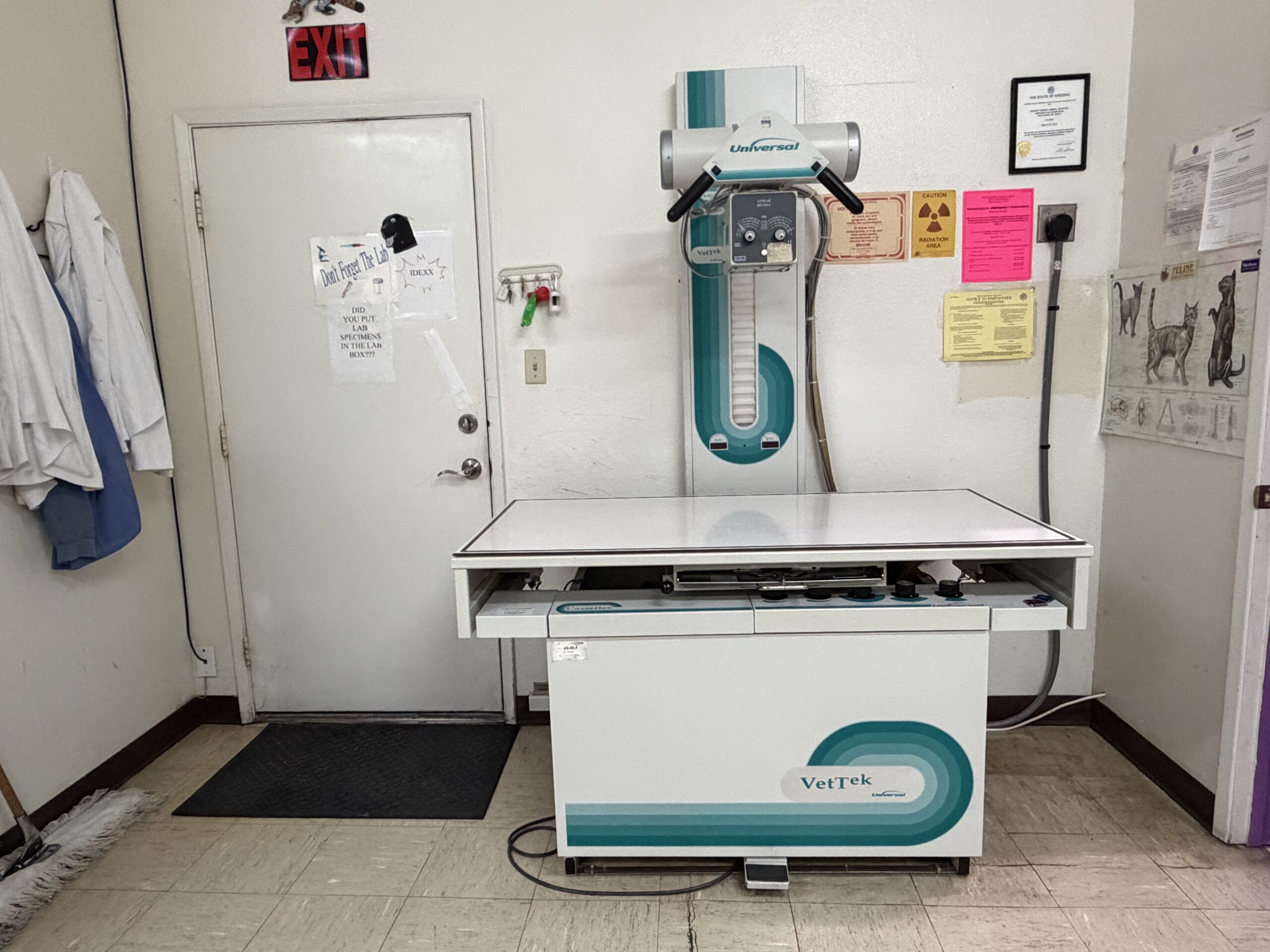
Desert Forest Animal Hospital offers veterinary diagnostics and blood testing , abdominal ultrasound for dogs and cats , and digital X-ray imaging .
Advanced staging and treatment may require consultation with a veterinary surgeon or oncologist.
Treatment Options for Anal Gland Tumors in Dogs
Treatment depends on the precise tumor type, size, location, extent of spread, the dog’s overall health, and the owner’s goals.
Benign Perianal Adenoma: Neutering and Surgery
Many benign perianal gland adenomas are influenced by testosterone.
For an intact male dog, neutering may cause the tumor to shrink substantially or regress. In selected cases, the veterinarian may recommend neutering first and monitoring the response.
Surgical removal may be recommended when the tumor:
- Is large or continuing to grow
- Bleeds, ulcerates, or becomes infected
- Causes discomfort
- Interferes with defecation
- Does not respond sufficiently to neutering
- Requires histopathology for diagnosis
Neutering may be performed at the same time as tumor removal when medically appropriate. Female dogs and previously neutered males may require a different approach.
The prognosis for appropriately treated benign adenomas is generally excellent.
Read about our veterinary surgery services in Cave Creek and spay and neuter services .
Malignant Anal Sac Adenocarcinoma: Surgery When Feasible
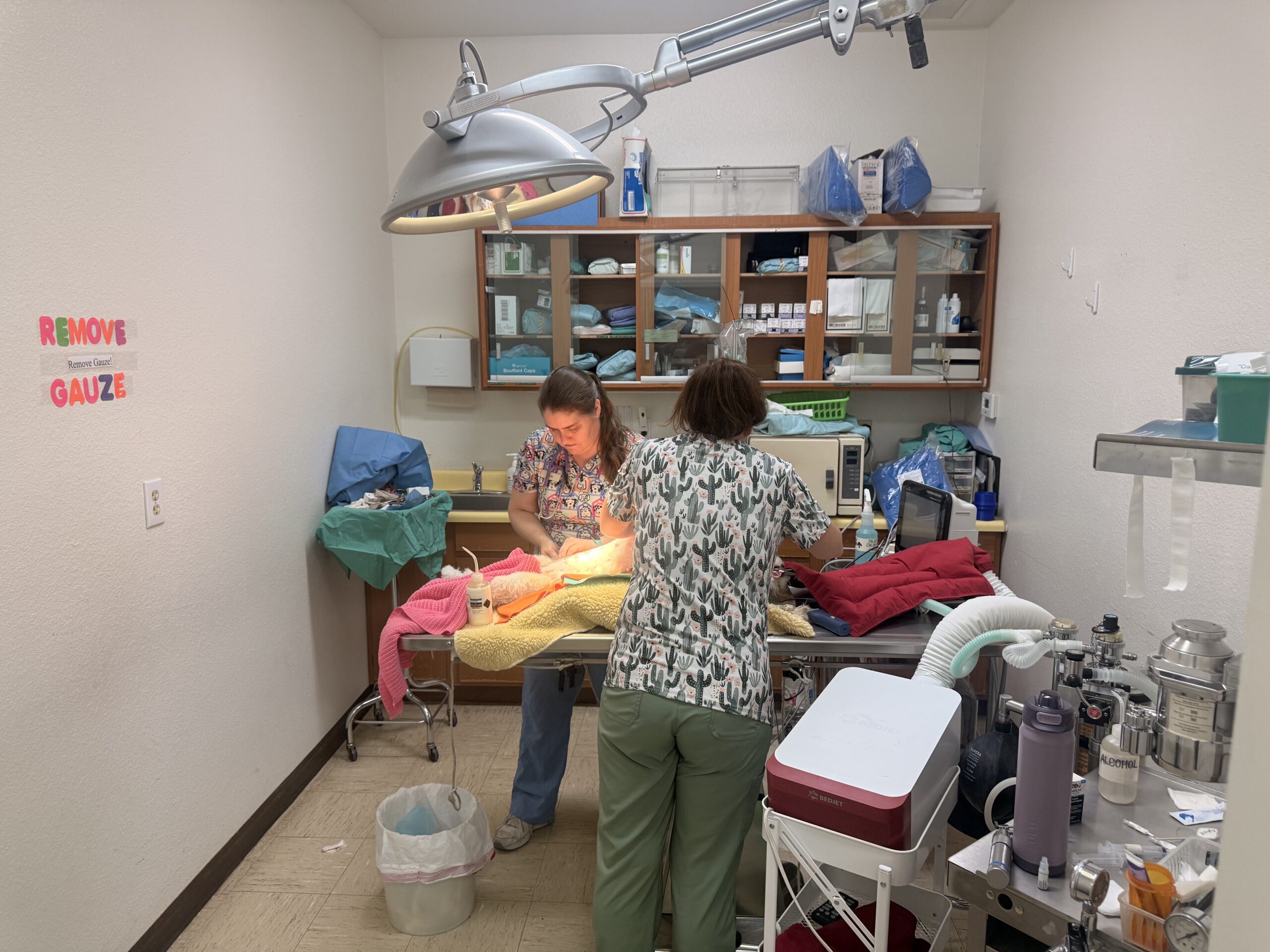
Surgery is generally the preferred initial treatment for resectable anal sac adenocarcinoma.
Removal of the affected anal sac and tumor is known as an anal sacculectomy.
When cancer has spread to regional lymph nodes, removal of affected lymph nodes may also be considered.
Surgery can improve local disease control and may provide prolonged survival in appropriately selected patients.
However, tumors in this location can be challenging to remove because they are close to the rectum and anal sphincter.
Potential complications include wound problems, infection, and temporary or occasionally persistent changes in fecal continence.
Complex procedures may be referred to a board-certified veterinary surgeon.
Radiation Therapy
Radiation therapy may be considered when a tumor cannot be completely removed, surgical margins are incomplete, nearby lymph nodes are involved, or local tumor control is especially important.
Radiation may be used following surgery, instead of surgery in selected cases, or as a palliative treatment to reduce symptoms.
Modern veterinary radiation approaches can provide focused treatment while attempting to limit exposure of surrounding healthy tissues.
Recent research, including a small 2026 retrospective study of dose-escalated radiation therapy, has reported encouraging local disease-control results.
However, additional studies are needed to determine which patients benefit most and which protocol is optimal.
Conventional Chemotherapy
Conventional chemotherapy may be considered for dogs with metastatic disease, tumors that cannot be completely removed, or other high-risk features.
Drugs sometimes considered by veterinary oncologists include carboplatin and mitoxantrone.
Chemotherapy may help control disease in selected patients, but a consistent survival advantage has not been conclusively established for every dog with anal sac cancer.
At-Home Metronomic Chemotherapy
Metronomic chemotherapy generally involves giving lower doses of certain anticancer drugs on a regular schedule rather than using the higher intermittent doses associated with conventional chemotherapy.
The goal may be to slow tumor progression, influence the formation of blood vessels supporting cancer growth, and maintain quality of life.
Veterinary oncologists sometimes prescribe low-dose oral cyclophosphamide, occasionally with other medications, in metronomic protocols.
Potential advantages for selected dogs include:
- Administration at home
- Fewer hospital visits
- Potentially lower treatment intensity
- Possible disease stabilization
- An alternative when more intensive treatment is not appropriate
However, the evidence specifically demonstrating a survival benefit from metronomic chemotherapy for anal sac adenocarcinoma remains limited.
It should not be considered a proven cure or an equivalent substitute for surgery when surgery is feasible.
At-Home Targeted Therapy: Palladia
Another potential treatment is toceranib phosphate, marketed as Palladia.
Toceranib is an oral tyrosine kinase inhibitor that targets certain cellular signaling pathways involved in tumor growth and blood-vessel formation.
It is FDA-approved for certain canine mast cell tumors and may be prescribed off-label by veterinary oncologists for anal sac adenocarcinoma.
Some dogs may experience tumor stabilization or response, but treatment benefit varies.
Toceranib and metronomic chemotherapy are different treatment approaches. A veterinary oncologist can help determine whether either is appropriate.
Can Chemotherapy Be Used After Surgery?
Yes. Depending on cancer stage, surgical margins, and lymph-node findings, a veterinary oncologist may recommend discussing systemic therapy following surgery.
The goal is to address possible microscopic or metastatic disease that surgery alone cannot treat.
Not every patient will benefit, and decisions should account for the available evidence, treatment risks, cost, and quality of life.
What Is the Prognosis for Dogs With Anal Gland Tumors?
Benign Perianal Adenomas
The prognosis is generally excellent with appropriate treatment.
Neutering, surgical removal when needed, and follow-up examinations are often effective.
Although benign adenomas do not metastasize, additional growths or local recurrence are possible.
Malignant Anal Sac Adenocarcinoma
Prognosis varies considerably among patients. Important factors include:
- Size of the primary tumor
- Regional lymph-node involvement
- Presence of distant metastasis
- Blood calcium levels
- Whether surgery achieves complete margins
- Response to treatment
- Overall patient health
Some dogs treated surgically, with or without additional therapy, live for years.
A 2026 retrospective surgical study involving 74 dogs reported median survival of approximately 25 months following surgery.
This figure reflects the study population and should not be interpreted as a prediction for any individual dog.
Looking for a Vet Near Me for an Anal Gland Lump in Dogs?
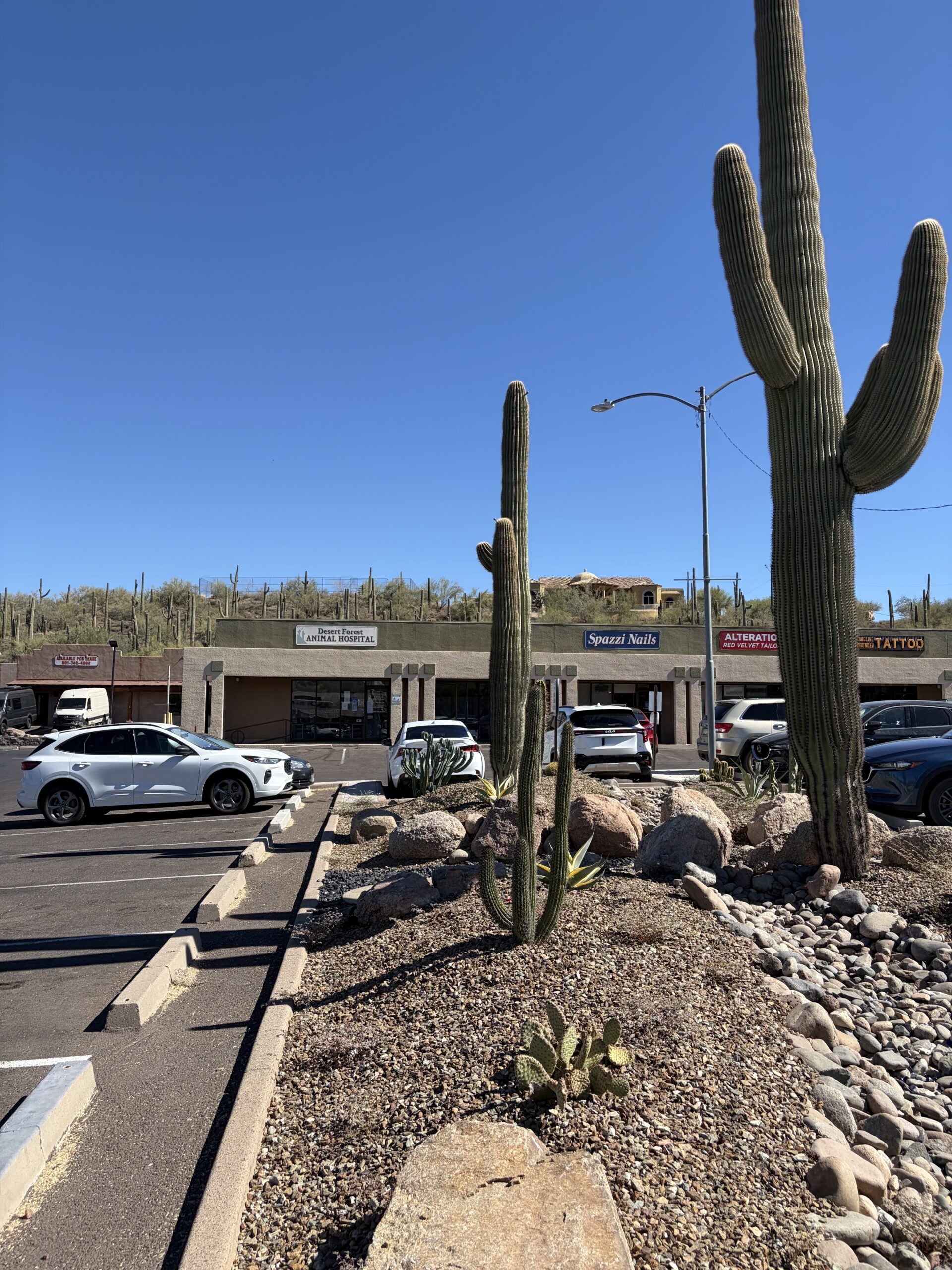
Desert Forest Animal Hospital is an independently owned veterinary hospital located at 6554 E Cave Creek Road, Cave Creek, AZ 85331. We have served local pets and families since 1984.
Our team evaluates dogs with new masses, anal-area discomfort, changes in bowel movements, and other medical concerns.
We offer veterinary examinations, in-house laboratory testing, diagnostic imaging, surgical consultations, and individualized treatment planning.
Owners searching for a vet near me in Cave Creek, a veterinarian for a senior dog with a lump, or an animal hospital offering diagnostic testing can begin with an examination.
Serving Carefree, Desert Mountain, Terravita and North Scottsdale
Our Cave Creek hospital welcomes dogs and their families from surrounding communities.
- Veterinarian near Carefree, Arizona
- Veterinary care for Desert Mountain and North Scottsdale
- New veterinary patients from Terravita, Tatum Ranch and Dove Valley Ranch
These communities are served by our single Cave Creek hospital location. We do not operate additional branches in these neighborhoods.
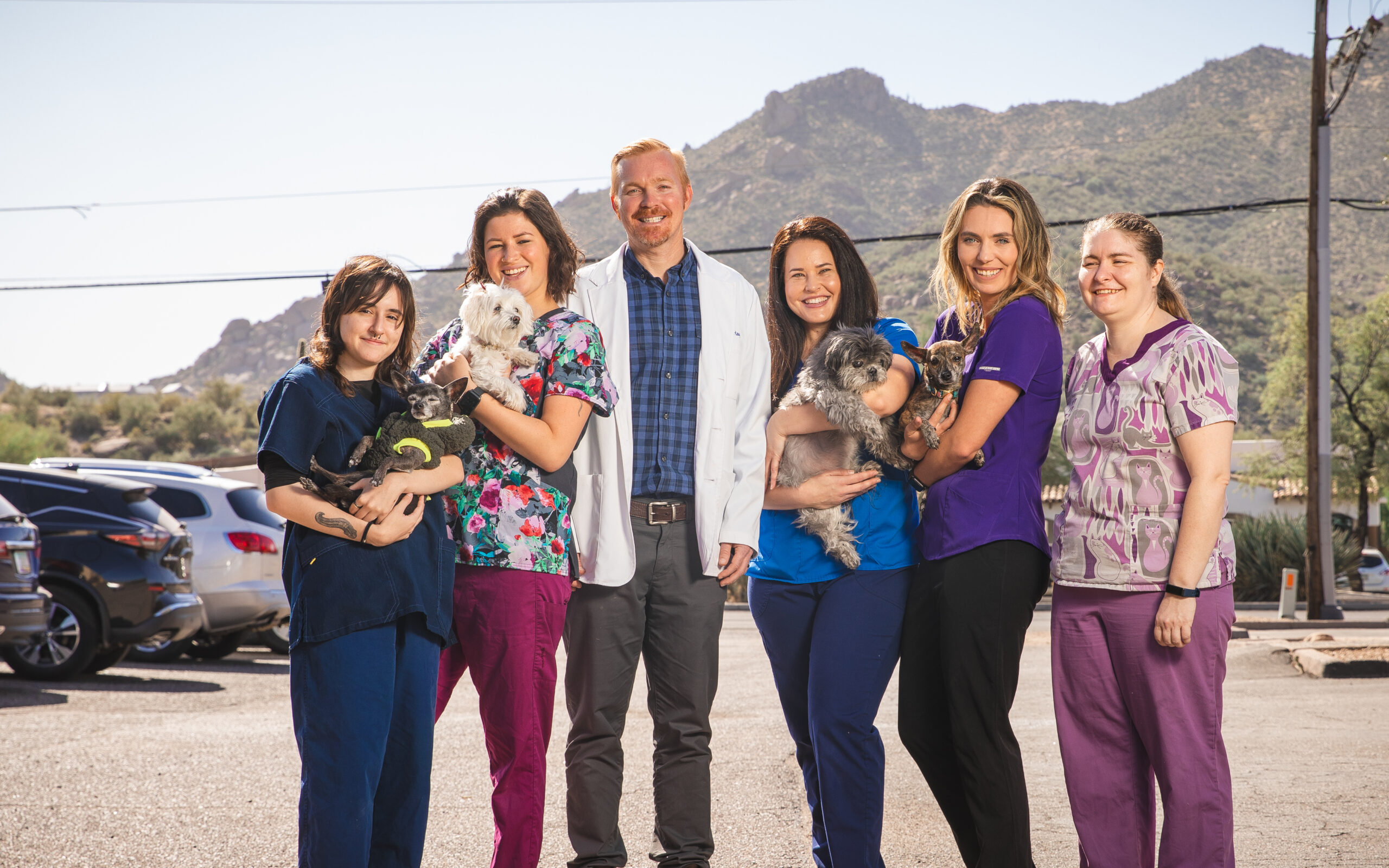
For anxious dogs, ask about individualized appointment planning and the Fear Free-informed veterinary approach of Dr. Quinn Bauer, a Fear Free Certified veterinarian.
If your dog is suddenly painful, bleeding, straining severely, or otherwise acutely ill, contact our same-day urgent veterinary care team to discuss the appropriate next step.
Notice a New Lump Near Your Dog’s Anus?
Don’t assume it is simply an impacted anal sac or a harmless growth.
Early evaluation can help identify conditions that may require biopsy, surgery, or additional diagnostic testing.
Desert Forest Animal Hospital
6554 E Cave Creek Road
Cave Creek, AZ 85331
Monday–Friday: 9 AM–6 PM
Saturday–Sunday: Closed
Same-day veterinary care is subject to availability and medical suitability. Desert Forest Animal Hospital is not a 24-hour emergency hospital.
Frequently Asked Questions About Anal Gland Tumors in Dogs
Are all anal gland tumors in dogs cancerous?
No. Many superficial perianal gland tumors are benign adenomas. However, tumors arising within an anal sac may be malignant. Veterinary examination and appropriate diagnostic testing are necessary.
Can a needle aspirate tell whether a tumor is benign?
Sometimes, but not always. Fine-needle aspiration can provide useful diagnostic information. However, certain benign and malignant perianal gland tumors look similar on cytology. A tissue biopsy or surgical removal with histopathology may be needed.
Will neutering cure a perianal adenoma?
Many testosterone-dependent benign perianal adenomas shrink after neutering of an intact male dog. Some still require surgical removal. Neutering is not a specific treatment for malignant anal sac adenocarcinoma.
Can anal sac adenocarcinoma spread to the lungs?
Yes. Regional lymph nodes in the pelvis and abdomen are more common initial sites of metastasis, but spread to the lungs and other organs can occur.
What is the best treatment for malignant anal sac cancer?
For tumors that can be removed, surgery is generally the preferred initial treatment. Depending on disease stage, radiation, chemotherapy, targeted therapy, lymph-node surgery, or palliative treatment may also be considered.
Can my dog receive chemotherapy at home?
Some dogs may receive oral metronomic chemotherapy or targeted treatment such as toceranib at home. These treatments are not interchangeable and are not guaranteed to extend survival. Veterinary supervision, monitoring, and medication safety precautions are essential.
How often should my older dog have a rectal exam?
Cornell recommends at least annual rectal examinations, and twice-yearly examinations for older dogs when clinically appropriate. The schedule should be individualized with your veterinarian.
Where can I find a vet near me in Carefree or Terravita?
Desert Forest Animal Hospital is located in Cave Creek and serves families from Carefree, Terravita, Desert Mountain, Tatum Ranch, and North Scottsdale. Call (480) 488-2010 to discuss an examination for your dog.
Veterinary References and Medical Research
This article draws on veterinary specialty resources and recent published research. Established treatments are distinguished from newer therapies for which evidence remains limited.
- American Animal Hospital Association: 2026 Oncology Guidelines for Dogs and Cats
- AAHA: Overview of Common Cancers, Including Canine Anal Sac Carcinoma
- Cornell University College of Veterinary Medicine: Anal Sac Adenocarcinoma
- American College of Veterinary Surgeons: Anal Sac Tumors in Dogs
- Merck Veterinary Manual: Hepatoid and Perianal Gland Tumors
- Veterinary Surgery (2026): Surgical Margins and Prognostic Factors in Canine Anal Sac Adenocarcinoma
- Journal of Small Animal Practice (2026): Dose-Escalated Radiation Therapy for Canine Anal Sac Adenocarcinoma
Published by: Desert Forest Animal Hospital
Medical-source review: November 3, 2026. Information reviewed against veterinary resources from AAHA, Cornell University, the American College of Veterinary Surgeons, Merck Veterinary Manual, and the cited oncology studies.
Last updated: November 3, 2026.
This educational guide does not replace an individualized veterinary examination or treatment recommendation. Decisions about surgery, chemotherapy, radiation, and cancer staging should be made with the treating veterinarian and, when appropriate, a board-certified veterinary surgeon or oncologist.