
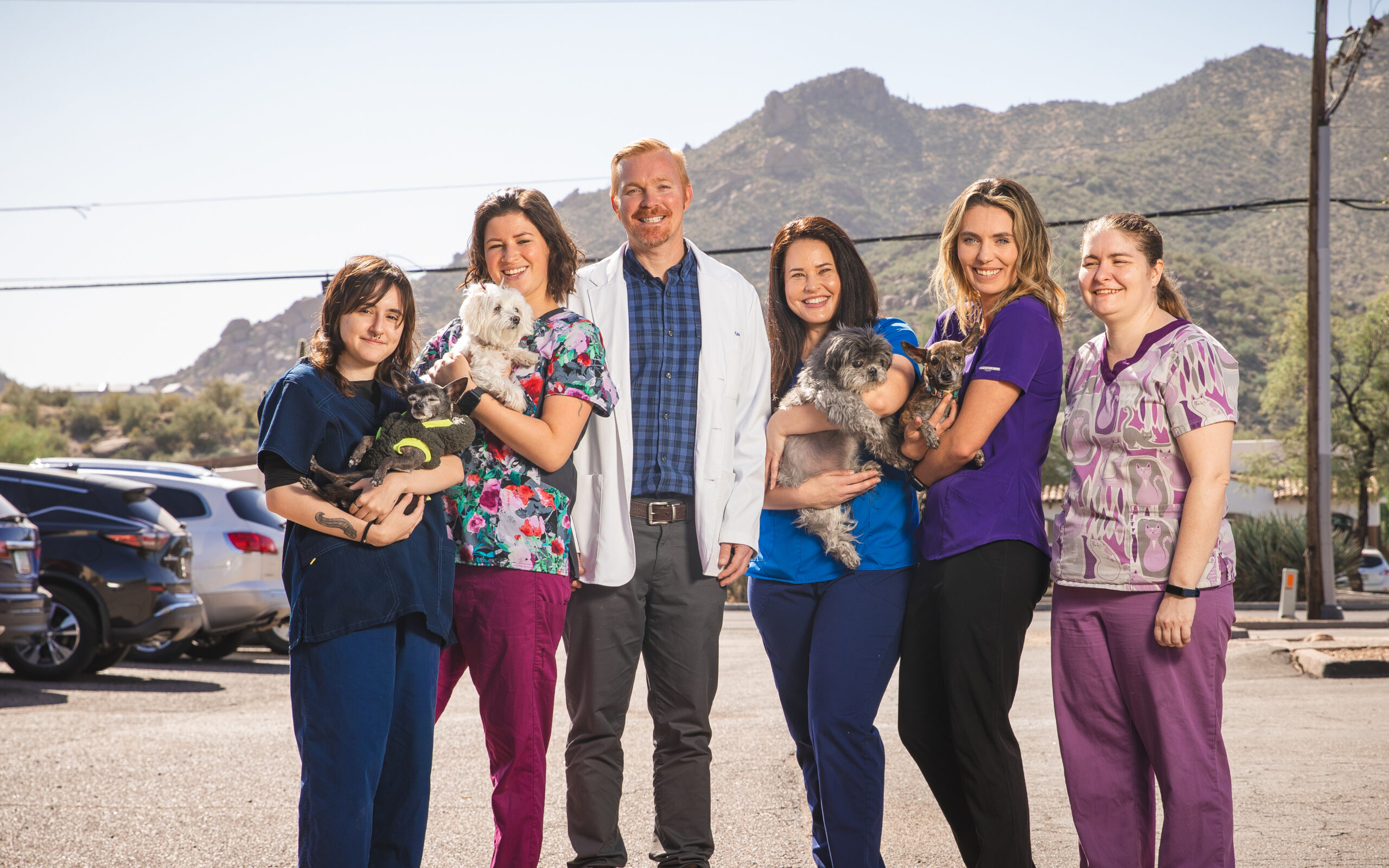

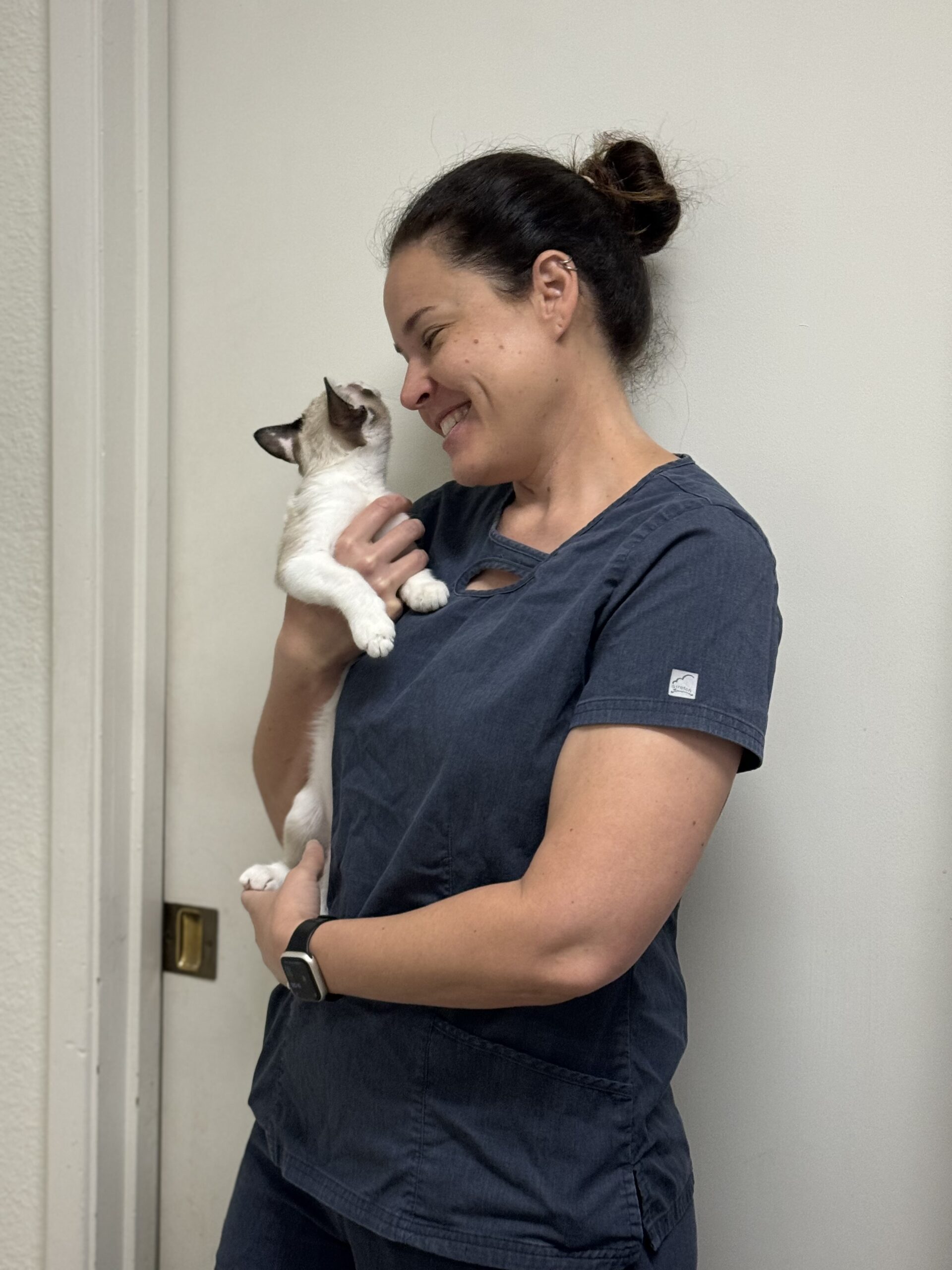

Being a veterinarian in Cave Creek means understanding that where a pet lives can be an important part of how we care for them.
Cave Creek is not simply another Phoenix suburb. It is a community shaped by the Sonoran Desert, horses and trails, wildlife, open space, a long Western history, and an independent personality that residents have worked hard to preserve.
Desert Forest Animal Hospital has had the privilege of caring for dogs and cats here since 1984.
That means our hospital was caring for Cave Creek pets before Cave Creek officially incorporated as a town in 1986.
Over more than four decades, veterinary medicine has changed dramatically. Diagnostic technology has improved. New medications have become available. Dentistry, pain management, preventive medicine and our understanding of animal behavior have advanced.
But one part of practicing veterinary medicine in Cave Creek has remained remarkably consistent:
You have to understand the place where your patients live.
A Veterinary Hospital in a Town With an Independent Spirit
Cave Creek traces its history to 1870, when mining, ranching and the American West helped shape the community that would eventually become today’s town.
That history is still visible.
Cowboys and horses remain part of everyday Cave Creek culture. So do artists, writers, retirees, families, hikers, cyclists and people who simply chose this part of Arizona because they wanted something different from a conventional suburban environment.
The Town of Cave Creek itself describes residents as “Creekers” and emphasizes the unusual mix of artists, writers, cowboys, professionals and longtime residents who make the community distinctive.
That independent character resonates with us.
Desert Forest Animal Hospital is an independently owned veterinary hospital. Medical recommendations are made here by the veterinary professionals caring for the individual patient—not by a distant corporate office.
Independent does not mean old-fashioned medicine.
To us, it means combining modern veterinary capabilities with the kind of personal accountability that has traditionally defined a local community practice.
We want pet owners to understand what we find, why we are recommending a test or treatment, what the alternatives are, and what we believe the next reasonable step should be.
Cave Creek Pets Live an Outdoor Life
It is difficult to separate Cave Creek from the landscape surrounding it.
The community is connected to an extensive network of trails leading toward Cave Creek Regional Park, Spur Cross Ranch Conservation Area, Desert Foothills Land Trust properties, the Tonto National Forest and the larger Maricopa Trail system.
People hike here. They ride horses. They mountain bike. They walk dogs through neighborhoods and along desert trails.
Spur Cross alone protects more than 2,000 acres of rugged upper Sonoran Desert, while Cave Creek Regional Park provides miles of desert recreation for hikers and equestrians.
That outdoor lifestyle can be wonderful for dogs.
Appropriate exercise supports body condition, strength, mobility, enrichment and the relationship between pets and their people.
But the same landscape also creates veterinary problems that are distinctly local.
A dog living an active Cave Creek life may encounter:
- Rattlesnakes
- Scorpions
- Cactus and cholla
- Extreme heat
- Wildlife
- Paw and nail injuries
- Sudden limping after hiking or outdoor activity
- Dust and environmental exposures
- Regional diseases such as Valley Fever
Understanding those risks is part of practicing veterinary medicine here.
Sometimes “Local Knowledge” Changes the Diagnostic List
Veterinarians are trained to consider multiple possible explanations for a patient’s symptoms. Location can change which possibilities deserve particular attention.
One of the clearest examples in Arizona is Valley Fever in dogs and cats.
Valley Fever is caused by Coccidioides, a fungus associated with soil in Arizona and other arid regions. Dogs can inhale airborne spores after soil is disturbed by wind, construction, landscaping, digging or outdoor activity.
A dog with coughing, lethargy, weight loss, fever or unexplained lameness in another region of the country may generate one diagnostic list.
In Cave Creek, Valley Fever needs to remain part of the conversation.
That does not mean every coughing or limping Arizona dog has Valley Fever. Far from it. Those symptoms can have many causes.
It means that good local medicine combines the patient’s examination, history, lifestyle, laboratory results, imaging and geographic exposures rather than considering symptoms in isolation.
Rattlesnakes Are Not an Abstract Risk Here
Another obvious example is rattlesnake exposure.
Cave Creek pets live near the habitat of native wildlife. Dogs exploring yards, trails and desert areas may encounter snakes even when their owners are cautious.
A suspected rattlesnake bite requires immediate veterinary attention.
Desert Forest Animal Hospital maintains crotalid antivenom for veterinary patients and provides urgent assessment of suspected bites during regular business hours when we have the capacity to safely care for the patient.
Our rattlesnake bite guide for Cave Creek dogs and cats explains what owners should do—and what they should not do—after a possible encounter.
One of the most important lessons is simple: do not wait for dramatic swelling or visible fang marks before calling for veterinary care.
Cactus, Cholla and the Small Injuries That Can Become Big Problems
Not every desert-related veterinary problem is life-threatening.
Sometimes it is a paw full of cactus spines.
Sometimes a dog comes home from a walk suddenly limping.
Sometimes a torn nail, puncture wound, paw-pad injury or embedded piece of plant material is painful enough that the pet needs prompt evaluation.
Cholla can be particularly difficult because barbed segments may become attached to the paws, face or mouth, and a painful dog may resist removal.
Our guide to cactus and cholla injuries in Cave Creek dogs explains when careful home management may be reasonable and when veterinary assistance may be safer.
This distinction—between something that can wait, something that should be seen today and something that represents a genuine emergency—is one of the most important decisions pet owners face.
What Urgent Veterinary Care Means in Cave Creek
Living in an active desert community means unexpected illnesses and injuries happen.
A dog may suddenly start limping after a trail walk. Another may begin vomiting repeatedly. A cat may develop urinary discomfort. An eye may become painful. A pet may develop a wound, allergic reaction or sudden change in behavior.
These problems are not necessarily life-threatening, but some should not wait several days for a routine appointment.
Desert Forest Animal Hospital provides same-day urgent veterinary care in Cave Creek for many stable sick and injured dogs and cats during regular business hours when staffing, current patient volume and the patient’s medical needs allow.
Calling ahead matters.
Our team can ask about the symptoms, assess apparent urgency, confirm current capacity and help determine whether Desert Forest or a 24-hour emergency hospital is the safer destination.
Being a good local veterinary hospital sometimes means treating the patient here.
Sometimes it means stabilizing a patient and arranging transfer.
And sometimes it means telling a family to bypass us and proceed directly to a 24-hour emergency hospital because their pet needs resources we cannot safely provide.
The goal is not to keep every case. The goal is to help the pet reach the appropriate level of care.
Scorpions, Wildlife and the Unexplained Painful Paw
Desert veterinary medicine also teaches us not to assume that every unusual symptom has an obvious explanation.
A dog may suddenly yelp and begin licking a paw after stepping outside. A cat may abruptly react to something on a patio or in a garage.
A scorpion sting is one possible explanation—but certainly not the only one.
Puncture wounds, cactus spines, torn nails, orthopedic pain, insect encounters and other injuries can produce similar signs.
That is why veterinary medicine starts with the patient rather than a guess.
Marked pain, tremors, weakness, abnormal neurologic signs, breathing changes or rapidly worsening symptoms warrant prompt professional attention.
Heat Changes the Way We Think About Outdoor Activity
Cave Creek gives people extraordinary opportunities to enjoy the outdoors, but Arizona heat requires respect.
A walk that is completely appropriate at one time of day or season may become unsafe under different conditions.
Pet owners should think about more than the air temperature. Ground temperature, direct sun, humidity, duration of exercise, access to water, breed, age, body condition and underlying heart or respiratory disease can all influence heat tolerance.
Heavy panting after activity does not automatically mean heatstroke.
But weakness, vomiting, disorientation, abnormal gum color, collapse or neurologic abnormalities after heat exposure are concerning signs that should not wait.
Severe heat illness is an emergency.
Modern Diagnostics Still Matter in “Country Vet” Medicine
The phrase “country vet” sometimes brings to mind an older style of highly personal veterinary medicine.
There is a lot about that tradition we admire: knowing families, listening carefully, using clinical judgment and treating each patient as an individual.
But personalized medicine should not mean giving up modern diagnostic capability.
When a Cave Creek dog or cat becomes ill, Desert Forest Animal Hospital can use in-house veterinary diagnostics and blood work, digital X-rays and other imaging when medically appropriate.
The important question is not whether a test is available.
It is whether the test is likely to help answer a meaningful medical question.
When we recommend diagnostics, we want owners to understand:
- What we are looking for
- Why the information matters
- How the result may change the treatment plan
- What reasonable alternatives may exist
Technology is most useful when it supports judgment rather than replacing it.
A Pet’s Emotional Experience Matters Too
Veterinary care is not only about disease.
Dogs and cats arrive at the hospital with previous experiences, personalities, fears and preferences.
Dr. Quinn Bauer is a Fear Free Certified veterinarian with a particular interest in helping nervous, sensitive and previously fearful pets receive the care they need.
Depending on the patient and medical situation, a lower-stress visit may involve allowing time to acclimate, using treats when appropriate, modifying positioning, minimizing unnecessary restraint or considering medication when it provides a safer and more humane experience.
Fear Free care does not mean avoiding necessary medicine.
If a pet is critically ill, medical stabilization takes priority.
It means recognizing that when circumstances allow, how veterinary medicine is delivered matters alongside what medicine is delivered.
More Than 40 Years of Watching Cave Creek Change
Desert Forest Animal Hospital began caring for pets in Cave Creek in 1984.
Cave Creek incorporated two years later.
Since then, the North Valley has grown enormously. Roads, neighborhoods and nearby communities have changed. Veterinary technology has changed. The expectations people have for their pets’ healthcare have changed.
Yet Cave Creek has worked remarkably hard to preserve its Western identity, desert open space and independent character.
We appreciate that.
Our own goal is similar in a small way: continue improving the medicine without losing the personal character of a locally owned veterinary hospital.
What Cave Creek Pet Owners Teach Us
Cave Creek pet owners are diverse.
Some dogs spend their weekends hiking.
Others prefer the couch.
Some families have lived here for decades. Others just arrived from another state and are learning for the first time about Valley Fever, rattlesnakes and Arizona heat.
Some pets love visiting the veterinarian. Others become anxious the moment the carrier appears.
Those differences matter.
A preventive plan for an active trail dog may be different from the plan for a senior indoor dog. A newly arrived pet from another region may have different previous exposures and preventive needs. A fearful animal may need an entirely different approach to handling.
That is why our veterinary recommendations consider age, medical history, lifestyle, outdoor exposure, behavior and the environment in which a pet actually lives.
New to Cave Creek With a Dog or Cat?
If you have recently moved to Cave Creek, Carefree, Desert Hills, North Scottsdale or another North Valley community, tell your veterinarian where your pet previously lived and what your lifestyle looks like now.
Questions worth discussing may include:
- Does your dog hike or spend significant time outdoors?
- Does your yard border open desert?
- What parasite prevention has your pet been receiving?
- Which vaccines are appropriate for your pet’s actual lifestyle?
- Has your dog previously lived in an area where Valley Fever is uncommon?
- Does your pet have significant fear or anxiety at veterinary visits?
- Does your senior pet have new mobility or activity changes?
Our New Client Center explains what to bring, how to transfer records and what new Cave Creek pet owners may want to consider when establishing veterinary care in Arizona.
Veterinary Medicine Should Belong to Its Community
A veterinarian should understand anatomy, physiology, pharmacology, diagnostics and disease.
But a community veterinarian should also understand the world immediately outside the hospital door.
In Cave Creek, that world includes horses sharing trails with hikers, dogs walking through desert neighborhoods, cactus and wildlife, summer heat, dust, Valley Fever, rattlesnakes and a town that remains fiercely proud of its Western independence.
That local knowledge does not replace veterinary science.
It gives veterinary science context.
After more than 40 years in Cave Creek, that is what being a local veterinary hospital means to us.
Veterinary Care for Dogs and Cats in Cave Creek
Desert Forest Animal Hospital provides preventive care, dentistry, surgery, diagnostic testing, Fear Free-informed care, treatment of illness and injury, and same-day urgent evaluation when available for dogs and cats in Cave Creek and surrounding North Valley communities.
We are currently accepting new patients.
Desert Forest Animal Hospital
6554 E Cave Creek Road
Cave Creek, AZ 85331
Call (480) 488-2010
Learn more about becoming a new client at Desert Forest Animal Hospital.
Medical Review
Reviewed for medical accuracy by Bryan Hayter, DVM
Owner and Medical Director
Desert Forest Animal Hospital
Last medically reviewed: August 2026
This article is intended for general educational information. It cannot determine the severity of an individual animal’s illness or injury and does not replace veterinary examination, diagnosis or individualized medical advice. If your pet is experiencing a potentially life-threatening emergency, seek immediate veterinary care.