



Winter in the Sonoran Desert means cooler mornings, more hiking, holiday visitors, and plenty of opportunities to enjoy Arizona with your dog or cat.
But the season also creates veterinary considerations that are easy to overlook: Valley Fever exposure, holiday toxins, respiratory infections among social dogs, winter wildlife, and new puppies joining the family.
Whether you live year-round in Cave Creek or spend the winter near Carefree, Terravita, Desert Mountain, Dove Valley Ranch, or North Scottsdale, this guide will help you understand which risks matter—and which seasonal claims are often exaggerated.

1. Spending Winter in Cave Creek? Establish Veterinary Care Before You Need It
Every winter, people return to their homes throughout Cave Creek, Carefree, Desert Mountain, Terravita, and nearby North Scottsdale communities. Many bring dogs and cats who already have established veterinarians in another state.
One of the best things a seasonal resident can do is establish local veterinary care before a medical problem develops.
If your dog develops vomiting, limping, a painful ear infection, or another unexpected condition, having a local clinic familiar with your pet’s history can make the process more efficient.
Before arriving for the season, consider gathering:
- Previous veterinary examination records
- Vaccination history and rabies certificates
- Current prescription medications and doses
- Recent blood work and diagnostic imaging
- Chronic medical diagnoses
- Previous medication reactions or allergies
- Microchip information
- Pet insurance and emergency contact details
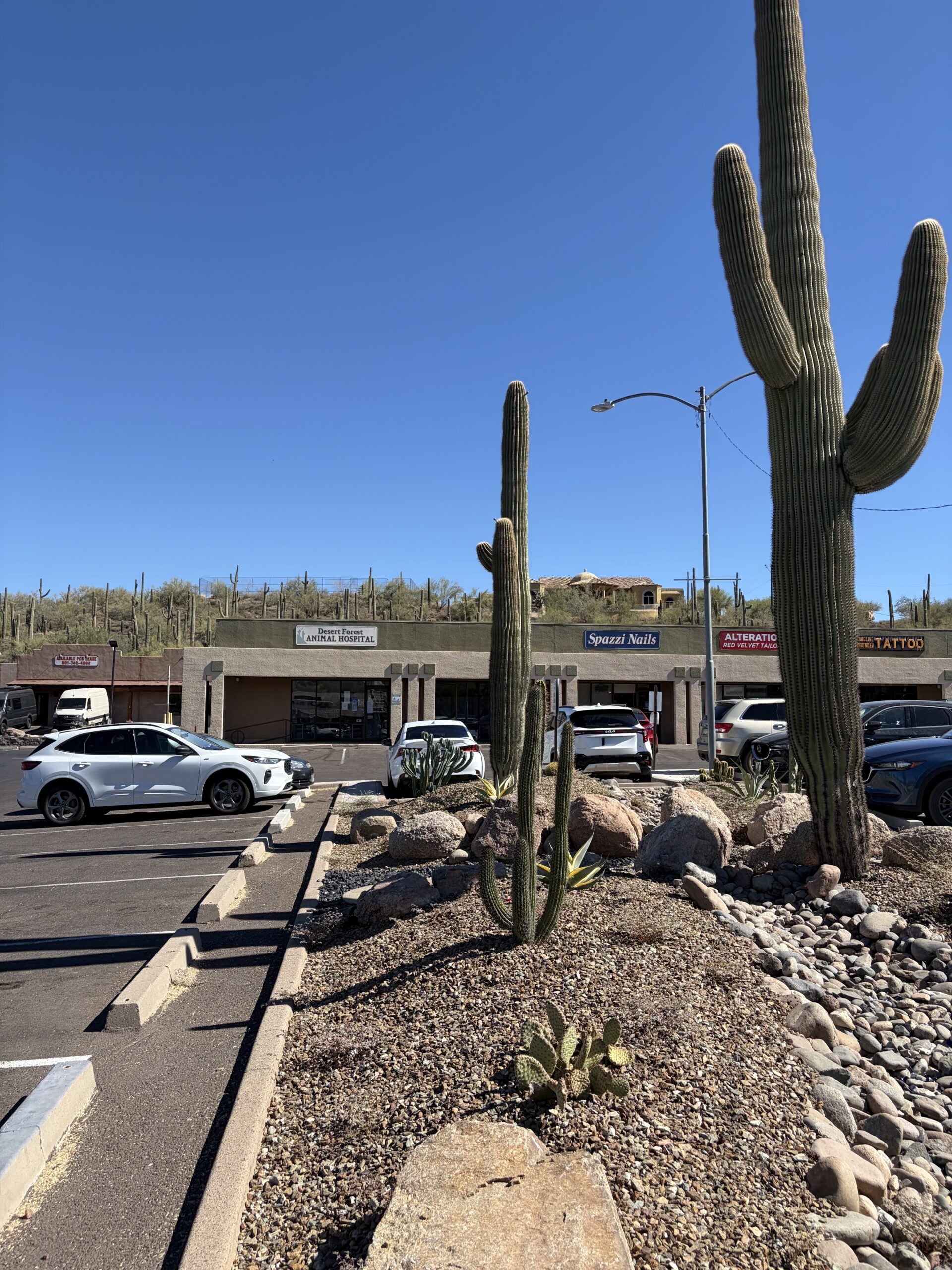
Desert Forest Animal Hospital welcomes new dog and cat patients. Our new-client information page explains how to prepare for an appointment at our Cave Creek veterinary hospital.
For families searching for a vet near me in Cave Creek or a veterinarian near Carefree, continuity of care and convenient access often matter more than choosing a clinic based solely on distance.
2. Is Valley Fever a Winter Risk for Dogs in Cave Creek?
Yes. Valley Fever can occur throughout the year in Arizona.
Valley Fever, or coccidioidomycosis, is caused by a fungus called Coccidioides. The organism lives in desert soil, and infection occurs when microscopic fungal spores become airborne and are inhaled.
Dogs may encounter infectious dust while digging, hiking, exploring disturbed soil, or spending time near construction or landscaping activity.
Does Valley Fever Have a Season?
The University of Arizona Valley Fever Center for Excellence describes seasonal patterns in Arizona, with peaks in reported human infections around summer and fall.
These patterns are influenced by rainfall, soil conditions, and periods of drying and dust. They should not be interpreted as an exact month-by-month prediction of an individual dog’s risk.
Winter does not eliminate exposure. Warm, dry, windy conditions can still create airborne dust during the cooler months.
Symptoms of Valley Fever in Dogs
Signs can include:
- Persistent or recurring cough
- Fever or unusual fatigue
- Decreased appetite
- Unexplained weight loss