


Sonoran Desert Trail Safety · Cave Creek & Carefree, Arizona
Hiking With Dogs in the Sonoran Desert: A Trail Safety Guide
The trails around Cave Creek and Carefree are remarkable places to experience the Sonoran Desert. A little preparation can help protect your dog and the plants, wildlife and fragile habitat that make these places special.
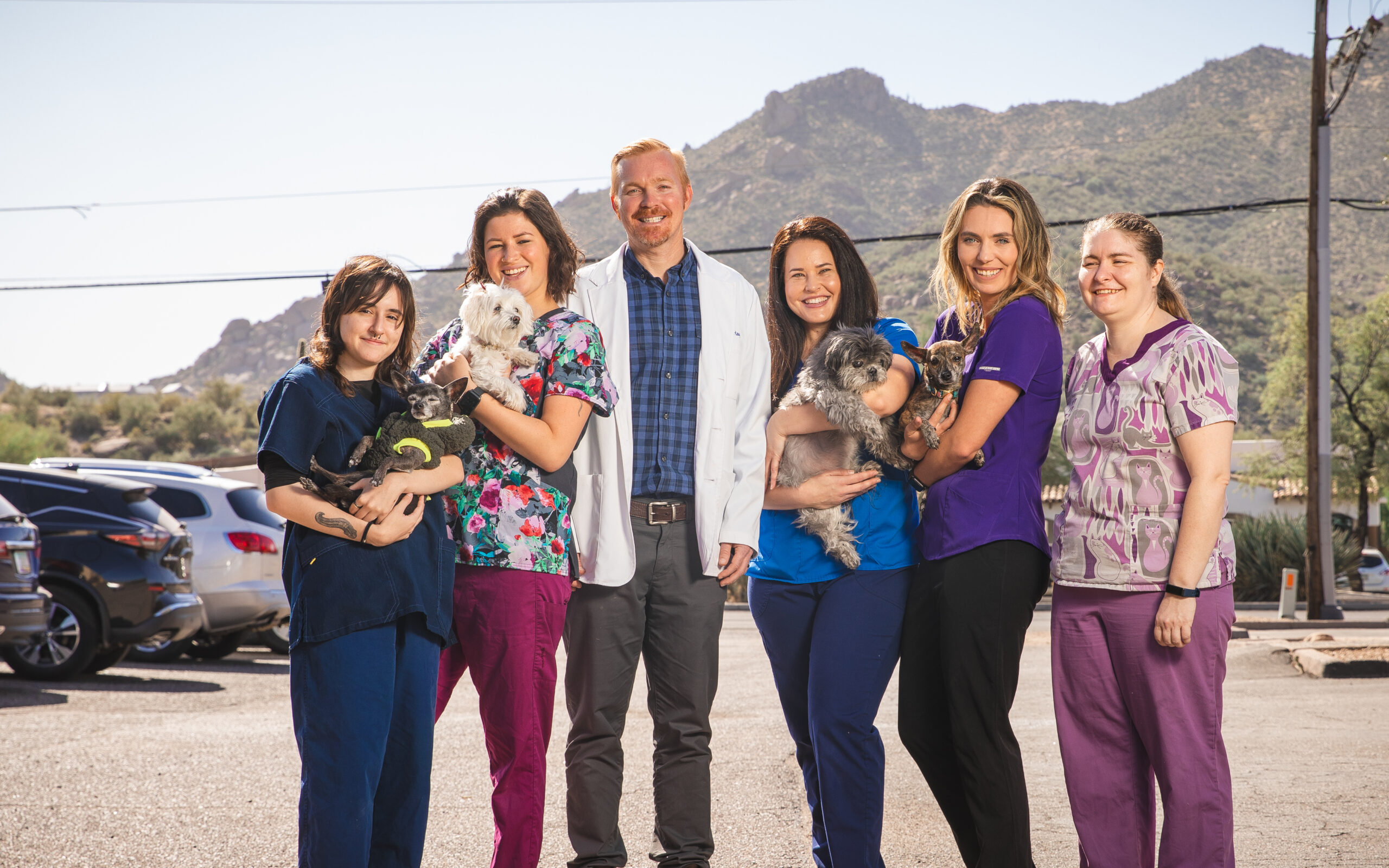
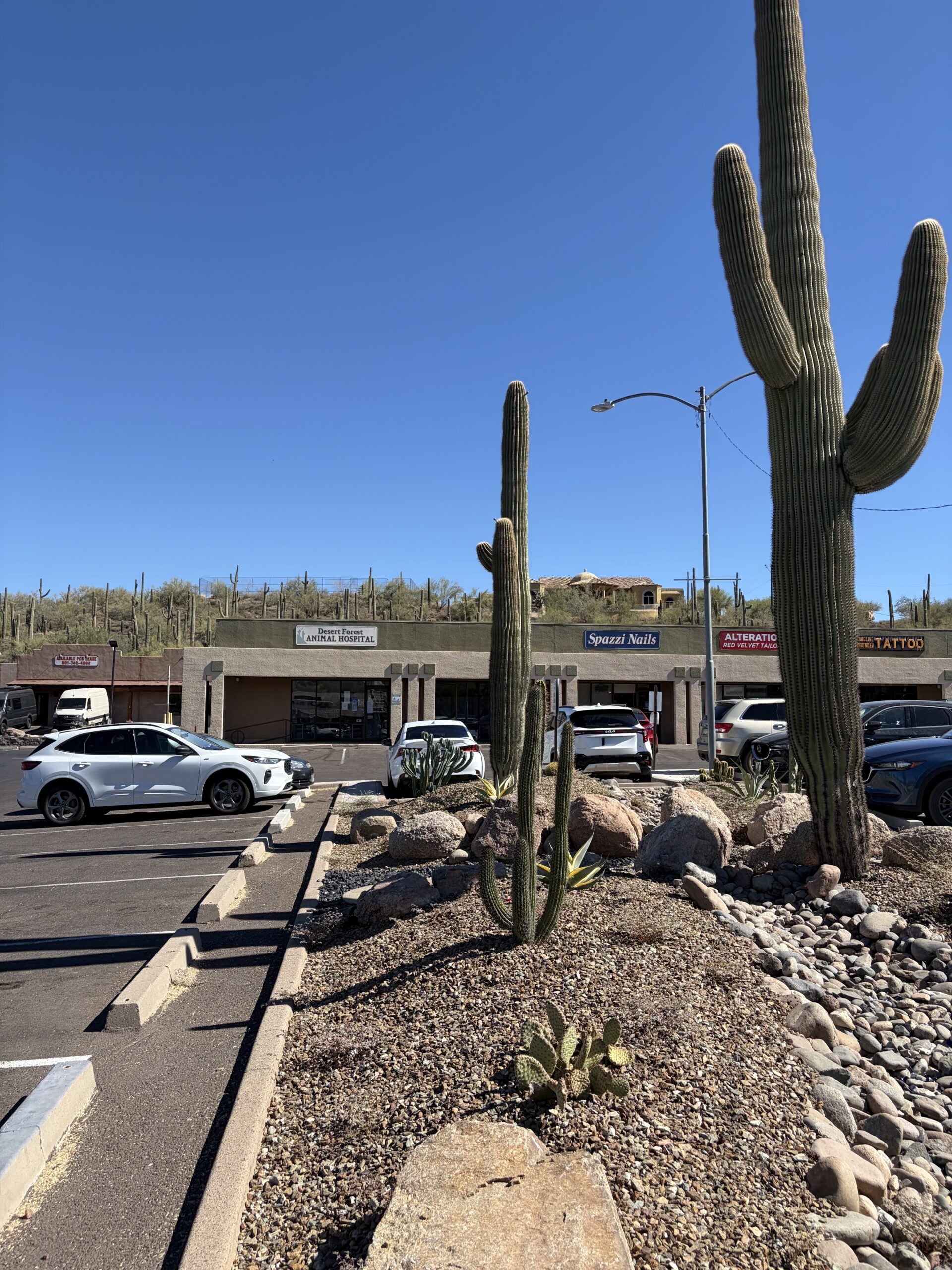
Created as a short companion to the Sonoran Desert Pet Safety Guide from Desert Forest Animal Hospital, serving Cave Creek since 1984.
A practical checklist for local residents and visitors. Always follow the rules posted by the preserve or trail manager.
1. Check the Trail Rules Before Bringing Your Dog
Not every protected desert property is open to the public, and not every hike welcomes pets. Desert Foothills Land Trust asks participants to leave pets at home on its guided tours. If you plan an independent outing, confirm that the specific preserve and trail permit dogs, and check hours, access and any posted restrictions before traveling.
Visit the Land Trust’s protected lands and trail information and guided-tour guidance.
Respect the preserve: Keep your dog close on a short, controlled leash wherever dogs are permitted; remain on designated trails; give wildlife space; and pack out all dog waste, including filled bags. Never leave a bag beside the trail to collect later.
2. Before You Leave the Trailhead
Weather & Route
- Check the hourly forecast, not just the temperature at departure.
- Choose a short route with a turnaround point and a trail map.
- Bring water for both of you; do not count on finding drinkable water along the trail.
- Tell someone where you are going and when you plan to return.
Dog-Ready Essentials
- Secure leash and well-fitting harness.
- Collar ID tag and current microchip registration.
- Collapsible water bowl and extra water.
- Waste bags, charged phone and basic paw first-aid supplies.
- Plan for carrying or assisting your dog if walking becomes unsafe.
For perspective, the City of Scottsdale’s McDowell Sonoran Preserve advises leaving dogs home if temperatures will exceed 90°F at any time during the outing. That is Scottsdale Preserve guidance, not a rule for every Land Trust property. Even below 90°F, sun, exertion and hot rock can put dogs at risk; when in doubt, choose another day.
3. On the Trail: Protect Paws, Wildlife & Habitat
- Watch for rattlesnakes. Look ahead, avoid reaching into vegetation or rock crevices, and never allow a dog to investigate a snake. Back away and give the animal room to leave.
- Keep clear of cactus and sharp terrain. Cholla segments, thorns, loose rock and hot surfaces can injure pads, mouths and eyes. Don’t let your dog explore dense cactus or step off trail.
- Leave wildlife alone. Keep dogs from pursuing coyotes, javelina, rabbits or other animals. Calmly yield space to other hikers, cyclists and horses.
- Offer frequent breaks. Watch for excessive panting, slowing down, heavy drooling or reluctance to move. Turn around early rather than pushing to finish a route.
- Protect water sources. Offer your own clean water; don’t encourage dogs to drink from unknown pools or stagnant water.
Dusty environments can expose dogs to the fungus responsible for Valley Fever. Reduce unnecessary digging in dry soil, and mention Arizona trail and dust exposure to your veterinarian if persistent coughing, fever, weight loss or unexplained lameness develops later. See DFAH’s Valley Fever resource.
4. Know When a Trail Problem Is an Emergency
Possible Rattlesnake Bite
Seek veterinary care immediately, even without visible swelling.
Move away from the snake, keep your dog calm and still, and carry them if safely possible. Do not cut the wound, apply ice, use a tourniquet or attempt to capture the snake.
Rattlesnake bite guide →Suspected Heatstroke
Heavy panting, weakness, wobbling, confusion, vomiting or collapse require immediate action.
Move into shade or a cool area, begin cooling with cool (not icy) water and airflow as you arrange urgent veterinary transport. Do not delay treatment to see if the dog improves.
AVMA warm-weather safety →Deep cactus spines, eye injuries, significant wounds, severe limping or an animal bite also deserve prompt veterinary assessment. Life-threatening symptoms—including breathing difficulty, collapse or uncontrolled bleeding—may require a 24-hour emergency hospital.
5. After the Hike: Take Two Minutes to Check Your Dog
- Inspect paw pads and between the toes for cuts, thorns or cactus spines.
- Look over the coat and ears for grass awns, ticks and other debris.
- Offer fresh water and allow your dog to cool down and rest.
- Watch for persistent limping, vomiting, unusual fatigue or changes in breathing.
- Pack out all waste and supplies, leaving the trail as you found it.
- If symptoms develop after the hike, tell your veterinarian where you went and what happened.
Keep Exploring Safely
Thoughtful trail use helps protect both pets and the Sonoran Desert. For more details about heat, snakes, wildlife, cactus injuries and other regional risks, read the full Sonoran Desert Pet Safety Guide.
Desert Forest Animal Hospital
6554 E Cave Creek Road
Cave Creek, AZ 85331
(480) 488-2010
DFAH evaluates many stable urgent illnesses and injuries during regular hospital hours when availability allows; call before arriving. DFAH is not a 24-hour emergency hospital.
When to Seek Urgent Veterinary Care