

Few things get a pet owner’s attention faster than waking up to a dog who has vomited several times, a cat who suddenly refuses breakfast, or a pet who develops unexpected diarrhea.
Sometimes an upset stomach is brief. Other times, vomiting or diarrhea can be an early sign of dehydration, intestinal obstruction, toxin exposure, infection, pancreatitis, organ disease, or another medical problem that deserves prompt veterinary attention.
If your dog or cat is suddenly sick and you are unsure whether the problem can wait, call Desert Forest Animal Hospital at (480) 488-2010. During regular hospital hours, our team can evaluate many stable pets with vomiting, diarrhea, appetite loss, abdominal discomfort, and other gastrointestinal concerns and help determine the most appropriate next step.
Desert Forest Animal Hospital provides compassionate veterinary care for dogs and cats throughout Cave Creek and nearby North Valley communities.
Is Your Pet Sick Right Now?
Call us today if your pet has repeated vomiting, significant diarrhea, loss of appetite, abdominal discomfort, unusual lethargy, or symptoms that are getting worse.
Desert Forest Animal Hospital
6554 E Cave Creek Road
Cave Creek, AZ 85331
Monday-Friday: 9:00 a.m.-6:00 p.m.
Saturday-Sunday: Closed
Call (480) 488-2010
When Is Vomiting or Diarrhea an Emergency?
There is an important difference between a pet who vomits once and then returns to normal and a pet who is repeatedly vomiting, weak, painful, or unable to keep fluids down.
The American Animal Hospital Association notes that persistent vomiting or diarrhea can contribute to dehydration and weakness and may require prompt veterinary treatment.
Seek immediate veterinary care if vomiting or diarrhea occurs along with any of the following:
- Collapse, severe weakness, or difficulty standing
- Difficulty breathing
- Blue, gray, extremely pale, or white gums
- Repeated unsuccessful attempts to vomit or retch
- A suddenly enlarged, tight, or painful abdomen
- Large amounts of blood in vomit or stool
- Severe abdominal pain
- Unresponsiveness or extreme lethargy
- Active seizures
- Known or suspected toxin ingestion
- A swallowed foreign object
- Severe heat-related illness
- A suspected rattlesnake bite
Do not wait for an online appointment request to be answered when your pet may be experiencing an emergency. During business hours, call Desert Forest Animal Hospital directly. If we are closed, or if your pet needs intensive monitoring, overnight hospitalization, or another level of emergency care, go to a 24-hour veterinary emergency hospital.
Learn more about urgent veterinary care at Desert Forest Animal Hospital →
When Should I Call the Vet About My Dog or Cat Vomiting?
A single episode of vomiting in an otherwise bright, comfortable adult pet is different from repeated vomiting or vomiting accompanied by other symptoms.
Call your veterinarian promptly when:
- Your pet vomits repeatedly over a short period
- Vomiting continues or keeps returning
- Your dog or cat will not eat
- Your pet cannot comfortably keep water down
- Vomiting occurs with diarrhea
- You see blood in the vomit
- Your pet seems weak, painful, or unusually quiet
- The abdomen appears uncomfortable or enlarged
- Your pet may have eaten a toy, bone, fabric, corn cob, or another foreign material
- Your pet may have gotten into medication, chemicals, plants, or human food
- Your pet is very young, elderly, or has an existing medical condition
There is no single number of vomiting episodes that is safe for every dog or cat. Age, size, medical history, hydration, possible toxin exposure, and accompanying symptoms all matter.
What About Diarrhea?
Diarrhea is also a symptom rather than a diagnosis. A veterinarian may consider your pet’s diet, parasite exposure, medications, vaccination history, travel, age, and other symptoms when determining the likely cause.
Contact a veterinarian if diarrhea is:
- Repeated or severe
- Very watery
- Bloody or black and tar-like
- Accompanied by vomiting
- Accompanied by weakness or loss of appetite
- Associated with abdominal pain
- Occurring in a puppy or kitten
- Continuing instead of improving
Vomiting and diarrhea both cause fluid loss. Veterinary fluid-therapy guidelines recognize gastrointestinal fluid loss as an important cause of dehydration in dogs and cats.
Puppies and Kittens Deserve Extra Caution
Young animals can become sick quickly, and vomiting or diarrhea deserves particular attention in puppies and kittens.
Possible causes range from dietary changes and intestinal parasites to infectious diseases, foreign-body ingestion, and toxin exposure.
If your puppy or kitten is repeatedly vomiting, has significant diarrhea, stops eating, becomes unusually sleepy, or develops bloody diarrhea, contact a veterinarian promptly rather than simply waiting for the problem to pass.
Regular preventive care, parasite screening, and an individualized vaccination schedule can also help protect growing pets.
Explore preventive veterinary care at Desert Forest Animal Hospital →
Why Is My Dog or Cat Vomiting?
Vomiting can occur for many reasons, ranging from relatively mild gastrointestinal irritation to serious disease.
Some possibilities a veterinarian may consider include:
- Eating spoiled food, garbage, or something unusual
- An abrupt dietary change
- Food intolerance
- Intestinal parasites
- Gastrointestinal infection or inflammation
- Pancreatic disease
- Foreign-body obstruction
- Medication reactions
- Toxin exposure
- Liver, kidney, or metabolic disease
- Other systemic illnesses
Because several very different conditions can produce similar symptoms, the appearance of the vomit alone usually cannot tell us exactly what is wrong.
Why Is My Pet Having Diarrhea?
Diarrhea has an equally broad range of potential causes. A veterinarian may consider:
- Dietary indiscretion
- A sudden food change
- Parasites such as Giardia or intestinal worms
- Infectious disease
- Food-responsive gastrointestinal disease
- Inflammatory gastrointestinal disease
- Stress
- Medication effects
- Toxins
- Pancreatic, liver, or other systemic disease
Persistent or recurrent diarrhea often deserves investigation rather than repeated attempts to manage the symptom at home.
Could My Pet Have Eaten Something Toxic?
Vomiting and diarrhea can sometimes be among the first signs of poisoning.
If there is any possibility that your dog or cat swallowed a medication, rodenticide, household chemical, toxic plant, chocolate, xylitol-containing product, or another potentially dangerous substance, contact a veterinarian or veterinary poison-control service immediately.
The ASPCA Animal Poison Control Center is available 24 hours a day at (888) 426-4435. A consultation fee may apply.
Do not try to make your pet vomit unless a veterinarian or veterinary poison specialist specifically tells you to do so.
Whether inducing vomiting is appropriate depends on the substance involved, how long ago it was swallowed, and your pet’s condition.
What Should I Avoid Giving My Pet at Home?
It can be tempting to reach for something in the human medicine cabinet when a pet has an upset stomach. That can create additional problems.
Unless your veterinarian specifically recommends it for your individual pet, avoid giving:
- Human pain medications
- Pepto-Bismol or other bismuth medications
- Imodium or other anti-diarrheal medication
- Leftover antibiotics
- Medication prescribed for another pet
- Hydrogen peroxide to induce vomiting
Do not intentionally withhold water for prolonged periods without veterinary direction. Vomiting and diarrhea already increase the risk of dehydration.
How We Evaluate Vomiting and Diarrhea at Desert Forest Animal Hospital
The appropriate workup depends on your pet. Not every patient needs every diagnostic test.
Your veterinarian will typically begin with a medical history and physical examination.
Helpful information includes:
- When the symptoms began
- How many times your pet has vomited
- The frequency and appearance of diarrhea
- Whether blood is present
- Whether your pet is eating and drinking
- Recent food changes
- Medications and supplements
- Possible access to garbage, toys, or toxins
- Travel, boarding, or wildlife exposure
- Parasite-prevention history
Depending on the findings, your veterinarian may recommend diagnostic testing.
In-House Blood Work Can Help Us Look Beneath the Symptoms
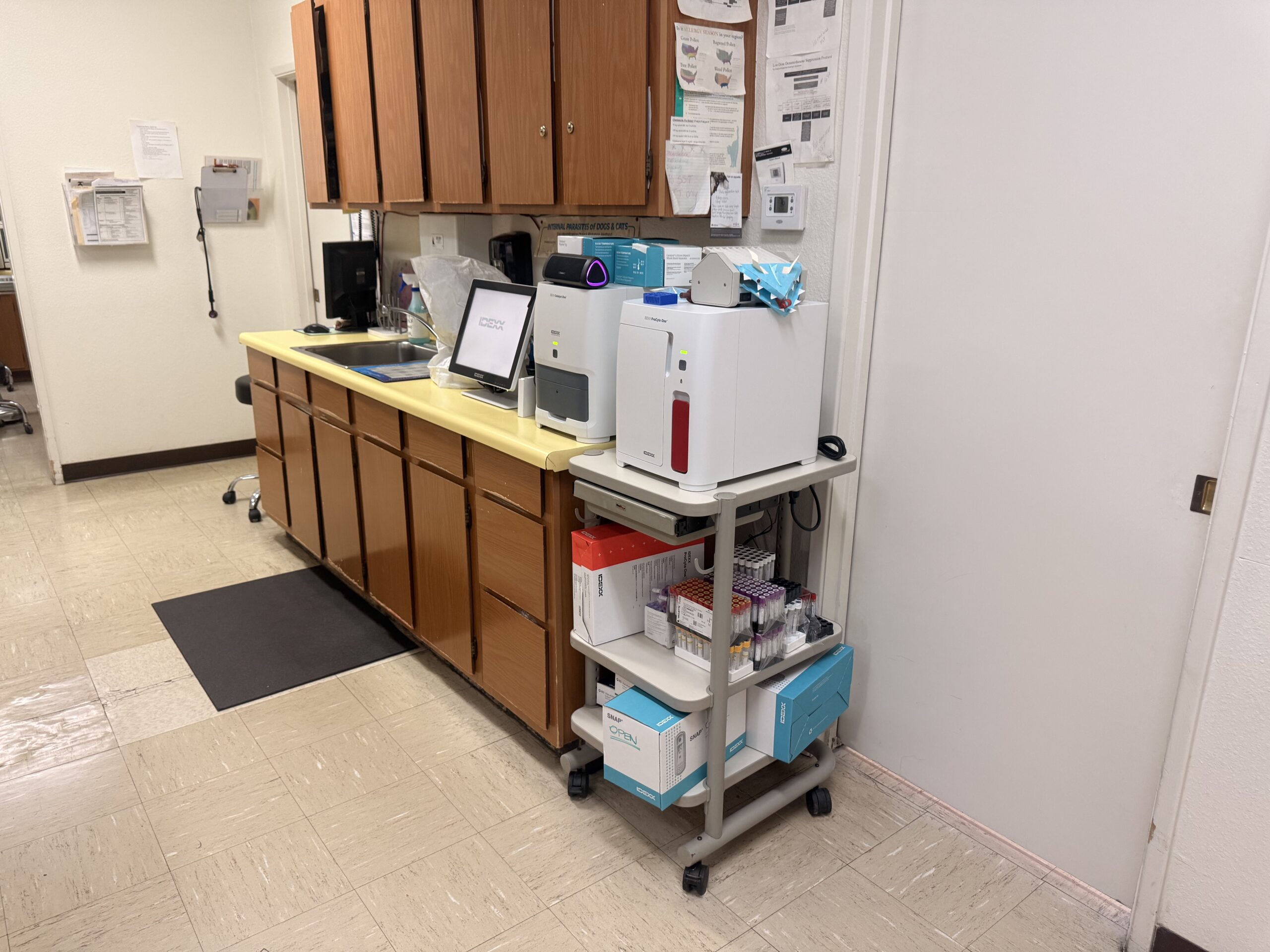
Desert Forest Animal Hospital provides in-house veterinary blood work and diagnostics.
Blood testing may help evaluate concerns involving:
- Dehydration
- Red and white blood cells
- Electrolytes
- Kidney function
- Liver function
- Blood glucose
- Inflammation or infection
- Other metabolic abnormalities
Laboratory results are interpreted together with your pet’s examination, symptoms, and medical history rather than in isolation.
When X-Rays or Abdominal Ultrasound May Be Recommended
If we are concerned about a swallowed object, abnormal abdominal organs, intestinal obstruction, or another structural problem, diagnostic imaging may be appropriate.
Desert Forest Animal Hospital provides digital veterinary X-rays and can often provide or coordinate abdominal ultrasound for dogs and cats during business hours when medically appropriate and scheduling allows.
X-rays and ultrasound provide different types of information. Your veterinarian will recommend the imaging approach that best fits your pet’s examination findings and symptoms.
Low-Stress Veterinary Care for a Pet Who Already Feels Sick
A dog or cat experiencing nausea, abdominal pain, or diarrhea may already feel vulnerable before arriving at the hospital.
Dr. Quinn Bauer is a Fear Free Certified veterinarian. Desert Forest Animal Hospital uses gentle, behavior-aware handling whenever the patient’s medical condition permits.
During an emergency, necessary stabilization always comes first. For stable pets, however, thoughtful handling can help reduce additional fear and stress during examination and diagnostic testing.
Learn about Fear Free veterinary care at Desert Forest Animal Hospital →
What Should I Bring to the Appointment?
If possible, bring:
- A list of your pet’s medications and supplements
- The packaging from anything your pet may have eaten
- A photograph of vomit or stool if the appearance is unusual
- A fresh stool sample if requested by our team
- Your pet’s recent medical records if we have not seen them before
For possible toxin exposures, keep the original packaging whenever it can be done safely. The exact product and concentration can be important in determining treatment.
Vomiting and Diarrhea Care for Cave Creek, Carefree, Desert Mountain and Nearby Communities
Desert Forest Animal Hospital is located at 6554 E Cave Creek Road in Cave Creek, Arizona. We care for dogs and cats from Cave Creek, Carefree, Desert Mountain, North Scottsdale, Tatum Ranch, Dove Valley Ranch, Terravita, Desert Hills, Anthem, and surrounding North Valley communities.
If your pet develops vomiting, diarrhea, appetite loss, abdominal discomfort, or another sudden gastrointestinal problem, call us before coming in. Our team can discuss the symptoms you are seeing and help determine whether evaluation at Desert Forest Animal Hospital is appropriate or whether your pet should be taken directly to a 24-hour emergency facility.
This is particularly important when vomiting or diarrhea is accompanied by weakness, pain, dehydration, possible toxin exposure, foreign-object ingestion, or another change in your pet’s condition.
Frequently Asked Questions About Pet Vomiting and Diarrhea
How many times can a dog vomit before I should call the vet?
There is no safe universal number. Multiple episodes over a short period, inability to keep fluids down, vomiting combined with diarrhea, loss of appetite, pain, weakness, blood, possible toxin exposure, or other concerning symptoms are reasons to contact a veterinarian promptly.
Should I take my dog to the vet for vomiting and diarrhea?
Call your veterinarian when vomiting and diarrhea occur together, are repeated or severe, or are accompanied by lethargy, pain, blood, appetite loss, dehydration, or another change in your pet’s condition. Puppies, kittens, senior pets, and animals with chronic medical problems may warrant earlier evaluation.
Can I give my dog Pepto-Bismol for an upset stomach?
Do not give human gastrointestinal medications unless your veterinarian has specifically recommended them for your pet. Some medications can be inappropriate because of another illness, medication interaction, dosage concern, or the underlying cause of the gastrointestinal symptoms.
Should I make my dog vomit if it ate something poisonous?
No—not unless a veterinarian or veterinary poison professional specifically instructs you to do so. Inducing vomiting can be dangerous after certain toxin exposures or in certain medical situations. Call your veterinarian or ASPCA Animal Poison Control at (888) 426-4435.
Can Desert Forest Animal Hospital see a vomiting dog or cat the same day?
Often, yes. During regular hospital hours, our team evaluates many dogs and cats with repeated vomiting, diarrhea, appetite loss, abdominal discomfort, dehydration, or other concerning gastrointestinal symptoms. Call (480) 488-2010 before coming in so we can discuss your pet’s condition and help determine the appropriate next step.
Is Desert Forest Animal Hospital a 24-hour emergency hospital?
No. Desert Forest Animal Hospital is open Monday through Friday from 9:00 a.m. to 6:00 p.m. and is closed Saturday and Sunday. Pets requiring after-hours treatment, overnight monitoring, or intensive emergency care should be evaluated at a 24-hour veterinary emergency hospital.
Worried About Vomiting or Diarrhea? Call Us.
You do not have to determine the diagnosis at home before calling.
If your dog or cat is vomiting, having diarrhea, refusing food, acting unusually tired, or simply does not seem right, call Desert Forest Animal Hospital. Our team can help you decide whether your pet should be evaluated promptly and what type of veterinary care may be appropriate.
Desert Forest Animal Hospital
6554 E Cave Creek Road
Cave Creek, AZ 85331
Call: (480) 488-2010
Request a veterinary appointment online →
For urgent or emergency concerns, call rather than waiting for an online appointment request.
Medical review: Reviewed for medical accuracy by Bryan Hayter, DVM, Owner and Medical Director.
Last reviewed: September 2026.
This article provides general educational information and is not a substitute for examination and diagnosis by a veterinarian. If your pet is experiencing severe or rapidly worsening symptoms, seek veterinary care immediately.