
A cut on a dog or cat can be deceptively simple.
Some small, superficial wounds can be cleaned and monitored with veterinary guidance. Other lacerations extend through the skin into fat, muscle, tendons, blood vessels, joints, or deeper body structures even when the opening at the surface does not look dramatic.
Bite wounds can be particularly misleading. A small puncture from another dog or cat may conceal considerably more tissue damage beneath the skin than is visible from the outside.
At Desert Forest Animal Hospital, we evaluate dogs and cats with cuts, punctures, bite wounds, paw injuries, cactus-related wounds, and other unexpected injuries during regular hospital hours.
If your pet has an open wound, call before coming in so our team can discuss what happened, how much bleeding is present, where the wound is located, and whether our hospital or a 24-hour emergency facility is the safest destination.
Learn about same-day urgent veterinary care in Cave Creek →
What Is a Laceration?
A laceration is a tear or cut in the skin and underlying tissues.
Lacerations can result from:
- Sharp metal or fencing
- Broken glass
- Branches or sticks
- Falls or collisions
- Dog or cat fights
- Wildlife encounters
- Vehicle trauma
- Cactus or other penetrating plant material
- Household accidents
- Unknown trauma discovered after a pet has been outside
The veterinary concern is not simply the length of the cut. We also consider depth, contamination, tissue damage, bleeding, location, pain, infection risk, and whether deeper structures may have been injured.
The Merck Veterinary Manual notes that uncomplicated lacerations without deep tissue damage can often be closed after appropriate wound preparation, while contaminated, infected, or deeper wounds may require a different approach.
When Does a Cut on a Dog or Cat Need Veterinary Care?
A wound should be evaluated promptly if it is:
- Deep
- Gaping or pulling apart
- Actively bleeding
- Painful
- Caused by an animal bite
- Caused by a dirty, rusty, sharp, or unknown object
- Contaminated with dirt, gravel, hair, plant material, or debris
- Located over a joint
- Located on a paw or between the toes
- Near an eye
- On the face or neck
- On the chest or abdomen
- Associated with limping
- Associated with significant swelling
- Producing discharge or an unpleasant odor
- Showing tissue beneath the skin
A wound also deserves veterinary attention when you cannot tell how deep it goes.
One of the important principles of veterinary trauma care is that the visible wound may not represent the full extent of the injury. Merck’s veterinary emergency guidance specifically warns that apparently small surface wounds may hide deeper tissue injury. Read more about veterinary trauma assessment from Merck →
When Is a Laceration an Emergency?
Some wounds should not wait for a routine veterinary appointment.
Seek immediate veterinary care for:
- Heavy or uncontrolled bleeding
- Blood that rapidly soaks through towels or dressings
- Collapse or profound weakness
- Very pale gums
- Difficulty breathing
- A penetrating wound to the chest or abdomen
- An open wound exposing bone
- Severe trauma such as being hit by a vehicle
- A large area of skin pulled away from the underlying tissue
- Major facial, throat, or neck injury
- A wound associated with significant neurologic changes
Major trauma can cause internal injury even when the skin wound attracts most of the owner’s attention. Veterinary emergency assessment therefore begins with the patient’s overall stability, airway, breathing, circulation, pain, and evidence of internal trauma before focusing solely on the visible wound.
The Merck Veterinary Manual’s emergency-care guidance similarly emphasizes evaluating the entire patient rather than allowing an obvious wound to distract from potentially more serious injuries.
What Should I Do if My Dog or Cat Is Bleeding?
If you can do so safely, apply firm, direct pressure to the wound with clean gauze, a clean towel, or another clean cloth.
Try not to repeatedly lift the cloth to check the wound every few seconds. Continuous pressure helps a clot form.
If blood soaks through the first layer, additional material can generally be placed over it while pressure is maintained.
If bleeding is heavy, continues despite direct pressure, or your pet becomes weak, pale, confused, or collapses, seek emergency veterinary care.
Do not place a narrow homemade tourniquet around a limb unless specifically instructed by a veterinary professional. Improper tourniquet use can damage nerves and blood supply.
Merck’s professional wound-management guidance identifies direct pressure as an important initial method for controlling wound bleeding.
Should I Clean My Pet’s Cut at Home?
If the wound is minor and your pet is stable, gently rinsing obvious surface contamination with clean water or saline may be reasonable while you contact your veterinarian.
Avoid aggressive scrubbing.
Do not routinely put hydrogen peroxide, rubbing alcohol, essential oils, soaps, or household disinfectants into an open wound unless your veterinarian specifically instructs you to do so.
Products that kill germs can also damage healing tissue and delay wound repair.
Veterinary wound-care guidance from VCA Animal Hospitals recommends water or saline for basic wound cleansing and advises against hydrogen peroxide and alcohol unless specifically directed by a veterinarian.
Do Not Let Your Dog or Cat Lick the Wound
Licking does not disinfect a wound.
A pet’s mouth contains bacteria, and repeated licking can:
- Introduce contamination
- Irritate healing tissue
- Remove sutures
- Open a closed wound
- Delay healing
An Elizabethan collar, inflatable collar, recovery garment, or another veterinarian-approved barrier may be recommended depending on the wound’s location.
How Does a Veterinarian Evaluate a Laceration?
Veterinary wound care begins with more than asking whether the cut needs stitches.
The veterinarian may evaluate:
- The patient’s overall stability
- How the injury occurred
- How long ago it happened
- Wound depth
- Degree of contamination
- Blood supply to the surrounding tissue
- Whether skin or deeper tissue has lost viability
- Possible muscle or tendon injury
- Joint involvement
- Possible nerve or blood-vessel damage
- Whether a foreign object remains in the wound
- Evidence of infection
- Whether underlying bone may be involved
Hair around the wound often needs to be clipped so the true margins and surrounding tissue can be examined.
A very painful, frightened, or moving patient may also need sedation to allow thorough wound exploration and cleaning without causing unnecessary distress or risking further injury.
Why Thorough Wound Flushing Matters
Simply closing a dirty wound can trap bacteria and damaged material inside.
One of the most important steps in laceration treatment is often lavage—carefully flushing the wound to remove visible and microscopic contamination.
Damaged or dead tissue may also need to be removed, a process called debridement.
According to the Merck Veterinary Manual, lavage helps decrease debris and bacterial burden while also allowing better examination of underlying tissues.
Does Every Laceration Need Stitches?
No.
One of the most common questions pet owners ask is:
“Does my dog’s cut need stitches?”
The answer depends on much more than the size of the opening.
A relatively clean, uncomplicated laceration with healthy tissue may sometimes be closed with sutures, staples, or another appropriate closure technique after thorough cleaning and evaluation.
However, immediate closure may be inappropriate when a wound:
- Is heavily contaminated
- Is already infected
- Contains damaged or questionable tissue
- Needs continued drainage
- Has significant underlying tissue injury
- Would place excessive tension on the skin if closed
Some wounds are deliberately left open initially so contamination, swelling, drainage, or tissue viability can be managed before later closure.
Others are allowed to heal as open wounds.
This is why a veterinarian may occasionally tell an owner that not suturing a wound immediately is actually the safer medical choice.
Merck’s surgical wound-management guidance specifically distinguishes clean uncomplicated lacerations from contaminated wounds, which may require drainage or open-wound management rather than immediate primary closure. Read Merck’s guidance on specific wounds →
Is There a Time Limit for Getting Stitches?
Pet owners sometimes hear that a wound must be closed within a fixed number of hours.
Time matters because bacterial contamination and tissue changes can progress, but veterinary wound decisions are not based on the clock alone.
A veterinarian also considers:
- How contaminated the wound is
- What caused it
- Where it is located
- How healthy the surrounding tissue appears
- Whether infection is already present
- Whether deeper tissue has been damaged
If a wound appears likely to need closure, earlier evaluation is generally preferable because it gives the veterinarian more options.
Why Dog Bite Wounds Can Be More Serious Than They Look
Dog bites are a classic example of why the size of the skin wound does not tell the whole story.
A canine tooth may create only a small puncture in the skin while pressure, crushing, tearing, and movement damage tissues underneath.
Dog attacks can occasionally result in:
- Deep muscle trauma
- Skin separation from underlying tissue
- Broken ribs
- Chest injury
- Abdominal injury
- Neck trauma
- Damage to blood vessels
- Infection
The Merck Veterinary Manual notes that major tissue damage from dog bites may be located beneath the surface of the wound.
If a small dog has been grabbed or shaken by a much larger dog, veterinary examination is particularly important even when the visible punctures appear minor.
Why Cat Bite Wounds Frequently Become Infected
Cat teeth are narrow and sharp.
They can create small punctures that close rapidly at the skin surface while bacteria remain deeper within the tissue.
The result may be an abscess that does not become obvious until later.
Possible signs include:
- Swelling
- Pain
- Warmth
- Limping
- Fever
- Lethargy
- Loss of appetite
- Drainage
- A foul odor
This is why a tiny puncture wound after a cat fight should not automatically be dismissed as insignificant.
Does Every Cut Need Antibiotics?
No.
Antibiotics should not automatically be prescribed for every superficial cut.
The decision depends on factors such as:
- Contamination
- Depth
- Bite or puncture injury
- Infection
- Tissue damage
- Wound location
- The patient’s overall medical condition
Dirty, infected, puncture, and bite wounds are more likely to warrant antimicrobial treatment than a clean superficial laceration.
If a wound is already infected or has unusual drainage, the veterinarian may occasionally recommend bacterial culture and susceptibility testing to help guide antibiotic selection.
Can a Laceration Require Surgery?
Yes.
Some wounds require considerably more than a few skin stitches.
Surgical treatment may be needed to:
- Explore deeper tissue
- Remove dead or severely damaged tissue
- Repair muscle or other structures
- Remove a retained foreign object
- Control bleeding
- Place a drain
- Close a large wound
- Repair wounds where skin has been pulled away from underlying tissue
Desert Forest Animal Hospital provides veterinary surgical care in Cave Creek, including evaluation of selected urgent surgical problems during regular business hours when medically appropriate.
When an injury requires advanced surgery, intensive monitoring, overnight hospitalization, or another level of emergency care that cannot safely be provided at DFAH, our team can recommend transfer to an appropriate emergency or specialty hospital.
When Are X-Rays or Other Diagnostics Needed for a Laceration?
Many simple skin wounds do not require extensive diagnostic testing.
Diagnostics become more important when the mechanism of injury raises concern for damage beneath the skin.
For example, a veterinarian may recommend digital veterinary X-rays when there is concern about:
- A fracture
- Joint injury
- A retained foreign object
- Chest trauma
- Abdominal trauma
- A bite wound involving deeper structures
Blood testing may also be appropriate for a patient with substantial trauma, significant blood loss, systemic illness, suspected infection, or a wound that requires anesthesia or surgery.
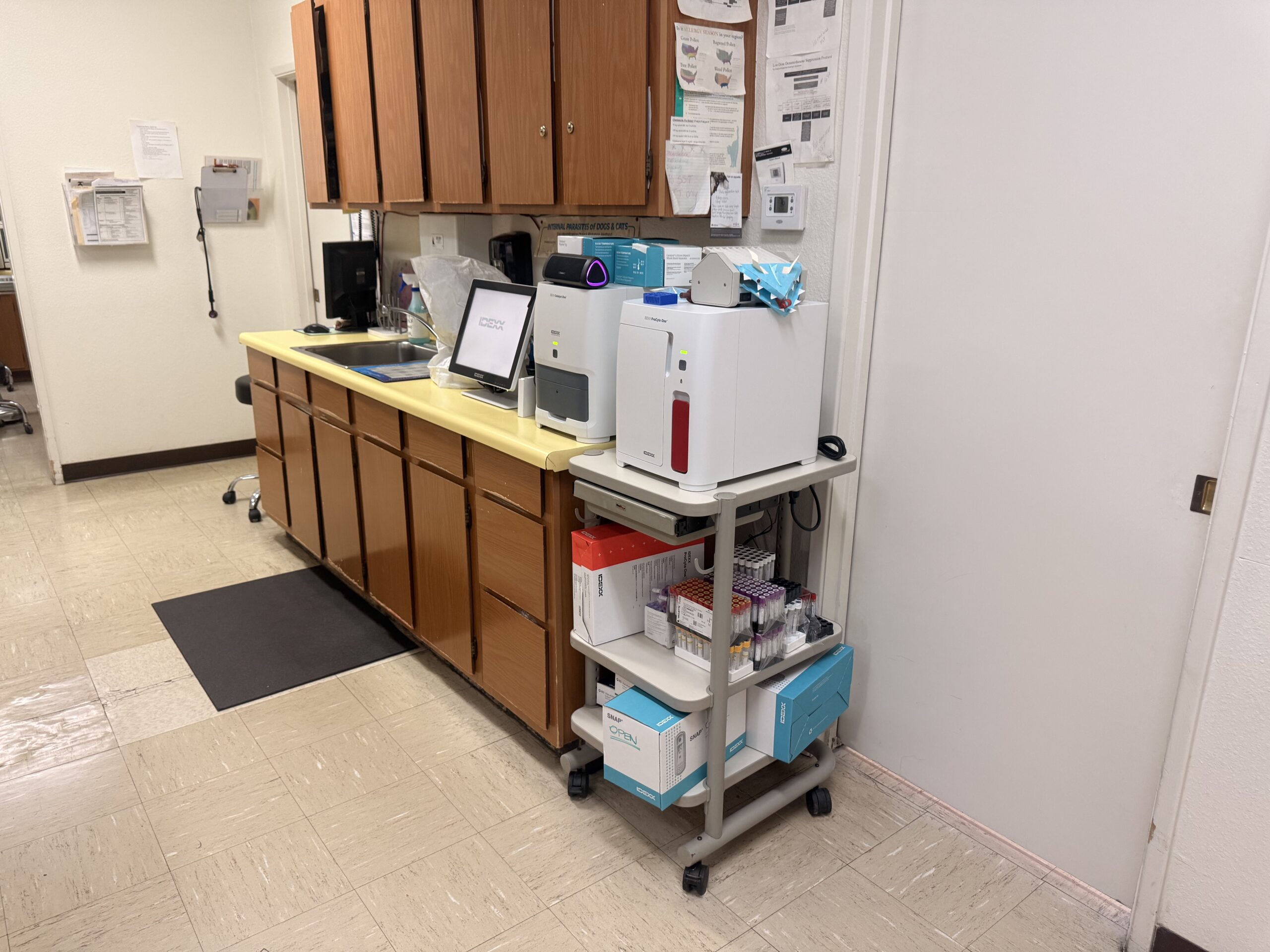
Desert Forest Animal Hospital offers in-house veterinary diagnostics and blood work when medically appropriate.
Pain Control Is Part of Good Wound Care
Lacerations can be painful.
A dog or cat may tolerate a brief glance at a wound at home but resist clipping, probing, flushing, or suturing once sensitive tissue is touched.
Pain control may include local anesthetic techniques, injectable or oral medication, sedation, or anesthesia depending on the patient and procedure.
A normally gentle animal may growl, scratch, bite, hide, or struggle when frightened or painful. That behavior does not mean the pet has suddenly developed a temperament problem.
Fear Free Care for Painful or Frightened Patients
Dr. Quinn Bauer is a Fear Free Certified veterinarian at Desert Forest Animal Hospital.
For injured patients, Fear Free principles may include minimizing unnecessary restraint, careful positioning, reducing avoidable stimulation, providing pain medication, or using sedation when that allows a safer and more humane examination or procedure.
Medical urgency always comes first. A severely injured patient may need immediate examination or stabilization, but reducing unnecessary fear remains valuable whenever the medical situation allows.
Learn about Fear Free veterinary care at DFAH →
Lacerations and Wounds in Cave Creek’s Sonoran Desert Environment
Dogs and cats in Cave Creek and the surrounding North Valley can encounter wounds that reflect our local environment.
Potential causes include:
- Cactus and cholla
- Desert brush and sharp vegetation
- Fencing and gates
- Trail injuries
- Rocks and uneven terrain
- Wildlife encounters
- Dog bites
- Paw injuries during outdoor activity
Outdoor dogs may also return home with an injury that was not witnessed. In those cases, the wound pattern and physical examination can help determine whether there may be a puncture, foreign body, bite, or deeper trauma.
Cactus wounds deserve their own considerations because small plant fragments or spines may remain embedded beneath the coat or skin.
Read our guide to cactus and cholla injuries in dogs →
What About Wildlife Bite Wounds?
Wildlife injuries should be evaluated carefully because there may be concerns beyond the visible wound.
Depending on the animal involved and the circumstances, your veterinarian may consider:
- Deep tissue trauma
- Crushing injury
- Infection
- Rabies vaccination status
- Other species-specific risks
Do not attempt to capture a wild animal that injured your pet.
If your pet was bitten by or had significant contact with wildlife, tell the veterinary team exactly what animal was involved if you know.
How Long Does a Laceration Take to Heal?
Healing time varies substantially.
A clean, uncomplicated skin laceration that can be closed appropriately may heal relatively quickly, while a contaminated bite wound, infected wound, degloving injury, or wound requiring repeated bandage care can take much longer.
Healing is influenced by:
- Wound depth
- Blood supply
- Contamination
- Infection
- Location
- Movement and tension
- The pet’s age and general health
- Whether the pet licks or traumatizes the wound
Follow-up examinations matter because a wound can look better on the surface while problems persist deeper within the tissue.
Signs a Wound May Be Infected
Contact your veterinarian if a healing wound develops:
- Increasing redness
- Increasing swelling
- Heat
- Increasing pain
- Yellow, green, bloody, or foul-smelling discharge
- Opening of previously closed wound edges
- Fever
- Lethargy
- Reduced appetite
If your pet suddenly worsens rather than gradually improving, the wound should be reassessed.
Same-Day Veterinary Care for Cuts and Wounds in Cave Creek
A stable dog or cat with a laceration often falls into the category of a problem that should be evaluated promptly but may not require a 24-hour emergency hospital.
During regular hospital hours, Desert Forest Animal Hospital evaluates many stable pets with:
- Skin lacerations
- Open wounds
- Bite wounds
- Puncture wounds
- Paw injuries
- Cactus-related wounds
- Minor traumatic injuries
- Possible wound infections
Call before coming in. The team can discuss the injury, current availability, and whether same-day evaluation at DFAH or immediate treatment at a 24-hour emergency hospital is more appropriate.
Learn more about veterinary urgent care in Cave Creek →
Laceration Treatment for Cave Creek, Carefree, Desert Mountain and North Scottsdale Pets
Desert Forest Animal Hospital is located in Cave Creek and provides veterinary care for dogs and cats from Cave Creek, Carefree, Desert Mountain, North Scottsdale, Tatum Ranch, Dove Valley Ranch, Terravita, Desert Hills, Anthem, and surrounding North Valley communities.
Our hospital can move from examination to treatment and, when medically appropriate, diagnostic testing, digital imaging, sedation, wound care, and selected surgical procedures.
That can be particularly helpful when what appears to be “just a cut” turns out to involve a deeper injury.
Frequently Asked Questions About Lacerations in Dogs and Cats
Does my dog’s cut need stitches?
Possibly. A clean, relatively recent laceration with healthy tissue may be appropriate for closure, but the decision depends on depth, contamination, location, tissue viability, infection risk, and underlying injury. Some wounds are safer to leave open initially.
Can a dog wound heal without stitches?
Yes. Some wounds are intentionally managed open and heal gradually from deeper tissues toward the surface. Whether this is appropriate depends on the type of wound, contamination, infection risk, location, and the pet’s overall condition.
Should I take my dog to the vet for a small cut?
A very superficial scrape may not require veterinary treatment. A small wound should still be examined if it is deep, painful, gaping, contaminated, caused by a bite or puncture, near an eye or joint, associated with limping, or difficult to evaluate fully.
Can I use hydrogen peroxide on my dog’s cut?
We generally recommend against routinely putting hydrogen peroxide into an open wound unless your veterinarian has specifically instructed you to use it. Hydrogen peroxide and other harsh products can damage healing tissue. Clean water or saline is generally safer for basic first aid while you seek veterinary guidance.
Can I use hydrogen peroxide on a cat wound?
No household wound product should automatically be considered safe for a cat. Hydrogen peroxide can damage tissue and delay healing and should not routinely be applied to an open cat wound. Contact your veterinarian for appropriate wound-cleaning instructions.
Does my pet need antibiotics for a laceration?
Not necessarily. Antibiotic decisions depend on contamination, depth, infection, whether the wound is a puncture or bite, damaged tissue, and the individual patient. Antibiotics are not a substitute for proper wound cleaning and treatment.
Why didn’t my veterinarian stitch the wound closed?
Closing a contaminated or infected wound can trap bacteria and damaged material beneath the skin. Some wounds need continued drainage, debridement, or open-wound treatment before closure can be considered.
Is a dog bite an emergency if I only see two small holes?
It can be more serious than it appears. Dog bites can cause substantial crushing and tearing beneath small puncture wounds. Veterinary evaluation is recommended, particularly after a large dog attacks a smaller pet or when the bite involves the neck, chest, abdomen, or a joint.
Why does a cat bite turn into an abscess?
Cat teeth can introduce bacteria deep into tissue through a narrow puncture. The skin opening may close while infection develops underneath, producing swelling, pain, fever, and eventually drainage.
Can my pet eat before being seen for a laceration?
If there is a reasonable possibility that sedation or anesthesia may be needed, ask the veterinary team when you call. Feeding recommendations may depend on the injury, the patient’s age and health, how urgent treatment is, and when the pet last ate. Do not delay emergency care because your pet recently ate.
What should I bring to the veterinary visit?
If possible, tell us how and when the injury occurred. Bring information about medications, allergies, vaccination status, and any known object, animal, chemical, or environment involved in the injury.
Does Your Dog or Cat Have an Open Wound?
Lacerations are one of those veterinary problems where appearances can be misleading. A short cut can be deep. A tiny bite puncture can hide substantial tissue injury. And a large-looking wound may sometimes be medically straightforward once it has been properly cleaned and evaluated.
The safest approach is to consider how the injury happened, where it is located, how much bleeding or pain is present, and what may be happening beneath the skin.
If your dog or cat has a concerning cut, puncture, bite wound, or other unexpected injury during regular hospital hours, contact Desert Forest Animal Hospital before coming in.
Desert Forest Animal Hospital
6554 E Cave Creek Road
Cave Creek, AZ 85331
Same-Day Urgent Veterinary Care →
Diagnostics & In-House Blood Work →
Medical Review & Editorial Standards
Reviewed for medical accuracy by Bryan Hayter, DVM — Owner & Medical Director
Last medically reviewed: October 2026
Dr. Hayter provides ownership and medical leadership for Desert Forest Animal Hospital and supports the hospital’s commitment to thoughtful, evidence-informed veterinary care for dogs and cats.
This article provides general educational information about lacerations and wound care. It cannot determine the depth, contamination, infection risk, or severity of an individual pet’s injury and is not a substitute for a veterinary examination or individualized treatment plan.
Learn more about Desert Forest Animal Hospital and our veterinary team →
Veterinary References
- Merck Veterinary Manual — Wound Management
- Merck Veterinary Manual — Initial Wound Management in Small Animals
- Merck Veterinary Manual — Management of Specific Wounds in Small Animals
- Merck Veterinary Manual — Trauma in Small-Animal Emergency Medicine
- VCA Animal Hospitals — Care of Open Wounds in Dogs