COMPLETE DENTAL CARE FOR DOGS AND CATS
Pet Dental Care and Teeth Cleaning in Cave Creek, AZ
Healthy teeth and gums are important to your pet’s comfort, ability to eat normally and overall quality of life. Desert Forest Animal Hospital provides comprehensive pet dental care in Cave Creek, Arizona, including oral examinations, professional dental cleanings under anesthesia, dental X-rays and treatment of painful, infected or damaged teeth.
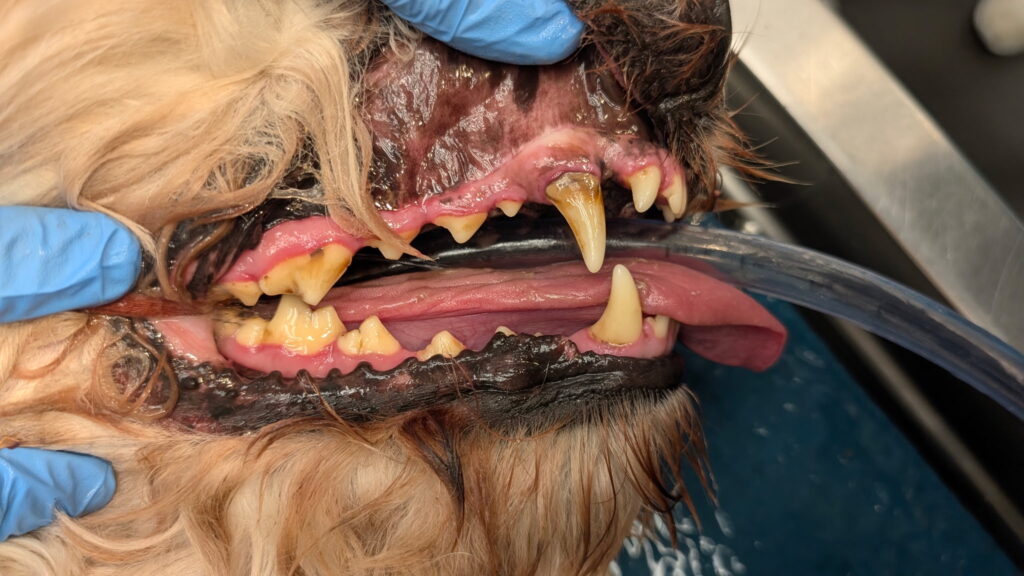
One of the most important things we have learned from caring for dental patients is that the outside appearance of a pet’s teeth does not always tell us how healthy the mouth is underneath the gumline.
At Desert Forest Animal Hospital, owners are often surprised by how advanced tooth and gum disease is when we examine their pet during an annual wellness visit. Dogs and cats frequently continue eating despite significant dental disease, so problems can progress quietly before an owner realizes that something is wrong.
Our veterinary team creates an individualized dental plan for each dog or cat based on oral findings, age, medical history, anesthetic considerations and the treatment actually needed.
We welcome dogs and cats from Cave Creek, Carefree, Tatum Ranch, Desert Hills, North Scottsdale, Anthem and surrounding North Valley communities.
Why Veterinary Dental Care Matters
Dental disease is much more than a cosmetic problem or unpleasant breath.
Plaque is a bacterial biofilm that develops on the teeth. If it is not regularly disrupted, inflammation can develop along and beneath the gumline. As periodontal disease progresses, the tissues and bone supporting the teeth can be damaged.
The World Small Animal Veterinary Association dental guidelines describe periodontal disease as one of the most common medical problems affecting companion animals and emphasize that it is frequently underdiagnosed because obvious outward signs may be limited.
Dogs and cats can be remarkably good at adapting to chronic oral discomfort. Some continue eating normally. Others chew on the less painful side, swallow kibble with minimal chewing or gradually change their behavior so subtly that the difference is difficult to recognize.
A normal appetite does not necessarily mean a pain-free mouth.
Professional veterinary dental care can help:
- Identify periodontal disease beneath the gumline
- Relieve chronic oral pain
- Identify fractured, loose or damaged teeth
- Detect tooth-root and jawbone abnormalities with dental X-rays
- Treat painful or infected teeth
- Preserve healthy teeth whenever possible
- Slow progression of periodontal disease
- Improve comfort while eating and playing
- Establish an effective home dental-care plan
What We Commonly See at Desert Forest Animal Hospital
Dental disease varies considerably between individual pets. Some dogs maintain relatively healthy mouths for years, while others develop significant periodontal disease surprisingly early.
At Desert Forest Animal Hospital, we often see owners who are genuinely surprised by how much periodontal disease we discover during an annual examination. This is one reason we examine the teeth and gums as part of routine preventive and wellness care.
We also pay particularly close attention to the mouths of small-breed dogs. In our experience, breeds such as Yorkshire Terriers, Chihuahuas and Toy Poodles can develop remarkably severe periodontal disease, sometimes despite being otherwise healthy.
This clinical experience is consistent with veterinary dental literature showing that small and toy-breed dogs are particularly susceptible to periodontal disease.
Smaller mouths often contain tightly spaced or crowded teeth, creating areas where plaque can accumulate and where home dental care may be more difficult.
Signs Your Dog or Cat May Have Dental Disease
Bad breath is one of the most common signs of dental disease, but it is not the only one. Contact our Cave Creek veterinary team if you notice:
- Persistent or unusually strong bad breath
- Yellow or brown tartar
- Red, swollen or bleeding gums
- Drooling more than usual
- Blood in saliva or on toys
- Dropping food while eating
- Chewing predominantly on one side
- Swallowing kibble without chewing
- Reluctance to eat dry food or hard treats
- Decreased interest in chew toys
- Pawing or rubbing at the mouth
- Reacting when the mouth or face is touched
- A broken, discolored or loose tooth
- Swelling beneath an eye or along the jaw
- Loss of appetite or unexplained weight loss
- A lump, sore or unusual tissue inside the mouth
Most dental disease can be evaluated during a scheduled appointment, but some oral problems should not wait.
Sudden facial or jaw swelling, significant oral bleeding, an inability to close the mouth normally, a newly fractured tooth with severe pain, marked difficulty eating, or a rapidly worsening oral infection may require prompt veterinary evaluation.
If your dog or cat develops an acute dental or oral problem during our regular clinic hours, call (480) 488-2010 before arriving. Desert Forest Animal Hospital provides
same-day urgent veterinary care in Cave Creek
for many stable illnesses, injuries, and painful oral conditions when availability allows.
Severe uncontrolled bleeding, major facial trauma, difficulty breathing, collapse, or another life-threatening condition requires immediate emergency veterinary care.
Dental Problems We Evaluate in Dogs and Cats
Gingivitis and Periodontal Disease
Gingivitis is inflammation of the gums. When disease progresses deeper beneath the gumline, periodontal inflammation can damage the periodontal ligament and bone supporting the teeth.
Advanced periodontal disease may cause gum recession, deep periodontal pockets, infection, loose teeth, bone loss and significant discomfort.
Fractured and Damaged Teeth
Fractured teeth are an especially important problem in dogs because many dogs enthusiastically chew objects much harder than their teeth.
At Desert Forest Animal Hospital, we see a significant number of fractured teeth associated with antler chews. For that reason, we generally consider antlers inappropriate chew toys for dogs and recommend avoiding them.
We are not alone in this recommendation. The Cornell University College of Veterinary Medicine recommends avoiding antlers, hooves and bones because they can fracture teeth.
A useful practical guideline is the thumbnail test: if you cannot make an indentation in a chew with your fingernail, it may be too hard for your dog’s teeth.
Very hard bones, rocks, hooves, ice and some rigid nylon toys may also damage teeth.
A tooth fracture can expose sensitive dentin or the pulp containing nerves and blood vessels. Even dogs that continue eating may have substantial oral pain.
Tooth-Root Infection and Abscesses
Infection around a tooth root can cause pain, facial swelling, drainage or difficulty eating. Some root infections are not visible during an awake oral examination and are discovered only with dental radiographs.
Feline Tooth Resorption
Tooth resorption is a common and often painful dental condition in cats in which tooth structure begins to break down.
Some lesions are visible near the gumline, while others extend beneath the gum tissue or involve the tooth root. Dental X-rays are extremely important for determining the extent of resorptive disease and planning treatment.
Retained Puppy or Kitten Teeth
Baby teeth that remain after permanent teeth erupt can create crowding and trap debris between teeth.
Retained deciduous teeth are particularly common in small-breed dogs and should be evaluated because they may contribute to periodontal disease and abnormal tooth positioning.
Oral Masses and Abnormal Tissue
Lumps, ulcerated areas, pigment changes or abnormal tissue inside the mouth deserve evaluation. Some oral growths are benign, while others require sampling, biopsy or additional treatment.
Malocclusion and Crowded Teeth
Teeth that do not align normally may contact the gums, palate or opposing teeth. Crowded or rotated teeth can also create narrow spaces where plaque and debris accumulate more readily.
What Is Included in a Professional Veterinary Dental Procedure?
A veterinary dental procedure is much more comprehensive than simply removing visible tartar.
The goal is to perform a complete oral health assessment and treat disease both above and below the gumline.
1. Pre-Dental Examination and Treatment Planning
Before a dental procedure, our veterinarian reviews your pet’s medical history and evaluates general health as well as the visible teeth and gums.
Please tell us about:
- Current medications and supplements
- Previous anesthesia experiences
- Known heart, kidney, liver or respiratory conditions
- Changes in appetite or chewing
- Previous dental disease
- Any recent changes in your pet’s health
An awake examination provides valuable information, but it cannot reveal everything happening beneath the gums.
2. Pre-Anesthetic Evaluation and Blood Work
We understand that anesthesia is one of the greatest concerns owners have when considering dental treatment.
At Desert Forest Animal Hospital, we encounter anesthesia hesitancy frequently, and we take those concerns seriously. General anesthesia is never completely without risk, but careful patient evaluation, individualized drug selection, appropriate equipment and attentive monitoring are important ways we manage that risk.
Pre-anesthetic blood work or additional testing may be recommended based on your pet’s age, examination, medical history, medications and planned procedure.
Testing can help identify abnormalities that may affect our anesthetic plan.
Learn more about our in-house blood work and diagnostics →
3. Individualized General Anesthesia
A complete professional dental cleaning requires general anesthesia.
Anesthesia allows us to safely:
- Protect your pet’s airway
- Examine every tooth
- Probe beneath the gumline
- Measure periodontal pockets
- Take properly positioned dental X-rays
- Remove plaque and tartar below the gums
- Perform extractions or other treatment without causing pain or fear
- Prevent sudden movement around sharp dental instruments
The AAHA Dental Care Guidelines for Dogs and Cats recommend general anesthesia, appropriate pain management and proper monitoring and equipment for veterinary dental procedures.
How We Approach Anesthesia at Desert Forest Animal Hospital
We know that many pet owners are more worried about the anesthesia than the dental procedure itself.
That is why we take a deliberate approach rather than using exactly the same anesthetic plan for every patient.
Depending on the individual pet, our anesthetic protocol may include:
- A pre-anesthetic physical examination
- Pre-anesthetic laboratory testing when appropriate
- Pre-anesthetic medications selected for the individual patient
- An IV catheter for medication and vascular access
- Endotracheal intubation to protect the airway
- Supplemental oxygen
- IV fluid therapy when appropriate
- Active warming and temperature support
- Continuous anesthetic monitoring
- Close monitoring throughout recovery
Our equipment allows us to monitor important physiologic parameters during anesthesia, which may include:
- Pulse oximetry to monitor blood oxygen saturation
- Capnography to evaluate ventilation and carbon dioxide
- ECG monitoring to evaluate heart rate and rhythm
- Blood-pressure monitoring
- Temperature monitoring
- Respiratory rate and anesthetic depth
The AAHA Anesthesia and Monitoring Guidelines similarly emphasize individualized anesthetic planning, premedication, airway management, monitoring of oxygenation and ventilation, cardiovascular monitoring, temperature support and continued observation during recovery.
No anesthetic procedure can be described as risk-free. Our responsibility is to evaluate the individual patient, anticipate potential problems, monitor closely and adjust the plan when necessary.
4. Complete Oral Examination and Dental Charting
Once your pet is safely anesthetized, we can perform a much more detailed examination than is possible in an awake patient.
We evaluate and document findings such as:
- Missing teeth
- Fractured teeth
- Periodontal pocket depth
- Gum recession
- Tooth mobility
- Tooth resorption
- Abnormal wear
- Oral masses or abnormal tissue
5. Dental X-Rays
Dental X-rays are one of the most valuable components of veterinary dentistry because much of each tooth lies underneath the gumline.
Radiographs can reveal:
- Periodontal bone loss
- Tooth-root infection
- Fractured roots
- Retained roots
- Unerupted teeth
- Tooth resorption
- Changes involving the surrounding jawbone
The WSAVA dental guidelines note that full-mouth dental radiographs can identify substantial pathology that is not apparent during clinical examination alone.
The extent of dental imaging is determined by the veterinarian based on your pet’s findings and dental history. Full-mouth radiographs may be recommended when appropriate.
6. Scaling Above and Below the Gumline
Plaque and tartar are removed from visible tooth surfaces as well as beneath the gumline.
Subgingival cleaning is essential because periodontal disease develops primarily in the tissues surrounding and supporting the teeth—not simply on the visible crown.
7. Polishing
After scaling, the teeth are polished to smooth microscopic irregularities created during cleaning and create a smoother tooth surface.
8. Treatment of Painful or Diseased Teeth
Not every dental patient needs extractions.
However, extraction may be recommended when a tooth is:
- Severely fractured
- Infected
- Loose
- Severely affected by periodontal bone loss
- Painfully resorptive
- Otherwise unable to be maintained comfortably
Dental X-rays and the anesthetized oral examination help guide these decisions.
Before the procedure, our team will explain how estimates and authorization will be handled if we discover disease that could not be identified during the awake examination.
Multimodal Pain Control for Dental Extractions
Dental extractions are oral surgery, and we believe pain control deserves the same thoughtful planning as the procedure itself.
At Desert Forest Animal Hospital, we take particular care to provide multimodal pain control when a patient needs extractions or other painful dental treatment.
Rather than relying on a single medication, we may combine several complementary methods of analgesia based on the individual patient.
Depending on the pet’s health and the procedure being performed, a pain-control plan may include:
- An opioid analgesic around the time of the procedure
- Local dental nerve blocks, including lidocaine or another appropriate local anesthetic
- A nonsteroidal anti-inflammatory drug (NSAID) when medically appropriate
- Additional analgesic medications selected according to the patient’s needs
- Appropriate medication to continue pain control during recovery at home
This is known as multimodal analgesia: using medications that act through different mechanisms to improve pain control while allowing the veterinarian to individualize treatment.
The AAHA Pain Management Guidelines emphasize multimodal and individualized pain management. AAHA’s dental guidance also supports local anesthetic dental nerve blocks as an important component of analgesia for oral surgery.
The exact combination is adjusted for the patient. For example, an NSAID may not be appropriate for every dog or cat because of kidney disease, gastrointestinal concerns, concurrent medication or another medical condition.
9. Recovery and Discharge
Monitoring does not stop when the dental procedure is finished.
Your pet is observed during anesthetic recovery until appropriate recovery milestones are reached.
Discharge instructions depend on what was performed and may include:
- Pain medication
- Antibiotics when medically indicated
- Temporary soft-food recommendations
- Activity instructions
- Home dental-care recommendations
- Follow-up examination when appropriate
We review the dental findings and treatment performed so you understand what we found inside your pet’s mouth.
Why We Do Not Recommend Anesthesia-Free Dental Cleanings
An anesthesia-free dental cleaning may remove visible tartar from the surface of a tooth, making the mouth appear cleaner.
But appearance is not the primary purpose of veterinary dentistry.
An awake cleaning cannot provide the same ability to:
- Probe periodontal pockets
- Examine every surface of every tooth
- Obtain diagnostic dental X-rays
- Safely clean beneath the gumline
- Evaluate tooth mobility thoroughly
- Treat painful disease
- Protect the airway from dental debris
The American Animal Hospital Association explains that periodontal probing and dental radiography require an appropriately anesthetized and immobile patient.
Anesthesia-free scaling may therefore create the impression of a healthier mouth while disease remains untreated below the gumline.
Dental Care for Small-Breed Dogs
Although any dog can develop periodontal disease, we watch small and toy breeds particularly carefully.
In our own patients, Yorkshire Terriers, Chihuahuas, Toy Poodles and other small dogs are among the breeds in which we commonly see severe periodontal disease.
It is not unusual for a small dog to continue eating normally even when significant tartar, periodontal pockets, loose teeth or bone loss are present.
Small dogs may benefit from:
- Careful oral evaluation at every wellness visit
- Earlier intervention when periodontal disease develops
- Daily home brushing when tolerated
- Appropriately sized dental products
- Veterinarian-directed dental-cleaning intervals rather than waiting for severe disease
Dental Care for Senior Dogs and Cats
Senior pets frequently develop periodontal disease, fractured teeth, resorptive lesions and other painful oral problems.
These should not automatically be dismissed as part of normal aging.
Older pets may need additional laboratory testing or modifications to the anesthetic plan, but advanced age by itself is not an automatic reason to avoid needed dental treatment.
The AAHA senior-care guidelines specifically note that age alone is not a contraindication to general anesthesia. Patient health, medical conditions and the expected benefits of treatment should all be considered.
Learn more about senior pet care in Cave Creek →
Dental Care for Cats
Cats can be especially difficult to assess for dental pain because they often conceal discomfort.
A cat with significant dental disease may continue eating but:
- Turn the head while chewing
- Drop food
- Chatter or tremble the jaw
- Drool
- Groom less frequently
- Become irritable or withdrawn
- Prefer softer food
- Approach the food bowl and then walk away
Cats are also particularly susceptible to tooth resorption. Dental X-rays help determine whether disease extends beneath the gumline and which treatment is appropriate.
Gentle Dental Care for Anxious Dogs and Cats
The dental procedure itself occurs under anesthesia, but the experience before and after anesthesia matters too.
Dr. Quinn Bauer is a Fear Free Certified veterinarian. Our team uses gentle, behavior-aware handling whenever medically appropriate to reduce unnecessary fear, anxiety and stress.
For an anxious pet, a dental plan may include:
- Pre-visit medication when appropriate
- A calmer admission process
- Reduced unnecessary restraint
- Positive reinforcement when medically appropriate
- Individualized handling
- Comfort-focused recovery
Tell us in advance if your pet has struggled with previous veterinary visits, handling or separation. That information allows us to plan more thoughtfully.
Learn about Fear Free veterinary care at Desert Forest Animal Hospital →
How Often Does My Pet Need a Dental Cleaning?
There is no single dental-cleaning interval that is appropriate for every dog and cat.
Recommended timing may depend on:
- Species
- Breed and adult size
- Age
- Tooth alignment and crowding
- Previous periodontal disease
- Rate of plaque and tartar accumulation
- Home brushing
- Diet and chewing habits
- Medical conditions
- Findings during wellness examinations
For some small-breed dogs prone to periodontal disease, waiting several years between dental evaluations may allow significant disease to develop.
We evaluate your pet’s mouth during routine wellness examinations and recommend dental care based on what we actually see.
Home Dental Care Between Professional Cleanings
Professional dentistry treats existing disease. Home care helps slow plaque accumulation after treatment.
Home care cannot repair a fractured tooth, reverse advanced bone loss or adequately clean a deep periodontal pocket, but it can make an important difference in maintaining oral health.
Brush Your Pet’s Teeth When Possible
Daily brushing is the most consistent way to mechanically disrupt plaque.
Use toothpaste made specifically for pets. Do not use human toothpaste because dogs and cats swallow toothpaste and some ingredients found in human products are inappropriate for pets.
Introduce brushing gradually. A short, positive brushing experience is more useful than forcing a frightened pet to tolerate a long one.
Choose Evidence-Based Dental Products
Dental diets, chews, treats, gels and water additives differ considerably in their effectiveness.
The Veterinary Oral Health Council accepted-product list identifies products that have submitted evidence meeting VOHC standards for plaque or tartar control.
Ask us which options make sense for your pet’s size, chewing style, calorie needs and medical history.
Please Avoid Antlers and Other Extremely Hard Chews
This is an area where our own clinical experience strongly influences our recommendation.
We see enough fractured teeth associated with antler chewing that we generally recommend that our patients not chew antlers.
We also recommend caution with:
- Hard natural bones
- Hooves
- Rocks
- Ice cubes used as chew objects
- Extremely rigid nylon or plastic toys
Choose a chew with some flexibility or one that can be indented with a fingernail, and supervise your dog’s chewing.
Complimentary Dental Assessments
Not sure whether your dog or cat needs a professional dental cleaning?
Contact Desert Forest Animal Hospital to ask about a complimentary technician dental assessment.
A technician can look for visible tartar, gum inflammation, obvious damaged teeth and other signs that a veterinary dental examination may be appropriate.
This preliminary assessment does not replace a veterinarian’s examination and cannot diagnose disease beneath the gumline, but it may help you determine the appropriate next step.
Appointment availability may be limited.
Call (480) 488-2010 to reserve a dental assessment.
Why Choose Desert Forest Animal Hospital for Pet Dentistry?
Dental Disease Is Evaluated at Routine Exams
We routinely look at your pet’s teeth and gums during wellness visits, and we frequently identify dental disease that owners did not realize was present.
Digital Dental X-Rays
Dental radiographs allow us to evaluate tooth roots and supporting bone that cannot be seen during an awake visual examination.
Individualized Anesthesia
We evaluate the individual patient and use pre-anesthetic assessment, appropriate medications, airway protection, modern monitoring and supportive care throughout anesthesia and recovery.
Multimodal Pain Management
When extractions or other painful procedures are necessary, we use multiple pain-control strategies as medically appropriate rather than relying on a single medication.
Experience With Small-Breed Dental Disease
We are particularly attentive to dental health in small dogs such as Yorkies, Chihuahuas and Toy Poodles because we frequently see significant periodontal disease in these patients.
Fear Free Certified Veterinarian
Dr. Quinn Bauer is a Fear Free Certified veterinarian and incorporates thoughtful, lower-stress approaches before and after procedures whenever medically appropriate.
Local and Independently Owned
Desert Forest Animal Hospital has served the Cave Creek community since 1984. We provide individualized veterinary care for dogs and cats from Cave Creek, Carefree and surrounding North Valley communities.
Frequently Asked Questions About Pet Dental Care
My pet is still eating. Could the mouth really be painful?
Yes. Dogs and cats frequently continue eating despite substantial dental disease. Some alter how they chew or gradually adapt to chronic discomfort. Appetite alone cannot determine whether the mouth is healthy or pain-free.
Why did my veterinarian find so much dental disease when I did not notice anything at home?
This happens frequently. Periodontal disease develops largely beneath the gumline, and pets often show few obvious signs. At Desert Forest Animal Hospital, we commonly find more advanced dental disease than owners expected during routine examinations.
Why are small dogs more prone to dental disease?
Small and toy-breed dogs are particularly susceptible to periodontal disease. Crowded teeth and limited space within a small mouth can contribute to plaque accumulation. In our practice, we pay particular attention to breeds such as Yorkshire Terriers, Chihuahuas and Toy Poodles.
Are antlers safe for dogs to chew?
We generally recommend against antler chews. We have treated numerous dogs with fractured teeth associated with hard chewing objects, including antlers. Veterinary dental sources such as Cornell University also advise avoiding antlers, bones and hooves because they can fracture teeth.
Why does my pet need anesthesia for a dental cleaning?
Anesthesia protects the airway and allows us to examine every tooth, probe beneath the gums, take diagnostic dental X-rays, clean below the gumline and treat painful disease without movement or distress.
I’m afraid to put my older pet under anesthesia. Should I skip the dental?
Age alone does not determine anesthetic risk. We consider the pet’s examination, medical history, laboratory results, medications and severity of dental disease. We understand owners’ concerns and are happy to discuss how we individualize anesthesia and monitoring for your pet.
How do you control pain when teeth have to be extracted?
We use multimodal pain management. Depending on the individual patient, this may include opioid medication, local dental nerve blocks such as lidocaine, an NSAID when medically appropriate and additional analgesic medications. The goal is to address pain through several complementary pathways before, during and after the procedure.
Do anesthesia-free dental cleanings work?
Anesthesia-free scaling can remove some visible tartar but cannot provide a complete periodontal examination, dental X-rays or thorough cleaning beneath the gumline. It therefore does not replace professional veterinary dentistry under anesthesia.
Why are dental X-rays so important?
A significant portion of every tooth is hidden beneath the gums. Dental X-rays can reveal bone loss, tooth-root infections, fractures, retained roots, unerupted teeth and feline tooth resorption that may not be apparent during an awake examination.
Will my pet definitely need teeth extracted?
No. Not every dental cleaning involves extractions. We recommend removing a tooth when examination and dental imaging indicate that it is painful, infected, fractured, severely loose, resorptive or no longer adequately supported.
How much does a dog or cat dental cleaning cost?
Cost depends on what treatment is necessary. An uncomplicated cleaning differs from a procedure involving extensive dental X-rays, surgical extractions or advanced periodontal disease. Our team discusses the anticipated treatment plan, estimate and authorization process with you.
How often should I brush my pet’s teeth?
Daily brushing provides the most consistent plaque control when your pet tolerates it safely. If daily brushing is not realistic, ask us about other home-care options, including products carrying the Veterinary Oral Health Council Seal of Acceptance.
Pet Dental Care Near Cave Creek and Carefree, AZ
Desert Forest Animal Hospital is located at:
6554 E Cave Creek Road
Cave Creek, AZ 85331
We provide veterinary dental care for dogs and cats from:
- Cave Creek
- Carefree
- Tatum Ranch
- Desert Hills
- North Scottsdale
- Anthem
- Nearby North Valley communities
Does Your Pet Need a Dental Cleaning?
You do not need to wait for severe bad breath, loose teeth, facial swelling or difficulty eating.
If you are concerned about your pet’s teeth—or simply are not sure what you are seeing—contact our team.
Desert Forest Animal Hospital
6554 E Cave Creek Road
Cave Creek, AZ 85331
CALL (480) 488-2010
REQUEST A DENTAL APPOINTMENT
Medical review: Reviewed for medical accuracy by Bryan Hayter, DVM, Owner & Medical Director.
Last medically reviewed: August 2026
This page provides general educational information and is not a substitute for examination, diagnosis or individualized veterinary advice. Anesthetic and medication protocols are selected for the individual patient based on medical history, examination findings, diagnostic results and the procedure being performed.